
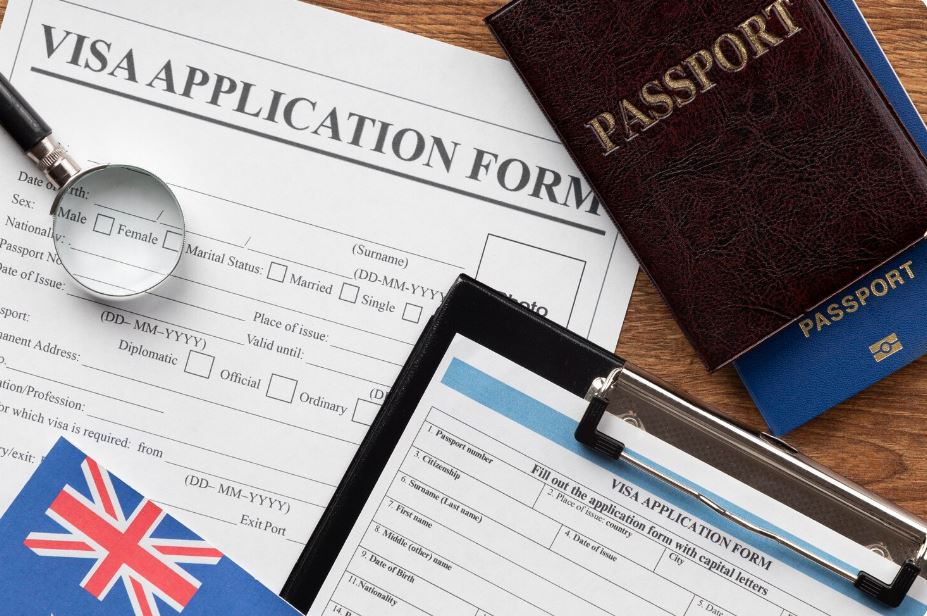
Long, patient lines are illuminated by fluorescent lights at Terminal 5 of Heathrow. Families clutch their passports, checking the departure boards that flash between Toronto, Sydney, and Madrid, and tucking their boarding passes inside. The custom is commonplace for most tourists. However, something has changed for dual nationals of Britain.
British dual citizens must show a valid UK passport or a Certificate of Entitlement when boarding a flight to the UK as of February 25, 2026, according to new regulations announced by the Home Office. Airlines may deny boarding if there isn’t one. The sound is procedural; however, the response points to something more profound.
UK Dual Citizenship & Passport Rules – Key Information
| Category | Details |
|---|---|
| Governing Authority | Home Office |
| Policy Effective Date | 25 February 2026 |
| Affected Individuals | British dual nationals |
| Required Documents | Valid UK passport or Certificate of Entitlement |
| ETA Eligibility | Dual nationals cannot use ETA |
| Certificate Cost | £589 |
| UK Passport Cost | Approx. £100 (adult standard) |
| Exemption | Irish passport holders |
| Official Guidance | https://www.gov.uk/british-citizenship |
In the past, dual nationals could enter the UK using their non-British passport if their second nationality did not require a visa. Next week, that flexibility is gone. Airlines are now required to confirm British citizenship before departure. The new Electronic Travel Authorization (ETA) system, which is used by other foreign nationals, is not available to dual nationals. Administrative clarity—modernizing border systems and bringing them into line with nations like the US and Australia—may have been the goal. However, in reality, clarity can feel harsh.
£589 is the cost of the Certificate of Entitlement. The average cost of a UK adult passport is approximately £100. When a person becomes a citizen, neither is automatically granted. When you consider someone who became a naturalized citizen years ago and never needed a British passport because their German or Australian one worked perfectly, that detail seems insignificant. All of a sudden, a document they never considered important becomes crucial.
People seem to have been caught off guard by the rollout. British-Latvian nationals on long vacations. Spanish retirees whose UK passports expired decades ago. The fact that mismatched surnames on passports could make boarding more difficult was discovered by women in Greece and Spain. Protesters contend that women whose marital naming customs vary across nations are disproportionately impacted by the name-alignment rule. According to the government, in rare circumstances, exceptions might be taken into account. Seldom do rare cases feel comforting.
The call will be made by airline employees, not border guards, standing at check-in desks. That difference is important. Airlines may be inclined to exercise caution because they risk fines for transporting passengers with incorrect documentation. In theory, a British national is allowed entry into the United Kingdom. However, boarding passes and rights are not always the same.
The majority of visa-free travelers must now obtain digital pre-authorization as part of the reform, which is linked to the wider implementation of the ETA system. However, dual nationals are not allowed to use it. Instead, they have to demonstrate their British status. As this plays out, one questions if efficiency has surpassed empathy.
According to census data, more than a million people are classified as dual nationals. That group isn’t fringe. Families dividing their lives across continents, retirees making a “final visit,” and professionals who have lived overseas for decades are all included. The administrative load seems doable to some. Others find it to be a scramble, particularly those who live far from British consulates.
Appointments at British consular offices in Spain are apparently filling up fast. Dual nationals in Australia are figuring out how long it will take to renew their passports and book flights. It is difficult to ignore the speed at which personal anxiety is impacted by bureaucratic changes. A grandmother is unsure if she will be able to attend Easter. Instead of paying for documents he believes are unnecessary, a university professor is thinking about giving up citizenship completely.
Although it sounds dramatic, renunciation has come up in the discussion. Some dual nationals contend that the symbolic advantage of citizenship is outweighed by the emotional cost if visiting family necessitates a £589 certificate. It’s unclear if those sentiments translate into meaningful numbers.
According to the government, details regarding the change have been accessible to the general public since October 2024. That might be the case. However, public awareness and public availability are not the same thing. Until a departure gate announcement makes them official, policies frequently exist in silence on websites.
Noting what hasn’t changed is also important. Dual citizenship is still permitted in the UK. Status is unaffected by the reform; documentation is. Because of long-standing agreements, Irish passport holders continue to be exempt. Additionally, there won’t be any disruption for British nationals holding valid UK passports.
However, legality is rarely the only aspect of policy. Perception is key. Many dual nationals view the change as symbolic, a declaration of more stringent borders in the wake of Brexit. Like most of Europe, Britain is strengthening entry checks, digitizing records, and adjusting its immigration laws. Policymakers and investors may refer to it as streamlining. People may accuse it of being restrictive.
There is a subtle tension in the air as you see families at airports, holding both passports anxiously in preparation. Are the documents going to be enough? Will the names be the same? Will they be accepted by the airline?
Whether the government will implement reduced-cost travel authorizations or transitional flexibility for individuals caught off guard is still up in the air. Campaign organizations are calling for a halt. Officials claim that the regulations are in line with global standards.
The lived experience of people attempting to just return home lies somewhere in between those stances.
Bullet points are frequently used to quantify policy changes. But they get personal at border control. Additionally, for dual nationals of the United Kingdom, February 25 may feel less like an administrative update and more like a time to reflect on what citizenship actually means in real life.