
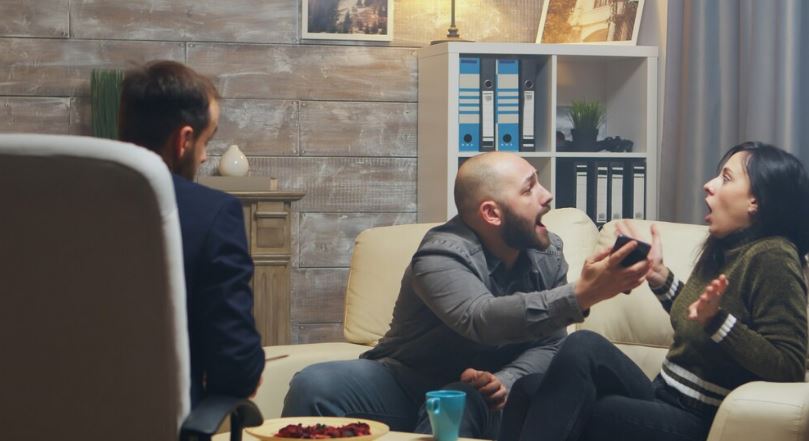
Nowadays, the majority of therapists describe a similar moment. A patient takes a seat, turns on their phone, and places it face down on the side table as though it were radioactive. They sigh. Then, as though it had happened to them directly, they discuss an event that occurred eight thousand miles away. It’s difficult to ignore how frequently this scene occurs in different cities, at different income levels, and in different political contexts.
There is no agreed-upon clinical term for what is occurring. Some refer to it as anxiety related to war. Some people favor moral harm, vicarious trauma, or just that persistent, low-pitched fear. The mechanism is fairly consistent regardless of the label. The nervous system dutifully gets ready to act when the brain, looking for danger, sees footage it cannot interpret, such as a bombed apartment building, a child being carried, or a marketplace that has gone silent. However, there is nothing to do. Thus, it remains turned on, idle, and fuel-burning.
| Field | Details |
|---|---|
| Subject | Mental health impact of prolonged global conflict and geopolitical anxiety |
| Primary condition | Chronic stress, vicarious trauma, war-related anxiety, learned helplessness |
| Key population affected | Adults exposed to 24/7 news cycles, diaspora communities, and younger adults |
| Therapy approaches | CBT, Acceptance and Commitment Therapy (ACT), Somatic regulation, Compassion-Focused Therapy |
| Reported anxiety spike | Roughly 1 in 6 adults show signs of problematic news consumption |
| Common symptoms | Sleep disruption, racing heart, irritability, intrusive thoughts, emotional numbness |
| Risk amplifiers | Doomscrolling, social media algorithms, graphic imagery, and financial strain |
| Where to find help | Licensed clinicians via directories such as Psychology Today |
| Research baseline | WHO estimates 10% of those exposed to traumatic events develop serious mental health problems |
| Self-care anchors | News boundaries, local action, sleep hygiene, social connection |
Last summer, Fathali Moghaddam, a conflict psychologist at Georgetown, told the American Psychological Association that the main theme is a lack of control. People believe they have nothing at all, and helplessness grows out of that lack. The body keeps score in subtle, enduring ways, such as shoulder tightness, shallow sleep that ends early, and breath that doesn’t quite deepen.
The presence of suffering in the distance is not what makes the present moment unique. That predates journalism itself. The architecture that delivers it is novel. At two in the morning, phones buzz with red-alert banners. Algorithms discover which atrocities garner attention and bring them to light more frequently. According to a 2024 PNAS study that tracked media exposure following 9/11, individuals who watched the most coverage had more trauma symptoms three years later than some survivors at the actual site. It turns out that the screen is not a buffer. It’s the wound sometimes.
In response, therapists have developed a small, useful toolkit. Because it is adept at identifying the cognitive distortions that subtly take over, cognitive behavioral therapy continues to be the mainstay. The “three P’s” of depressive thinking—the conviction that a crisis is widespread, enduring, and personal—are frequently mentioned by clinicians. By asking which aspects of the disaster are truly within the patient’s sphere of influence and which are just weather, CBT performs the unglamorous task of dissecting those three.
A different approach is used in Acceptance and Commitment Therapy. Instead of battling helplessness, ACT encourages people to accept what they cannot change and recommit to modest, morally motivated actions. Volunteer in your community. Treat your neighbor with kindness. Resolution is not the aim. The motion has significance. There’s a reason why resources like VolunteerMatch are frequently brought up in these sessions: they turn fear into something that can be scheduled.
Then there’s somatic work, which has quietly gained popularity as medical professionals realize that talking alone isn’t always sufficient. It is necessary to physically reassure the body that there is no threat in the room after it has been on alert for months. Slow breathing, walking outside without a phone, and grounding exercises are not gimmicks. They are maintenance for the nervous system.
The guilt of being safe is a more subtle issue that is addressed by compassion-focused therapy. Sometimes people are embarrassed that their lives go on, largely unaltered, while others’ do not. CFT aids in distinguishing self-punishment from empathy, which may seem straightforward but requires practice.
Rescue is what none of these strategies promise. A patient’s news boundaries won’t put an end to conflict. However, when someone begins to tend to the part of the world they truly live in instead of attempting to absorb the suffering of the entire world, there is a subtle change. It’s not bravery. It’s merely manageable. And that may be the most truthful thing anyone can say at the moment.