
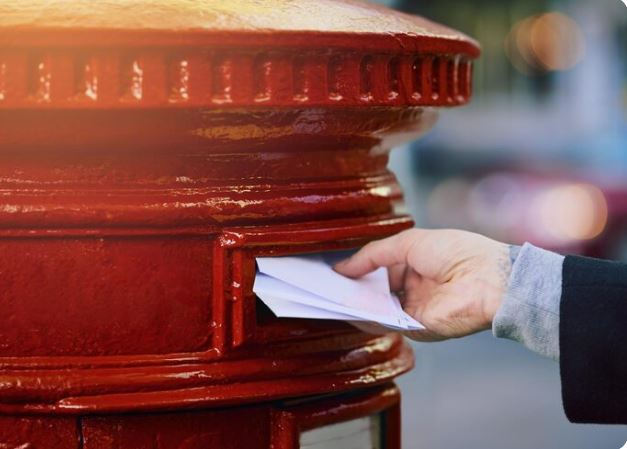
Once again, the typical quiet choreography of letters being delivered through letterboxes failed to take place on Monday morning.
As a result of the storms that occurred in January and the unusually high levels of staff sickness, Royal Mail has confirmed that there have been delays in service across more than one hundred postcodes in the United Kingdom. It had a procedural and almost routine sound to it. The response in living rooms and small businesses, on the other hand, suggested that something more fragile was going on.
Impacted Offices List by Royal Mail Delays
| Delivery Office | Affected Postcodes |
|---|---|
| Aberdare DO | CF44, CF45 |
| Ashington DO | NE22, NE62, NE63, NE64 |
| Banbridge DO | BT32 |
| Beverley DO | HU11, HU17, HU18 |
| Brechin DO | DD9 |
| Brierley Hill DO | DY5 |
| Chichester DO | PO18–PO20 |
| Chipping Norton DO | OX7 |
| Daventry DO | NN11 |
| Glasgow G15 DO | G15 |
| Glasgow G52 DO | G52, G53 |
| Helston DO | TR12, TR13 |
| Hull Central DO | HU1–HU3, HU5, HU9, HU12, HU19 |
| Hyde DO | SK13, SK14, SK16 |
| Kingswood DO | BS15, BS30 |
| Kirkcaldy DO | KY1–KY3 |
| Leicester East DO | LE2, LE5–LE7 |
| Lichfield DO | WS7, WS13, WS14 |
| Lisburn DO | BT26–BT28 |
| Lochgelly DO | KY5 |
| Lutterworth DO | LE9, LE17 |
| Maida Hill DO | W9 |
| North Tyneside DO | NE25–NE30 |
| Oxford East DO | OX3, OX4, OX33, OX44, OX49 |
| Penarth DO | CF64 |
| Pendle DO | BB8, BB9 |
| Pontefract DO | WF7, WF8, WF9, WF11 |
| Pontyclun DO | CF72 |
| Prenton DO | CH43 |
| Shrewsbury DO | SY1–SY5 |
| Sileby SPDO | LE12 |
| Sleaford DO | NG34 |
| South Shields DO | NE33, NE34 |
| Sunderland DO | SR1–SR6, SR9 |
| Swan House DO | LE1, LE3, LE7–LE9, LE19, LE95 |
| Swindon DO | SN1, SN2, SN3, SN6, SN25, SN26, SN38, SN99 |
| Waterlooville DO | PO7–PO8 |
| Whitwood DO | WF6, WF10 |
On the other hand, a resident of Chichester shared with me that she now checks her doormat with a more relaxed attitude. Paper and cardboard have a faintly damp odor in the air during February, and when she does not receive anything, she shrugs as if she has become accustomed to anticipating it as part of the ritual.
This company is adamant that the “vast majority” of mail is delivered in accordance with the schedule. This phrase has been mentioned numerous times, as if it were possible to achieve stability solely through the use of reassurance.
On the other hand, employees at certain delivery offices have reported cases in which letters were left unsorted while packages were cleared first. A postman told the BBC that if packages are allowed to accumulate, they will block walkways. This is a practical detail that speaks volumes about the priorities that are being prioritized on the ground.
The conflict in this situation is not merely operational. It is of a structural nature.
Royal Mail continues to fulfill its obligation to provide universal service by delivering packages to nearly two million postcodes around the clock, six days a week. At the same time, the number of letters that are addressed has decreased significantly over the course of the last decade, while the volume of parcels has increased due to the rise in popularity of online shopping.
Ofcom gave the company permission to conduct a pilot program in which it reduced the number of second-class letter deliveries on Saturdays and moved them to alternate weekdays. Although the change has been implemented in 35 delivery offices, it has not yet been implemented across the entire country because negotiations with the Communication Workers Union have been stalled.
Despite the fact that it appeared to be technical at the time, that was a pivotal moment.
The decision made by the regulator acknowledged a reality that many people had quietly accepted: the economics of letters no longer resemble the red pillar box era that people still picture when they think of Royal Mail. Letters are increasingly seen as a representation of obligation, while packages generate revenue.
While I was standing outside of a sorting office in east London a few winters ago, I took in the sight of trolleys stacked high with brown cardboard boxes. In contrast, trays of letters appeared to be of secondary importance because they were lighter and fewer in number. My body was experiencing the imbalance for the very first time at that moment.
Workers have reported that the workload can feel insurmountable, as they are required to deliver packages and letters along congested routes, and they are sometimes forced to share vans due to a lack of available vehicles. During the days leading up to Christmas, there were days when no mail was sorted at all.
There is a genuine sense of dissatisfaction among the staff. The CWU has referred to the organization as a “company in crisis,” arguing that the level of service has not demonstrated any signs of improvement since the holiday season. According to their point of view, the changes have been brought about by the reduction of costs and the modernization of the system without sufficient staffing or clarity.
According to Royal Mail, storms Goretti, Ingrid, and Chandra caused significant damage to routes in January, and at the same time, there was an increase in the number of employees who were absent due to illness. According to them, adverse weather conditions caused disruptions to particular routes rather than the entire network.
A longer-term recalibration may be concealed by a disruption that only lasts for a short period of time. Letters will inevitably fall further down the hierarchy if parcels are cleared first because they take up space and generate income. That is a change that is not only subtle but also significant for many customers.
As reported by Juliet from Crawley to the BBC, appointment letters from the NHS arrived after the date that was originally scheduled. When you miss a medical appointment because a letter was late, it feels less like an inconvenience and more like a breach of trust.
It is also important to take into consideration the counterpoint. As a result of the dramatic decrease in letter volumes, it is exceedingly costly to maintain nationwide delivery within six days for a product that is decreasing in size. A number of individuals contend that modifying the service in such a way as to reduce the number of letter days and place a greater emphasis on parcels is the best way to maintain the viability of the business and safeguard employment opportunities in the long run.
A tangible sense of reassurance is maintained by the post, particularly for residents who are older. A brown envelope from the council, a birthday card, and a bank statement all carry weight that extends beyond the contents of the envelopes, respectively. The impact of digital notifications on the mat is not the same as that of physical ones.
A surprising fact that was buried in Ofcom’s recent enforcement record is that Royal Mail has been fined a total of 37 million pounds over the past few years for failing to meet predetermined letter delivery targets. There is still that number.
For the time being, the service is in a state of limbo because negotiations between management and the union are still ongoing, and pilots are still restricted to working out of a small number of offices. There is a temporary delay, according to the customers. The employees report that the pressure is persistent.
When viewed on paper, the transformation of Royal Mail appears to be unavoidable: more packages, fewer letters, more intelligent routing, and more efficient schedules. In actuality, the shift is confusing and must be negotiated on a street-by-street and depot-by-depot basis.
It is not the delay itself that interests me; rather, it is the rapidity with which individuals have begun to adjust their expectations. Changes in habits occur stealthily when a system that was designed for daily certainty becomes unpredictable.
A greater number of times, you check the tracking app. Instead of sending documents via first-class mail, you use a courier service. You find yourself wondering if the red vans are still carrying the same promise that they did in the past.
It has been stated by Royal Mail that additional assistance will be brought in to restore affected routes “as quickly as possible.” That might clear up the backlog for this week.
From one late letter to the next, the more fundamental question—how a national postal service manages to strike a balance between duty and survival—continues to be revealed.