
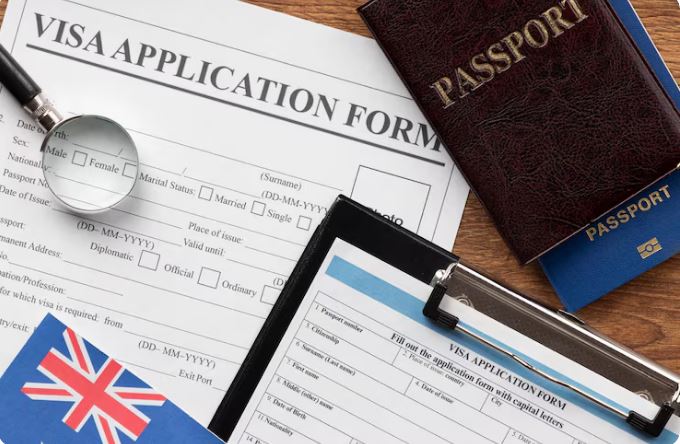
Having a British passport for many years was like having a silent guarantee that home was always close by. However, that quiet certainty has now been broken by a policy change that, despite its minor technicalities, has a significant disruptive impact.
Dual British citizens will need to enter the UK with a British passport or a Certificate of Entitlement as of February 25, 2026. The alternative, using a passport of a second nationality to board a flight or ferry, is no longer allowed. Over a million people’s travel is being altered by this rule change, which is a component of the nation’s transition to a digital border system, frequently in unexpected ways.
UK Passport Policy Update (Effective February 2026)
| Key Detail | Information |
|---|---|
| New Rule Effective Date | 25 February 2026 |
| Affected Travelers | All dual British citizens returning to the UK |
| Accepted Documents for Entry | Valid British passport or Certificate of Entitlement |
| Certificate of Entitlement Cost | £589 (varies slightly for overseas applications) |
| British Passport Cost | £94.50 online / £104.50 paper application |
| ETA Requirement | Applies to non-British travelers from visa-free countries |
| Where to Apply | www.gov.uk |
| Enforcement Authority | UK Home Office |
Dual nationals used to be able to easily pass through gates with an EU passport or something comparable. Behind the scenes, border officials could typically determine their British citizenship status by scanning. They are replacing that silent system. Now, evidence of Britishness needs to be official and visible. That usually entails either keeping the actual passport or shelling out almost £600 to have the ability to affix a certificate to another passport.
Many people have been negatively impacted by this, particularly those who live abroad. Applications for UK passports have increased significantly in recent weeks in countries like Germany and New Zealand, overwhelming postal services and passport offices. Documents have been piling up at Auckland’s mail center, forcing applicants to pay more for expedited delivery to make the deadline. Many people aren’t sure they’ll make it even then.
One mother I spoke with said she felt “ambushed by bureaucracy.” She had to balance forms, ID photos, and an online tracking system that seemed to be stuck in “processing” mode while she attempted to renew three British passports for her kids. The ticket for her oldest child was scheduled for mid-March. No passport as of yet. And nobody gave a definitive response.
Her story is not an uncommon one. One man in Germany, who was born in the UK but is now a naturalized citizen of another EU nation, received a friend’s WhatsApp message informing him of the new regulation. After years of not having a British passport, he was suddenly faced with a pressing deadline. Even worse, local legal restrictions may make his adopted nationality vulnerable if he applies for a passport.
In nations like Spain, where renouncing a prior nationality is a requirement of naturalization, these tensions are especially acute. Presenting a British passport may cause suspicion among dual British-Spanish nationals. If you walk this tightrope of bureaucracy, you could fall on either side.
The UK hopes to establish a more secure and effective border process by incorporating more stringent digital documentation. Millions of arrivals are pre-cleared by the ETA system, which was created for non-British travelers. Dual nationals, however, have found themselves in a precarious situation where they must now proactively demonstrate that they are British.
It doesn’t seem irrational at first to require a passport. It is, after all, the most widely used form of identification by tourists. However, the implementation has been annoying, especially with regard to the cost and timing. The cost of a passport is £94.50. The certification? £589. When you multiply that by two or three family members, the cost becomes unaffordable for many.
A friend in Australia told me she had almost canceled an Easter trip to Sussex to visit her parents during a recent phone conversation. The risk of being turned away at the airport didn’t seem worth the stress, the cost, or the wait. In the end, she scheduled an appointment in Sydney and paid for expedited service. However, there’s no assurance that it will get there on time.
This uncertainty is especially painful for travelers who are returning for weddings, funerals, or urgent business. One British-Italian man who works in the museum industry claimed that he was unaware of the rule until he had already made reservations for a transatlantic flight. When his flight lands after the deadline, he is now uncertain if he will be permitted to return to the UK.
According to the Home Office, this is a component of a larger digitization strategy that aims to improve border control, safety, and visibility. They have underlined that it will provide more authority to thwart threats before arrival and expedite the travel experience for compliant passengers. For those who are in administrative limbo and question whether their citizenship is sufficient on paper, however, that assurance seems vacuous.
The fact that this change has occurred so subtly adds to its complexity. Many claim they were not directly informed. Not a formal letter. No e-mail. Just an unexpected spike in news stories, buried government announcements, and warnings from other foreigners. This rollout seems more exclusionary than empowering, and more reactive than planned.
Advocacy groups are urging alternatives for the future. A digital pre-clearance system akin to Canada’s is one suggestion that would enable British citizens without valid passports to indicate their intention to travel. Such a measure might provide a useful compromise and be surprisingly inexpensive.
However, the system is currently binary. The document is either in your possession or not.
There is cause for cautious optimism in spite of the difficulties. If implemented transparently, a more integrated, data-secure border system could eliminate a lot of future travel-related hassles. Listening, adjusting, and making sure that future changes to policy don’t cause the same chaos again will be crucial.
Because it subtly alters what home means when it starts to feel like a place that has to be earned—through paperwork, fees, and patience. And that has been the most disturbing aspect for a lot of people.
FAQs
- Do dual British citizens need a British passport to enter the UK?
Yes, starting 25 February 2026, a valid British passport or Certificate of Entitlement is required. - Can I still travel to the UK with my other nationality passport?
Not if you’re a British citizen—you must use your British passport or provide a certificate. - What is the cost of a British passport application?
An online application currently costs £94.50, while paper applications cost £104.50. - How much does a Certificate of Entitlement cost?
It costs £589, with slightly higher fees for overseas applications. - What happens if I don’t have the correct document?
Airlines, ferries, or trains may deny you boarding for UK-bound travel. - Is there any exception for children of British citizens born abroad?
No—if they are British citizens, they must also hold a British passport or certificate to enter.