
People who have never been in the vicinity of a conflict exhibit a certain kind of fatigue. It manifests itself in the little things. a delayed response. mid-conversation glance at the phone. The way a person’s shoulders remain a little too high throughout the day, as though they are anticipating a sound that never materializes. Since early 2026, clinicians in North America and Europe have noticed it more frequently, and many of them are still figuring out what to name it.
Stress is the simple solution. The more difficult response, which more and more therapists are attempting to provide, is that something has crossed a boundary that was never intended to be crossed.
The political fallout was widely reported when nonviolent protests broke out throughout Iran in January and were met with live ammunition and widespread arrests. Television panels debated sanctions and escalation. Quieter and more difficult to quantify received much less attention. Thousands of Iranians living overseas—those with families in Berlin, jobs in London, and classes in Toronto—found themselves leading an odd double life. Waking up and feeling secure during the day, checking news feeds at night, anticipating a message, and being afraid of the silence that could indicate a problem. Leading the European Public Health Alliance and having personally experienced war, Milka Sokolović described that helplessness with remarkable accuracy: you wake up safely, respond to emails, and smile courteously, all while preparing for the worst.
It’s difficult to ignore how drastically the mechanism has changed. War used to slowly spread through letters and rumors to distant relatives. It now arrives in real time, looping and refreshing in the palm of the hand. The hypervigilance, sleep disturbances, and fear that descend on those who merely observed are what researchers refer to as vicarious trauma. Long after the threat—if there was ever a direct threat—has passed, the body’s alarm system remains activated due to the doomscroll, that obsessive thumb-flick through escalating images. A fight-or-flight reaction with nowhere to flee has an almost cruel quality.
The fact that this trauma rarely begins anew complicates the situation. It lands on the already-worked-over ground. January 2026 did not feel like the first blow for many Iranians. It seemed to be confirmation of a pattern that dates back to a revolution, a bloody conflict involving chemical weapons, years of sanctions, and protest movements that were met with imprisonment. As researchers continue to note, collective trauma does not go away over time. It builds up. A nervous system learns what to anticipate from it. Thus, everything stored below is activated when something new arrives.
And it doesn’t end with those who experienced it. Grief is passed down. Children and grandchildren who may never have visited the nation their families fled are affected by the yearning for a home country, the fears of exile, and the half-told tales at the dinner table. An adolescent in Stockholm is capable of bearing the burden of a Tehran she has never visited. I really struggle to understand that part, but the evidence consistently suggests otherwise.
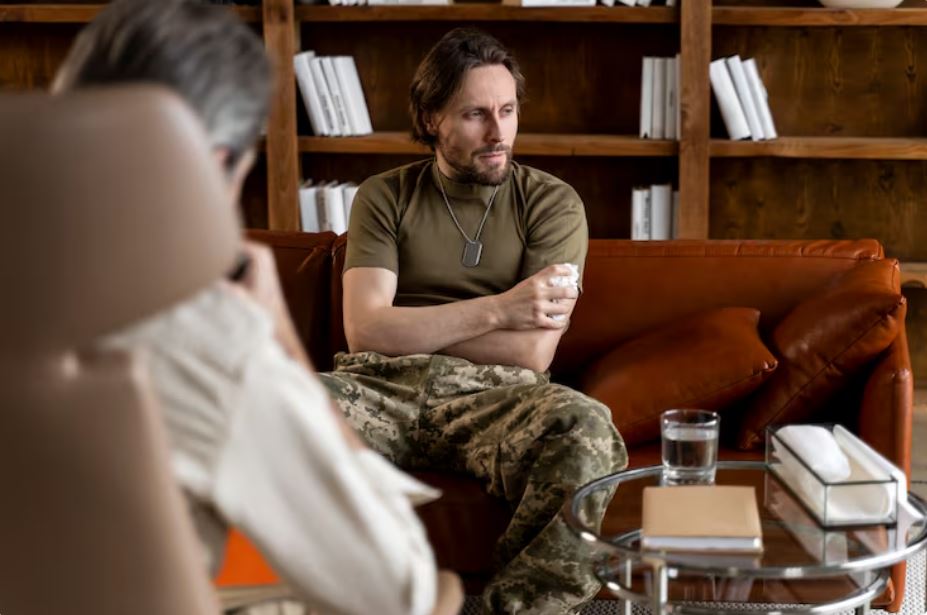
All of this is now landing in the therapy room, and the conventional model is under pressure. For many years, the prevalent method viewed trauma as something that was ingrained in a person, a neat diagnosis that could be treated with personal resources. The book on PTSD. However, it doesn’t fit neatly into that frame when a war you watched on a screen is layered over inherited grief and a political reality that hasn’t really ended. Some medical professionals, including scholars who have written about the Iranian case in particular, have contended that it is impossible to isolate the disordered person from the environment that continues to cause them distress. You’ve completely missed the point if you dismiss the fear as unreasonable.
There is another issue that is not sufficiently addressed. The therapists themselves are not exempt. Many have the same diaspora networks, news feeds, and occasionally ancestry as their clients. Burnout and secondary traumatic stress are subtly entering the field, and a weary clinician is of no use to anyone. Holding space for a grief you’re also carrying is an odd position to be in.
It appears that company is more beneficial than diagnosis. Instead of pathologizing suffering, let people identify the political form of their suffering. Creating trauma-informed communities that help people move from clinical isolation back toward one another through peer networks, cultural events, and narrative work. A man from inside Iran wrote about the difficult dilemma of either downplaying the truth, which felt like betrayal, or telling friends abroad the truth, which would crush them. There’s no simple solution to that. There might never be one.
However, it is becoming evident that the old map is incorrect. We continue to visualize suffering as something that remains stationary, contained within the site of the violence. It doesn’t. It spreads via family WhatsApp conversations, notifications at three in the morning, and the tales we tell our children. It is still genuinely unclear if the mental health systems designed for a slower, more limited type of pain can adjust quickly enough. The wounds, who are mostly anonymous, are already present and sitting in waiting rooms. We should at least stop referring to it as stress.