
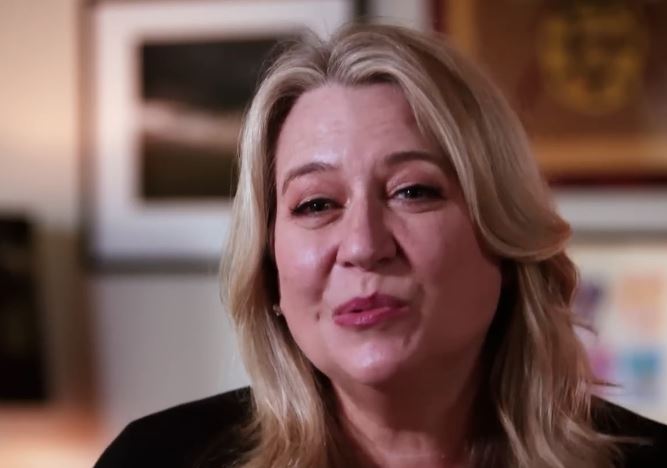
Many people were stopped in their tracks when Cheryl Strayed posted something on Instagram on April 30, 2026. Her husband Brian had been diagnosed with a serious, fatal illness, and she was canceling everything. There were no specifics, no diagnosis mentioned, just a quiet and heartbreaking statement. She asked people to think of her family. Within hours, tens of thousands of people responded to the post. Brian Lindstrom left fifteen days later.
On May 15, 2026, Lindstrom passed away from progressive supranuclear palsy, a rare neurodegenerative brain disease that impairs the cells responsible for basic body coordination, walking, balance, and eye movement. One of the reasons PSP is so confusing to experience is that it is not well known outside of neurology circles. It advances at its own speed, provides no effective therapy, and offers no practical means of slowing its progression. In a thoughtful and genuine Instagram post, Strayed wrote, “Brian Lindstrom died this morning the way he lived — with gentleness and courage, grace and gratitude for his beautiful life.” Carver and Bobbi, their kids, were with him when he passed away.
It’s difficult to avoid staring at the timeline for a while. A public diagnosis and death occurred two weeks apart. Most people do not associate that trajectory with neurodegenerative diseases, which are typically long, grinding processes measured in years. Given that PSP is notoriously difficult to diagnose in its early stages and is often mistaken for Parkinson’s disease, it’s possible Lindstrom had been experiencing symptoms for some time before the official diagnosis. Regardless of the internal chronology of his illness, what the public saw was an incredibly condensed final chapter, which made the loss seem even more sudden to the many readers who had followed Strayed’s work for years.
At the age of 65, Lindstrom had dedicated his professional life to producing documentaries about individuals who lived on the periphery of American society, such as those affected by addiction, incarceration, mental illness, and police brutality. On a $5,000 budget, he shot and edited Finding Normal, his first major motion picture. The death of a man with schizophrenia who passed away in Portland police custody was the subject of his 2013 film Alien Boy. Lost Angel: The Genius of Judee Sill, his last movie, debuted at DOCNYC and took home the Docnroll Film Festival’s Documentary of the Year award. In 2019, he and Strayed worked together directly to co-direct a short film for the New York Times. His body of work is focused and somber; it is the kind of filmography that takes decades to develop and consistently maintains a distinct point of view.
Strayed has written and spoken about loss frequently. Her memoir Wild and her advice columns collected in Tiny Beautiful Things made her one of the most-read American writers of the last 20 years. When Strayed was in her mid-twenties, her mother passed away from cancer. This event rocked her life for years and ultimately inspired the solo trek along the Pacific Crest Trail that became Wild. The fact that someone who has devoted so much of her public life to grieving is now dealing with the biggest personal loss of her adult life is a painful irony. When they first met in 1995, she wrote in her journal the following morning: “I met a man named Brian Lindstrom last night.” I believe he will be someone to me even though I have no idea who he is.”
Observing this from the outside—the April post, the silence, and the May announcement—carried the unique weight of something that happened too quickly for anyone to adequately prepare for, including, apparently, Strayed herself. In one of her posts, she mentioned that the upbeat clips from her podcast that are still showing up were from earlier, happier times. It seemed like only someone who was truly shocked would think to add that little clarification. Patients with progressive supranuclear palsy do not have much time to adapt to the condition. It gave them virtually nothing in this instance.