
Karl Deisseroth’s phone rang on a Monday in early October, shortly after midnight. He didn’t see it. His wife Michelle’s phone lit up a moment later with a number she knew to be from Sweden. “May we speak with Karl?” was the only query from the person on the other end. A few seconds went by. After that, Deisseroth claims that he was unable to form words for roughly thirty seconds. It’s a minor detail, but it reveals something: this man has spent decades developing tools to comprehend how the brain functions, and his own brain just stopped working at that precise moment.
Deisseroth and two German scientists, Peter Hegemann and Georg Nagel, were awarded the 2026 Nobel Prize in Physiology or Medicine for their contributions to the development of optogenetics, a method that uses light to turn on or off individual nerve cells inside a living brain. It sounds almost too tidy to be true. However, it is, and the consequences are profound. Schizophrenia, Parkinson’s, Alzheimer’s, epilepsy, and addiction are already being studied in animal models. This is no longer speculative science. Others are quickly expanding upon this foundation.
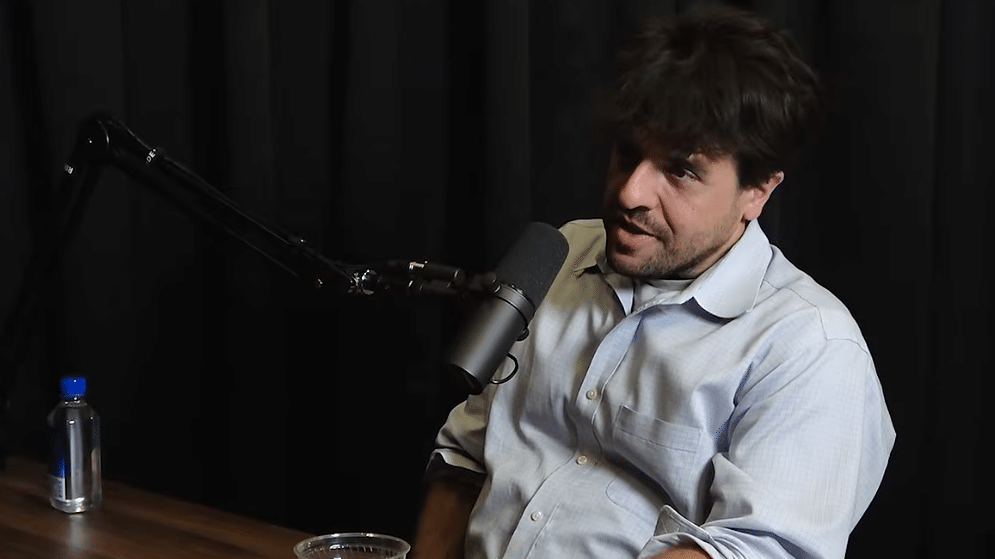
The beginning of the story is what makes it truly fascinating. Deisseroth started working at a psychiatric clinic while pursuing his training as a neurosurgeon. He continued to come across patients that he was unable to assist, not because he lacked the necessary skills but rather because the necessary equipment was unavailable. Despite centuries of medical research, the brain remained mostly opaque. He was not broken by that frustration. It completely rerouted him.
On the other side of the Atlantic, a biologist by the name of Peter Hegemann was posing a much more straightforward query: what is the half-millisecond reaction of the single-celled algae Chlamydomonas to light? He suspected that a single protein was serving as both an ion channel and a light absorber. He contacted Georg Nagel, who discovered channelrhodopsin-2, a light-sensitive protein capable of producing electrical impulses, by injecting the algal genes into frog eggs. They reported in 2003 that it was possible to introduce this protein into human cells. Deisseroth showed it functioning in rat nerve cells two years later. The method was known as optogenetics by 2006.
The fact that pond scum held the key to understanding the human brain has a certain poetic quality. Science has a way of doing that; the breakthrough was concealed somewhere no one had thought to look until someone did.
By all accounts, the early days in Hegemann’s lab were incredibly improvised. A researcher recalled that optical fibers were taped to microscopes after being salvaged from Christmas decorations. No one had the necessary equipment. Nobody knew exactly how it operated. Dima Kuzmin, a neurochemist, described it as “massively exciting.” Even though it appears disorganized from the outside, the best science often has that atmosphere—chaotic curiosity creating something enormous.
It’s difficult to ignore how long it took the Nobel committee to get here. Since the mid-2000s, optogenetics has been revolutionizing neuroscience labs all over the world. Deisseroth was the first guest on Huberman Lab’s podcast, and Andrew Huberman wrote online that this Nobel Prize was a question of “when, not if.” The European Commission stated that their research benefited from funding from Horizon Europe and suggested possible therapies for addiction, depression, and dementia. This call to Stockholm has been anticipated for years by the scientific community. It arrived while Deisseroth, who is said to be a night owl, was still awake.
It’s genuinely unclear what will happen next. Human clinical treatments are still in their infancy. Optogenetics enables researchers to address previously unsolvable questions about the brain, such as which particular neurons cause a given behavior, what goes wrong at the cellular level in a depressed brain, and why some people develop addictions while others do not. These are difficult questions. However, for the first time, there are instruments accurate enough to begin looking for solutions.
On the morning of the announcement, Nobel Committee member and professor Anna Wedell said, “This is a new era in neuroscience, but it’s only the beginning.” Karl Deisseroth may have said the same thing early on Monday morning while standing outside Stanford’s Clark Center. He simply didn’t have the right words yet.
FAQs
1. What did Karl Deisseroth win the Nobel Prize for?
He won for pioneering optogenetics, which controls brain cells using light.
2. Who shared the 2026 Nobel Prize in Physiology or Medicine with Deisseroth?
German scientists Peter Hegemann and Georg Nagel shared the prize with him.
3. Where did the key discovery behind optogenetics originally come from?
It came from studying how a single-celled alga reacts to light.
4. What diseases could optogenetics potentially help treat?
Researchers are targeting Alzheimer’s, Parkinson’s, schizophrenia, epilepsy, and addiction.
5. How much is the 2026 Nobel Prize in Physiology or Medicine worth?
The three laureates share 12 million Swedish crowns, roughly $1.2 million.