
Something about a disease that has plagued humanity for centuries suddenly gaining attention in a world that seemed to have moved on is unsettling. The pneumonic plague, not the bubonic variety that most people only dimly recall from middle school, is back in the spotlight, and the circumstances surrounding its resurgence seem uncannily similar to the kind of situation that public health officials secretly fear.
Unverified local Russian media reports state that on September 25, Darya Shipilova, a 28-year-old laboratory technician at the Irkutsk Anti-Plague Research Institute of Siberia and the Far East, unintentionally broke a test tube. She became sick in a matter of days. She passed away on October 2. Russian authorities listed pneumonia of “undetermined” origin as the cause. Undetermined is a word that is currently doing a great deal of work.
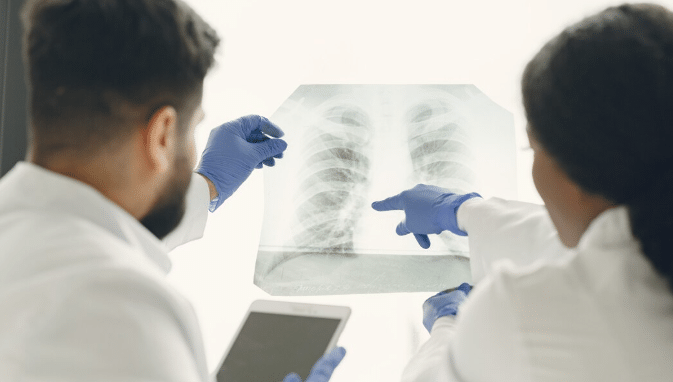
The way the pneumonic plague spreads and how quickly it kills are what distinguish it from its more well-known cousin, the bubonic plague. Pneumonic plague settles in the lungs and spreads through the air through breathing, coughing, and close contact, whereas bubonic plague is spread by flea bites and attacks the lymph nodes. According to the World Health Organization, it can be lethal within 18 to 24 hours of the onset of the illness if treatment is not received. That is not a grinding, slow illness. It’s a countdown.
Four days after the alleged accident, on September 29, Shipilova was reportedly admitted to a hospital in nearby Shelekhov. She passed away overnight between October 2 and 3. The inpatient ward of the hospital was put under quarantine. A number of departments completely halted admissions and discharges. Nearly 200 people who interacted with her are reportedly under medical observation, according to local reports, some of which come from the independent regional outlet Liudi Baikala. A staff member’s relative claims that the institute has been under lockdown since late September, forcing more than 60 employees to stay on the premises and sleep on chairs and floors. That figure may have increased since those reports were released.
Igor Kobsev, the regional governor of Russia, declared in public that Shipilova’s body did not contain any microorganisms connected to her line of work. The statement poses as many questions as it provides answers. Either she didn’t get the plague at all, or the results of the tests weren’t conclusive or weren’t fully disclosed. Although it is still working to confirm the information, the WHO acknowledged that it is in communication with Russian authorities. As of right now, there is still a significant and unsettling discrepancy between what officials are saying and what independent reporters on the ground are reporting.
Without raising any red flags, Washington seems to be taking this seriously. The United States is keeping a close eye on the situation, but Secretary of State Marco Rubio stated that there is “cause for focus,” not “cause for panic.” Speaking to reporters on October 5, President Trump described the pneumonic plague as “a rough disease” and added, in his trademark manner, that “the microbes have gotten stronger and stronger.” He also stated that the United States would assist Russia if necessary. The underlying worry about antibiotic resistance and pathogen evolution isn’t totally unfounded, but it’s the kind of comment that’s easy to brush off as improvised.
It is crucial to state unequivocally that antibiotic treatment is effective against pneumonic plague. When given early, common antibiotics for enterobacteria can be effective. The issue has always been the speed at which symptoms can appear and worsen before a diagnosis is even established, let alone verified. This is the reason this illness is so challenging to treat and so concerning in the past.
Here, it’s difficult to ignore the topography. Irkutsk is located over 3,000 miles from Moscow in a secluded area of eastern Siberia. Because the area has historically been a natural reservoir for Yersinia pestis in rodent populations, the institute there was created especially to study dangerous pathogens, including plague. This is not an arbitrary place. In order to prevent outbreaks from occurring elsewhere, research is conducted here. There’s irony in the possibility that something went wrong there.
The pneumonic plague never completely vanished. The world has just become adept at ignoring it. Every year, a few dozen cases appear worldwide, primarily in regions of Asia, Africa, and occasionally the western United States. The seven cases that occur each year in the United States alone—mostly from contact with infected animals in rural areas—usually go unreported by the media. The laboratory setting, a young scientist’s passing, and the institutional silence from Russian authorities—which makes verification all but impossible—are what have changed.
Information that hasn’t been made public will probably determine whether this grows into something bigger or subtly disappears from the news cycle. Perhaps the most honest thing anyone can say at this moment is that they are uncertain.
FAQs
1. What is pneumonic plague?
It’s a deadly lung infection caused by the bacterium Yersinia pestis.
2. How quickly can pneumonic plague kill?
Without treatment, it can prove fatal within 18 to 24 hours.
3. What triggered the current pneumonic plague scare?
A Russian lab worker allegedly broke a test tube containing the pathogen.
4. Can pneumonic plague be treated?
Yes, common antibiotics work effectively when administered early enough.
5. How is pneumonic plague different from bubonic plague?
It spreads through the air, not flea bites, and attacks the lungs.