
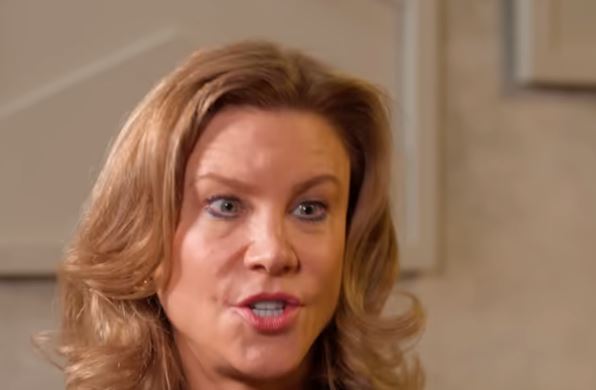
Before getting married in 2011, Amanda Staveley underwent the genetic test. Mehrdad Ghodoussi, the man she would marry, had just proposed to her, but before she accepted, she wanted to know the truth. Her mother, Lynne, suffered from Huntington’s disease, a hereditary disorder that gradually destroys the brain, has no known treatment, and is 50% likely to be passed down from parent to child. The results of the test were positive. She informed her future husband. Nevertheless, he proposed. That fact, which has gone unnoticed by the majority of the financial media that has covered Staveley over the years, reveals a lot about them both.
She was officially diagnosed in 2013, and in recent years, she has talked about it more candidly. Huntington’s disease is a degenerative, inherited, and presently incurable condition that causes the brain’s nerve cells to gradually deteriorate, eventually impairing mood, movement, and cognition. Staveley has talked about how a low dosage of an SSRI antidepressant helped manage some of the cognitive and emotional symptoms—a relatively modest intervention for something so important—and how the diagnosis changed her priorities without preventing her from doing much. She mediated one of the biggest and most closely watched football transactions in Premier League history in the years following her diagnosis.
The Saudi-led acquisition of Newcastle United in 2021 for £300 million was not an easy deal. In some of the more complicated areas of international finance, including sovereign wealth funds, Premier League regulation, and an ownership structure that sparked real ethical discussion, it required years of negotiation, legal challenge, and persistent pressure. It was primarily designed by Staveley. Walking into rooms where she was probably underestimated — a woman negotiating in spaces dominated by men with considerably more conventional credentials — and left with what she came for. Rather than slowing her down, the diagnosis might have given her a clearer understanding of time and what she wanted to do with it; however, this is her interpretation and not an external fact.
When she was embroiled in a High Court bankruptcy battle in 2024 over an alleged £36 million debt to Greek shipping magnate Victor Restis, the legal aspect of her illness became more controversial. Staveley asserted that her Huntington’s disease had been used against her during negotiations, impairing her ability to make decisions. The judge called that claim “puzzling,” pointing out that the parties’ WhatsApp messages at the time suggested a cordial business relationship. The case is still making its way through the legal system, posing questions about how a progressive neurological condition interacts with intricate contract negotiations carried out over years, some of which have no clear answers.
She received news in September 2025 that truly touched her. For the first time, Huntington’s disease was successfully treated in clinical trials thanks to gene-targeting treatments developed by scientists like Professor Sarah Tabrizi, which produced previously unheard-of outcomes. According to one account, Staveley heard it while strolling through a park. It is difficult to overstate the impact of that image: a woman who has been living for more than ten years with a diagnosis that required her to watch a clock count down, only to suddenly come across evidence that the clock may be slowed or stopped. Although Staveley’s stated optimism does not seem performative, it is still unclear how quickly such therapies might reach patients in general or what her own prognosis looks like given her current stage.
In the summer of 2024, she resigned from Newcastle United, calling the move “devastating” because it had become an integral part of who she was. Observing her career from the outside, it seems as though ambition and illness have truly become entwined for her, each giving shape to the other in ways that go beyond a straightforward tale of overcoming hardship. Her condition is Huntington’s. Additionally, she mediated a deal that transformed a city. At the same time, both statements are accurate.