
On September 7, 2026, Moshiri, one of the most recognizable faces on BBC News, disclosed that she has polycythemia vera, a rare blood cancer in which the bone marrow overproduces red blood cells, causing the blood to become dangerously thick.
She received the diagnosis in November 2024, so she had to spend almost two years managing the treatment, getting used to the exhaustion, and discreetly developing what she describes as an understanding of how the disease progresses through her life while anchoring one of the most demanding news programs on British television. Days of fourteen hours. Broadcasts in real time. Having to think fast and maintain composure under pressure.
Polycythemia vera does not make a big announcement. That’s part of the reason it’s so disturbing. In an odd way, the scariest version of the story comes from Moshiri herself, who claims she had hardly any symptoms. Her doctor’s meticulous routine blood tests were the only reason it was discovered. The diagnosis might have been made much later, after the thickened blood had already caused irreversible damage, with a different physician and a less attentive appointment. Deep vein thrombosis, heart attack, and stroke are all significantly increased risks associated with this condition. This type of diagnosis alters your perception of a headache.
Venesection, a procedure where blood is slowly extracted from the arm through a needle to lower its concentration, was the first treatment she received. Over the course of about five months, seven or eight sessions. They lasted about an hour each. Her iron levels drastically decreased, making her feel even more exhausted—a condition that sleep was unable to alleviate.
She compared the weariness to having your battery completely removed, describing it as almost physical in its strangeness. It’s not fatigue in the traditional sense. When you’re trying to explain to a nine-year-old why you can’t play right now, it’s important to understand that it’s an absence of energy rather than a depletion of it.
Observing this story unfold, it’s remarkable how much of it took place in plain sight without anyone outside of her immediate circle being aware of it. To cover the US-Israel war with Iran, she took a plane to Qatar. From the Vatican, she anchored.
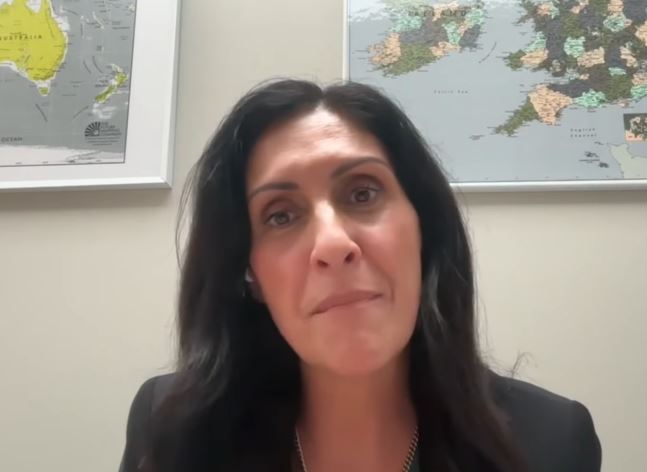
She went to Greenland. All the while controlling her medication, keeping an eye on her blood pressure, and adapting to what she now recognizes as a lifelong renegotiation of her physical boundaries. She has stated that she is not the same person as she was two years ago. It may not seem like much at first, but that sentence has a lot of weight.
There has been a noticeable improvement thanks to immunotherapy, interferon, which is available through the NHS. She had only required one venesection in the fifteen months before making her public declaration. She said that the last few months have been the best she has felt since the diagnosis, which is a significant decrease from the monthly rhythm of the early treatment period. Although PV can occasionally progress to myelofibrosis or even acute myeloid leukemia, the prognosis is still uncertain. Figuring out what works. Maintaining control over it.
She may have decided to speak at this particular moment in part because she feels secure enough to do so without making the story more terrifying than it needs to be. Announcing a diagnosis in a crisis is not the same as announcing it from a position of hard-won equilibrium.
The latter takes longer to reach, but it usually results in more beneficial public discussions about what it’s really like to live with a chronic blood cancer, what the NHS can provide, and how Blood Cancer UK has described PV as a part of a larger landscape of conditions that too frequently go unnoticed because the symptoms are ambiguous and easy to explain away. Blood cancer is the third leading cause of cancer-related deaths and the fifth most common cancer in the UK, but little is known about it.
According to Moshiri, receiving treatment is preferable to passing away. In that specific way, people grow when they’ve had enough time to sit with a difficult truth and stop flinching at it, she stated almost casually. Hearing that is disarming. Silently, it’s precisely the kind of statement that draws attention.