
For the past five years, Christina Applegate has rebuilt her identity around a diagnosis—something that most people only do once. She declared her multiple sclerosis to the world. She started speaking out for it. She penned a memoir. She took infusions, sat in doctors’ offices, and described her illness in interviews with the kind of worn-out clarity that only comes from spending years inside something. Then, at some point recently, a physician entered her room and congratulated her on not having multiple sclerosis.
Applegate talked about that moment in tears on her podcast MeSsy this week. It’s not the kind of epiphany that is met with relief. It was accompanied by bewilderment, sadness, and an awkward question that no one seems to be able to resolve just yet: what specifically has been making her life so challenging if it wasn’t MS?
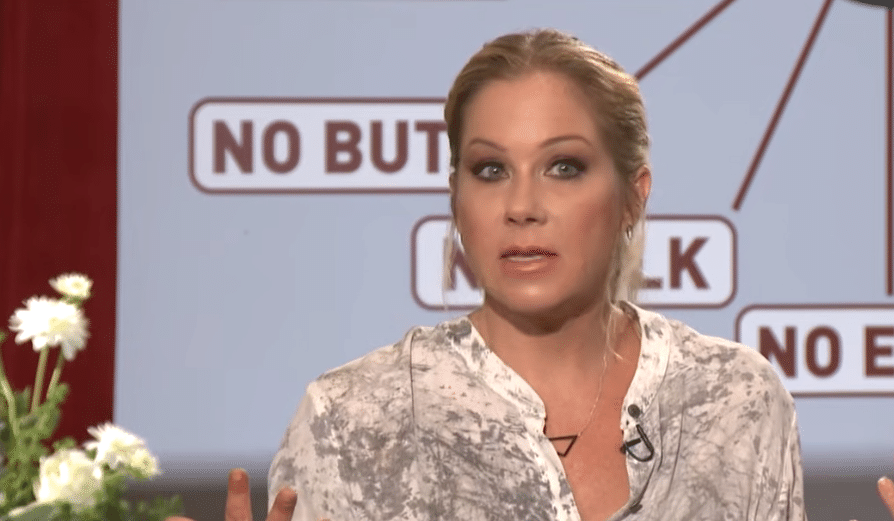
In August 2021, Applegate, 54, received his initial diagnosis. Before then, the tingling, numbness, and mobility issues had been developing for a while. She had been quietly suffering for some time when the doctors showed her brain scan pictures and verified that she had multiple sclerosis. Even though the diagnosis was painful, it gave her something to cling to. A moniker for what had turned her life upside down. A group of individuals who knew what that name meant.
Given what happened next, it’s possible that she clung to that name more than most. Alongside Jamie-Lynn Sigler, who has been dealing with relapsing MS since 2016, she co-hosted the MeSsy podcast, making her one of the most well-known faces of MS awareness in the nation.
The two women discussed the effects of chronic illness on a person’s body, identity, and daily routine in an honest and occasionally candid manner. Their viewership increased. They were remarkably honest. Additionally, Applegate leaned toward advocacy in the same way that people do when they want their suffering to have purpose.
Then, a few years ago, something changed. To observe how her body reacted, her doctor recommended discontinuing the infusion treatments, which are standard therapy for multiple sclerosis. In neurology, such pauses are common and can reveal a lot about how effective a treatment is. But what came next was out of the ordinary. When treatment was stopped, her body did not respond as it usually does for MS patients. Physicians noticed, investigated further, and ultimately came to the conclusion that the initial diagnosis was incorrect.
This week, Dr. Marwa Kaisey, a neurologist at Cedars-Sinai, joined Applegate on the podcast and noted that misdiagnoses of multiple sclerosis (MS) are far more common than most people realize—nearly one in five people with an MS diagnosis may not actually have the disease. There isn’t a single conclusive test for the condition.
A checklist of criteria rather than a single, unambiguous marker is used for diagnosis, which increases the likelihood of error more frequently than the medical community is willing to acknowledge in public. That’s a startling figure that begs the question of how many people are secretly living with the wrong diagnosis, taking the wrong drugs, and basing their entire identity on a false response.
However, Applegate does not consider this to be a statistic. She expressed that she felt like she had let people down, which is an amazing feeling when you think about it for a little while. She didn’t deceive anyone. She described her experience as accurately as she could. However, just because a doctor modifies the paperwork doesn’t mean that five years of advocacy and creating an identity around a disease will end.
The misdiagnosis itself doesn’t seem to be the most difficult aspect of all of this. It’s because she’s still ill. She still travels to appointments in a wheelchair. She still finds it difficult to move from a parking lot to a building on foot. The cause of her symptoms hasn’t gone away; it’s just unidentified at this point, and the search for the true cause seems to be just getting started.
Observing this from the outside, there is something subtly unsettling about a medical system that permitted this to go on for five years. Her condition deteriorated while she received treatment for a disease she didn’t have. According to Dr. Michael Kornberg of Johns Hopkins, a diagnosis becomes an integral part of an individual’s identity. Removing it is not easy. Nothing is fixed by it.
According to Applegate, she’s starting over. When you consider what the past five years actually entailed—the infusions, the memoir, the advocacy, the public grief, the podcast—that phrase takes on a different meaning. After all of that, square one at 54 is not a minor setback. Christina Applegate is genuinely uncertain about what lies ahead for her. And that’s the story worth listening to more than the actual misdiagnosis.
FAQs
1. When was Christina Applegate first diagnosed with MS?
She was diagnosed in August 2021 after experiencing symptoms for some time.
2. How did doctors discover the MS diagnosis was wrong?
Her body didn’t respond as expected when infusion treatments were paused.
3. Does Christina Applegate no longer have any illness?
She remains seriously ill — doctors simply don’t yet know the real cause.
4. How common are MS misdiagnoses?
Nearly one in five MS patients may actually have a different condition.
5. What did Applegate do after her 2021 MS diagnosis?
She became a prominent MS advocate and co-hosted a podcast about the disease.