
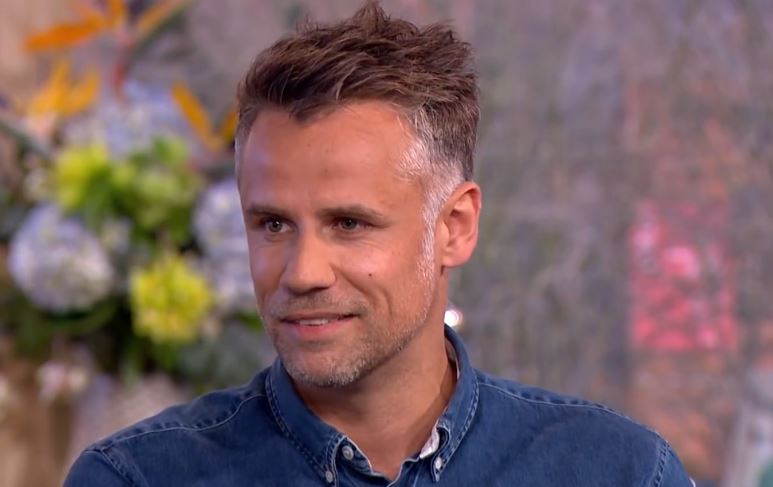
The picture of a man joking on social media from a hospital bed about the NHS’s 70th birthday, just hours before medical professionals would have to run him down a hallway at midnight with a needle stuck in his chest, is subtly unnerving. That’s exactly what happened to Richard Bacon in early July 2018—a series of events so abrupt and severe that the time between a happy tweet and a potentially fatal coma was measured in hours rather than days.
On a flight from Los Angeles to Britain, Bacon fell ill. He was treated in midair before exiting the aircraft in a wheelchair and heading straight to the hospital. At first, he was well enough to post a humorous comment about wanting to attend the NHS’s birthday celebration. After that, his condition rapidly worsened, and it was his sister Juliet who posted pictures from the hospital on Instagram to show how serious the situation was. Only a sibling’s Instagram story informed the public that the humorous man who had been tweeting birthday wishes had ended up in critical care.
Once at Lewisham Hospital, the medical response happened remarkably quickly. Doctors put him in a life-saving, six-day coma within ninety minutes of his arrival, complaining of dyspnea. You remember that particular detail. 90 minutes. Regardless of what was going on inside his lungs, the Lewisham clinicians were able to recognize the symptoms quickly enough to take action before the situation became totally irreversible. Although no conclusive cause was ever made public, the illness was later described as an unidentified double chest infection, initially thought to be pneumonia. With his trademark dark humor, he would later recall that the midnight run to the intensive care unit felt “a bit like Pulp Fiction.”
His physicians weren’t quietly hopeful. Bacon’s consultant would subsequently inform him that upon his arrival, all of his vital signs were appalling; his blood oxygen level fell to 58, he became blue, and the medical staff genuinely anticipated that he would experience cardiac arrest and pass away. Without a word, the resuscitation apparatus was prepared. It was the kind of clinical moment where words lose their meaning and experience takes over. One of the medications they had given started to take effect somewhere in that hallway. He didn’t make an arrest. He survived. Christine, his mother, told her local newspaper that at one point the family genuinely thought they might lose him. Christine had hardly left her son’s side all week.
It was disorienting in and of itself to wake up nine or ten days after going under. For a man in his early forties who had, by all accounts, been physically active, Bacon leaving the hospital with his wife Rebecca while using a frame was a sobering sight. The side effects of the coma medications had been hallucinogenic. Just ten days after being discharged, he pitched a game show to BBC commissioning editors while still trying to conceal a tracheotomy wound under his shirt. That detail, the man sitting in a development meeting with a new surgical dressing under his collar, trying to convince people he was capable of hosting television, is both ridiculous and genuinely touching.
Perhaps more than anything else, the illness forced a reckoning. That same year, at the age of 42, Bacon received an ADHD diagnosis, which reframed a lot of his previous behavior, including the chaos, restlessness, and alcohol-related addictive patterns he had been candid about. The coma only occurred a few months after the diagnosis. Two revelations may arrive so close together — one about his neurological wiring, the other about his mortality — had a compounding effect that a single event alone might not have produced. Since then, he has talked about thinking about death almost every day. Not morbidly, or at least not exclusively morbidly—more in the sense that near-misses tend to permanently change the nature of everyday life.
In July 2023, on the fifth anniversary of the emergency, Bacon publicly thanked the approximately forty Lewisham staff members who had worked to keep him alive by posting a picture of himself in that hospital bed. It has never seemed theatrical to express gratitude. If anything, it seems like something he continues to struggle with, revisiting it in public year after year as if the incident still needs to be processed. In the end, Richard Bacon’s illness reveals more about contingency than it does about medicine. He entered the correct hospital. The right people were working for the NHS. Eventually, the medications were effective. It remains to be seen if he truly believes in his good fortune.