
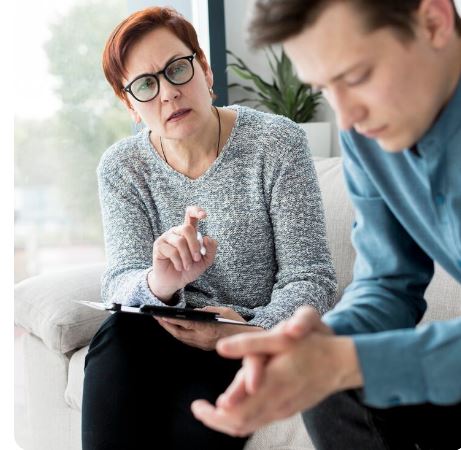
Short-term therapy in the UK often begins with a single search and a hesitant email. Most people approach it with one big question: “How much is this going to cost me?” Like most things in modern life, the answer is contingent upon the time, place, and person you are speaking to.
A private therapy session typically costs between fifty and one hundred pounds. That number rises rapidly in London, where many experts charge between £80 and £150. An expert in high-demand modalities or trauma may even surpass that. But step outside the capital, or switch to an online format, and those numbers shift—sometimes drastically.
| Aspect | Insight |
|---|---|
| Typical Cost Per Session | £40 to £100 for most private therapists |
| London Rates | £80 to £150+ per session |
| Regional Rates | £40 to £90, often lower outside major cities |
| Low-Cost Options | £15 to £40 through trainees, charities, and clinics |
| Initial Assessments | Sometimes charged separately (£30 to £70) |
| Wait Time | Often under 2 weeks, sometimes immediate |
| Concessions | Many therapists offer reduced fees for students, low-income clients |
| Online Sessions | Usually 10–20% cheaper than in-person |
In places like Newcastle or Sheffield, it’s not unusual to find accredited therapists offering sessions at £45. Due to the reduced overhead and increased flexibility that remote therapy offers, the cost may decrease even more when it is done online. This difference, although small per session, adds up quickly across several weeks.
Trainee therapists, often nearing the end of their qualifications, charge between £15 and £35. They work under close clinical supervision, and their sessions can be particularly structured and thoughtfully guided. For budget-conscious individuals, this route is remarkably effective, especially when the goal is to address a specific issue within a defined timeframe.
Charities and community services continue to be a vital part of the therapy landscape. Organisations like Mind and Cruse Bereavement Support offer short-term therapy at reduced rates, particularly for those facing life transitions, grief, or anxiety. They are worth the inquiry even though they are frequently full and there may be a few weeks’ wait.
What makes short-term therapy notably appealing is its purpose. It is not intended to heal decades’ worth of trauma in ten weeks. Instead, it focuses on practical goals—processing a loss, adjusting to change, or managing symptoms during a period of stress.
Many therapists offer “short-term plans” of 6 to 12 sessions, often structured around cognitive behavioural therapy (CBT) or solution-focused methods. These formats are highly efficient and can deliver tangible results in a relatively short span.
I once talked to a woman in Edinburgh who paid £270 for a six-session package. “I just needed help getting through a hard season,” she told me. “It was cheaper than a weekend trip, and honestly, more useful.” Her sessions were with a psychotherapist who ran a private clinic part-time and kept three sliding-scale spots open each week.
That detail stayed with me. Sliding-scale fees—quietly offered by many professionals—aren’t always advertised but are commonly available. Clients who are on lower incomes, unemployed, or in full-time education can often negotiate a rate that fits their situation, provided they ask clearly and respectfully.
Some therapists charge a one-time assessment fee, often between £30 and £70, to determine fit and establish goals. Sometimes, especially in smaller practices or online-only setups, this expense is included in the first session.
Online therapy has not only expanded access but also allowed for regional cost-matching. A therapist based in Cornwall, for instance, might work with clients from Glasgow or Birmingham at a flat rate of £50—a price that remains surprisingly affordable when compared to traditional metropolitan fees.
Many services now provide brief discovery calls—15 or 20-minute conversations to discuss what’s needed and whether the therapist’s approach fits with your goals—for individuals who are unsure. It’s a small but meaningful shift, one that adds a layer of transparency to a process that’s often daunting.
Short-term therapy also appeals because of its simplicity. You set a goal. You meet once a week. You consider. After that, you can choose to stop or go on. It is especially appropriate for people attempting therapy for the first time because it doesn’t require a long-term financial commitment.
Private therapy has long carried a reputation for exclusivity. But that image no longer matches the current landscape. The rise of remote therapy, the flexibility of part-time practices, and the presence of low-cost training clinics have reshaped what’s available—and to whom.
Over the past five years, demand has grown, but so has access. Independent therapists have responded by offering creative packages, from six-week “mental health MOTs” to structured goal-focused sessions for specific concerns.
What surprised me most while researching this piece was not just the range of prices, but the willingness among many professionals to make their services accessible. At the bottom of one Bristol therapist’s website was a note that read, “Message me if my rate is out of reach.” I could be of assistance.
For people waiting months for NHS counselling, a short-term private option—even just for a few weeks—can be a bridge to stability. To be powerful, something doesn’t have to be flawless.
Six sessions at £60 come to £360. That’s about what many spend annually on a gym they barely use. It’s roughly the price of a weekend trip, a new phone, or a few dinners out. But for many, it offers clarity, momentum, and relief.
In the coming years, as therapy continues to evolve, the notion of short-term support may become not only more common—but the new entry point into longer-term wellbeing.
The value of short-term private therapy lies not just in the hour itself, but in what it unlocks after you leave the room.