
Sitting in a coffee shop in any major city these days, the first thing you notice is how frequently someone looks at their phone, scowls, and then stealthily places it face down on the table. They occasionally release their breath. They don’t all the time. I spoke with a barista at a strip-mall café last month, and she told me that she witnesses the same small ritual of dread every morning before nine. Texts are not being checked by people. The futures are being examined.
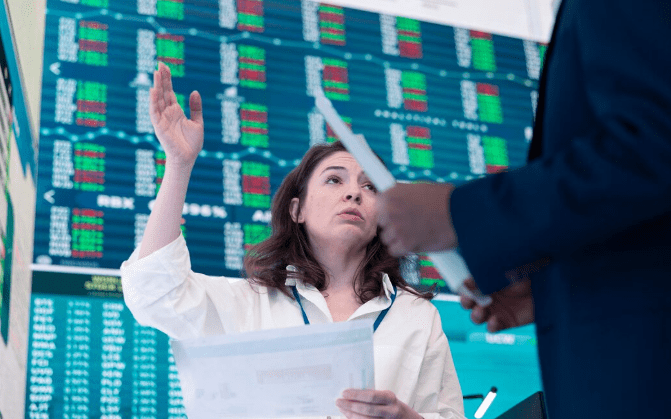
The way the general public interacts with markets is changing. The boundaries that formerly divided Wall Street workers from educators, nurses, and independent designers are now almost nonexistent. The volatility that once existed in trading pits now exists in pockets because every phone has a brokerage app. It turns out that the body is unable to distinguish between a portfolio that drops four percent before lunch and a tiger in the grass.
In their intake forms, therapists have begun to notice this. Psychologist Frank Murtha, who has worked with traders for many years, has long maintained that the emotional reactions that markets elicit are indistinguishable from basic fear. The fact that clients who don’t even work in finance are exhibiting these reactions is novel. A teacher who has an index fund. A young couple with a Roth IRA. The level of fear is not commensurate with exposure. Seldom is it.
Speaking with people gives me the impression that the fear isn’t actually related to money. It’s about a hazy, cinematic certainty that something massive is going to collapse. Using Robert Shiller’s long-running confidence surveys, Yale researchers have discovered that average investors believe there is a much greater chance of a catastrophic crash than history would indicate. The data does not support the numbers that people report feeling. What academics refer to as “negative affect”—what the rest of us call anxiety—fills the space between the two.
It’s difficult to ignore how much of this anxiety is nourished—almost tenderly—by the platforms themselves. Send out alerts when there is a sudden decline. On a watchlist, red candles flash. Collapse by Tuesday is predicted in Reddit threads. Emotionally charged language in financial news has a quantifiable impact on stock prices, according to a 2021 study by Hasan, Kumar, and Taffler. There is a feedback loop. Somewhere in the middle, a 34-year-old Lahore resident awakens at three in the morning with a clenched jaw, certain that something horrible is happening in Tokyo. We feel because we read, and we read because we feel.
Any clinician is familiar with the physical symptoms. tight chest. shallow breathing. The peculiar detachment of gazing at a figure that symbolizes years of labor. The degree to which anxiety is now socially acceptable is less well-known. Nowadays, people talk about it as freely as they used to talk about back pain or sleeplessness, as if market anxiety were just another contemporary ailment like screen fatigue.
It’s still unclear if this is a structural aspect of mass retail investing or a passing phase. People have always been afraid of markets; the intimacy has changed. If the crash occurs, it will happen on the same device that people use to text their mothers. Older generations of investors never had to deal with the nervous system’s reaction to that closeness. You get the impression that we’re just starting to comprehend the cost as you watch this play out.