
I recently learned from a pediatrician in a quiet neighborhood outside of Minneapolis that she can now almost exactly predict when a parent will bring in a child for what she refers to as “the ask.” It typically follows a report card, an incident on the playground, a period of insomnia, or a teacher’s casual remark. The parents take a seat, appear a little ashamed, and say something along the lines of, “I think we want to get him evaluated.” That sentence might have appeared two or three times a month ten years ago, she said. It happens a few times a week now. Her clinic’s waiting list for a comprehensive psychological evaluation extends into the upcoming academic year.
This is not the story of just one clinic. Parents are actively seeking mental health evaluations for their children at rates that were nearly unimaginable ten years ago in the United States, the United Kingdom, and an increasingly large portion of Europe and Asia. Research consistently demonstrates that 75% of lifetime mental illnesses start before the age of 18, and it is estimated that 1 in 7 children have a diagnosable mental health condition. The numbers haven’t really changed; they’ve been known for years in quiet academic circles. Parents, who were previously hesitant to label their children, are now spearheading the evaluation process.
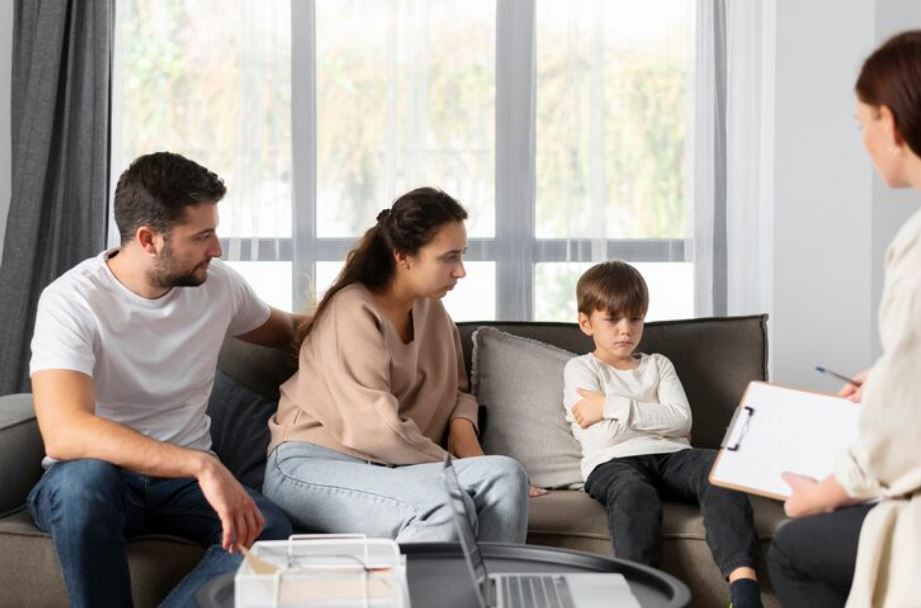
There are multiple forces coming together at once. Only now is the length of the pandemic’s tail accurately measured. No amount of screen-time hygiene seems to address the delayed social skills, increased anxiety, and irregular sleep patterns that children who spent their early years alone, nervous, or disengaged from peers are exhibiting in clinics. Many parents feel that it is now more difficult to recognize the typical indicators of childhood, such as playground laughter, school involvement, and friendships. Parents no longer assume that when a child faces difficulties, “he’ll grow out of it.” They are searching for answers more quickly, sometimes with a great deal of urgency.
| Subject | Details |
|---|---|
| Focus | Growing parental demand for child mental health evaluations |
| Prevalence of Child Mental Health Disorders | Approximately 1 in 7 children globally |
| Age at Which Most Mental Illnesses Begin | 75% start before age 18 |
| Increase in Youth Mental Health Problems | Up roughly 50% over the past three years (UK data) |
| Estimated Access to Child Intervention | Only around 30% of children in need receive care |
| Parental Screening Support | 64.9% support annual mental health screenings |
| Preferred Review Setting | 89.7% want to discuss results with medical professionals |
| Most Common Screening Areas | Anxiety, depression, ADHD, sleep, behavioral concerns |
| Key Reference Body | US Centers for Disease Control and Prevention |
| Cultural Shift Driving Demand | Reduced stigma, early intervention awareness, post-COVID concerns |
Here, social media has also played a complicated role. On the one hand, it has introduced millions of parents to terms related to child development, such as attachment, executive function, ADHD, and sensory processing. However, it has transformed clinical terms into social currency, which can occasionally lead to a type of anticipatory anxiety in which every peculiarity appears to be diagnosable. I’ve spoken with clinicians who have described a dual phenomenon: parents who arrive feeling both more overwhelmed and more informed. Before scheduling her son’s evaluation, a mother in Austin told me she had watched almost forty TikTok videos about autism. When the evaluation finally arrived, it revealed nothing particularly noteworthy—just a timid child in need of patience and a more regular sleep schedule. She sobbed with both relief and fatigue.
Additionally, a more subdued structural change is underway. In a way that private therapy never quite could, pediatricians are increasingly incorporating mental health screenings into routine checkups, normalizing the conversation. A JAMA Network for 2023 Nearly 65% of parents supported yearly mental health screenings for their children, and nearly 90% preferred to discuss the results with a qualified professional rather than rely on self-help resources, according to an open study of nearly 1,000 parents in 19 countries. In the early 2000s, those figures would have seemed unrealistic. Additionally, schools that were previously hesitant to engage in emotional assessment are now actively collaborating with counselors to identify kids who may require evaluation before their behavior in the classroom escalates into a crisis.
Naturally, access continues to be this story’s uncomfortable gap. Less than one-third of children who require mental health assistance actually get it in the majority of nations. Waitlists can last for months, insurance coverage is frequently inconsistent, and assessments can cost thousands of dollars. Parents in low-income or rural neighborhoods must navigate a system that makes assumptions about resources that many families lack. It’s possible that the next wave of advancement will rely more on making the actual path to care less daunting, costly, and slow than on raising awareness, which is already widespread.
It’s difficult to ignore how much the cultural register surrounding parenting has changed as you watch this develop. A generation was brought up believing that therapy was a last resort, that children were resilient, and that emotions should be handled in private. Many of today’s parents, who experienced their own unresolved struggles as children, appear committed to avoiding that pattern. It’s reasonable to wonder if they’re sometimes overcorrecting. However, the overall trend toward early identification, early assistance, and a more compassionate language regarding childhood challenges seems like a shift worth considering.