
The first thing you notice about Brandt Snedeker’s story is how subtly it developed. There were no tearful announcements, dramatic press conferences, or farewell tours. After the Fortinet Challenge in September 2022, he just stopped playing, and most fans were unaware of the reason. That kind of silence typically indicates something serious for a former FedEx Cup champion and nine-time PGA Tour winner. It meant something practically unheard of for him.
Manubrium joint instability is the clinical term for the condition, but it doesn’t adequately describe what was going on inside his chest. The joint, which is located at the top of the sternum, rarely causes issues for most people unless they have been in a serious auto accident. Such an accident had not happened to Snedeker. Since he was young, all he had done was swing a golf club thousands upon thousands of times. That has an almost poetic quality. His body was gradually being torn apart by the same motion that helped launch his career.
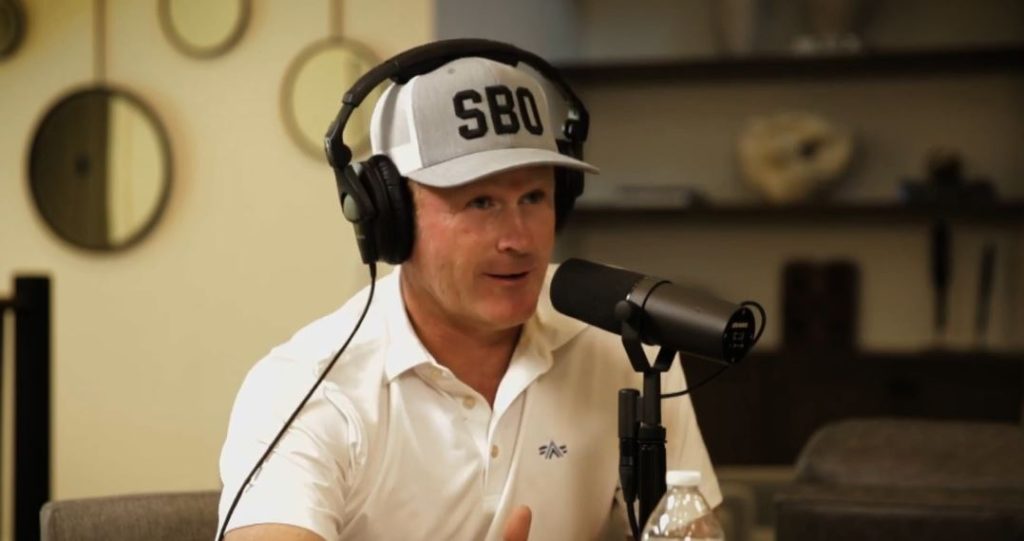
He had been experiencing the pain since 2016, by the time medical professionals gave it a name. For seven years. He experimented with anti-inflammatory drugs, painkillers, and standard cocktails. He took a plane to South America to receive stem cell treatment, which seems like a detail that is often overlooked but shouldn’t be. We are discussing a degree of desperation like that. To continue doing what he loves, a professional athlete searches outside the nation and outside of conventional medicine.
The case is peculiar because it is so uncommon. According to Snedeker, his case was the only one that wasn’t brought on by trauma out of perhaps twelve cases that had been reported worldwide in the preceding fifteen years. Dr. Burton Elrod, the surgeon, had done the procedure precisely once before, on the late Tennessee Titans quarterback Steve McNair. That sample size isn’t particularly reassuring. By all accounts, Elrod was reluctant to repeat the experience. The alternatives included screws, rods, and metal plates. None of that was what Snedeker desired. It required persuasion.
When you hear him describe the procedure, it sounds almost medieval. They removed a thumb-sized chunk of bone from his hip. They made an incision in his sternum, removed tiny pieces from both the upper and lower halves, and then packed the extracted bone between them. Snedeker likened it to a Lego piece that snaps into position. His body took care of the rest, with bone putty holding it together.
He was unable to do much for four months. It wasn’t until April 1, 2023, that he picked up a club. He was preparing for Jack Nicklaus’s Memorial Tournament by late May, telling reporters that he preferred to test himself in a challenging environment rather than ease back in. That decision has a certain Snedeker-like stubbornness to it. He has consistently putted confidently, played quickly, and presented himself as someone who doesn’t overthink things.
The long-term durability of the body is still up for debate. He recently won his tenth career championship, the Myrtle Beach Classic, indicating that the surgery was successful. However, the body records its experiences. In a sternum that had to be broken to be saved, it’s difficult not to wonder how many more swings are left.