
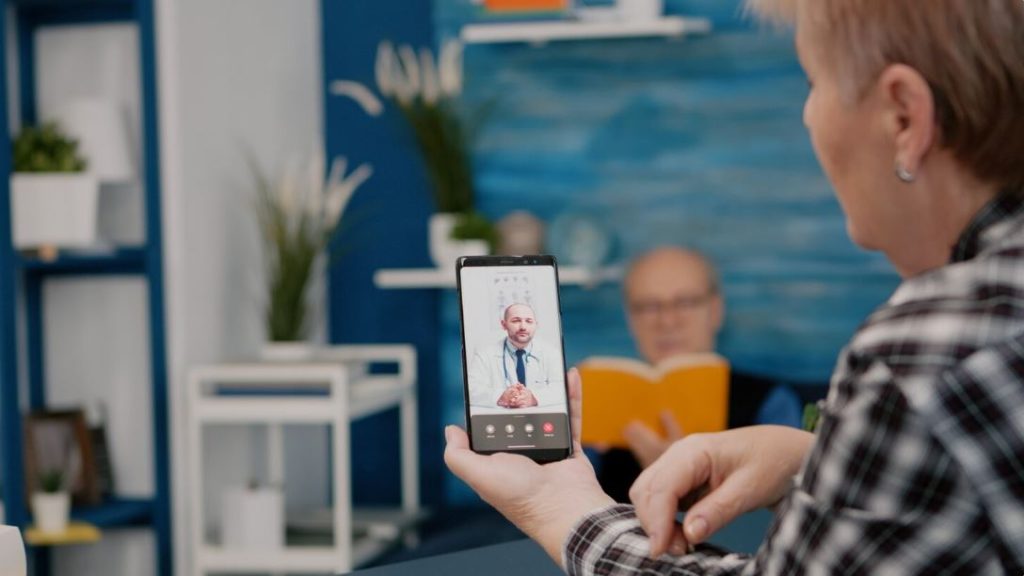
The patient is twenty-four years old. She settles in, says she’s fairly certain she has ADHD, and opens her phone before she’s completely seated. It’s with her partner. She has been reading. This sentence has become a sort of opening ritual for the clinician across from her, who has heard it so often that it hardly registers as new information. The important thing to note is that the discussion that ensues is no longer a diagnosis. A negotiation is taking place.
Even though that shift is tiny, it completely alters the hour. For the majority of the modern history of psychiatry, the physician provided the framework while the patient described symptoms. These days, the fully assembled framework—often with a hashtag attached—arrives first. ADHD and autism are the most common “prepackaged” diagnoses that young adults and teenagers receive, according to psychiatrists. The role of the clinician has subtly changed. More untangling, less investigation.
Since the simple explanation—children duped by the internet—is too neat, it is important to be open about the reasons behind this. Many of these patients are not gullible. They’re looking. Surprisingly, there are no specific guidelines for diagnosing ADHD in adults in the United States. For decades, the disorder was actually underdiagnosed, particularly in women who were perceived as disorganized or scattered rather than impaired. Therefore, it can be genuine when a video helps someone who has been confused for years feel seen. The issue wasn’t created by the platform. It simply fed it.
However, the temperament of the feed is the problem. A clip that simplifies a complex condition into five relatable characteristics will always travel more quickly than a cautious one because algorithms reward emotion rather than accuracy. If you believe the studies, the numbers are startling, and they have begun to mount. Less than half of the top 100 #ADHD videos on TikTok that two licensed psychologists examined matched the diagnostic standards that mental health practitioners actually employ. Content with autism performs worse. Interestingly, none of those creators were licensed psychologists, psychiatrists, or physicians, and only about 20% of them disclosed any credentials. According to the same study, over half had a product to sell, such as a coaching package, a fidget tool, or a workbook.
Beneath all of that, there’s a more subdued discovery that sticks with me. Participants who had previously self-diagnosed were the ones who watched and trusted the videos the most in a study involving over 800 undergraduates. Those who self-diagnosed felt more confident about having ADHD after watching, while those who had been doubtful were less certain. The information is not merely informative. It draws people further into the beliefs they initially held. An echo, growing louder.
You can sense that the clinic is getting louder. These days, appointments are longer, in part because doctors spend portions of the hour carefully reassuring patients about a self-diagnosis they have been dealing with for months. Additionally, things can get tense when the expert assessment comes out in a way that TikTok didn’t anticipate. Anguish. opposition. Occasionally, doctors refer to this process as “diagnosis shopping”—looking for someone who will validate the diagnosis that already feels familiar. The platform never had to do the delicate work of telling someone that their suffering is real but the name they’ve given it isn’t quite right. It simply gave out the name.
Some of the most knowledgeable individuals in the field are careful to state that they do not place the blame on the patients. Social media has made neurodiversity visible, but visibility is not the same as understanding, according to one clinician. It takes a lot of effort to make that distinction. Because their boundaries blur into everyday life, such as stress, burnout, grief, or just plain anxiety, ADHD and autism are particularly easy to oversimplify. This is precisely what makes an incorrect video seem so convincing.
Additionally, there is currently a countercurrent—almost a backlash—from members of the same generation. Gen Z artists have begun recording their “undiagnosis”—the public dismantling of a label they had taken on and subsequently abandoned. This self-correction occurs on the same stage that created the confusion, which is an odd but encouraging little development. Eventually, the instruments that disseminate the noise may also carry the corrections.
Whether clinics adjust to this or simply absorb the strain is still up for debate. Therapists were already in short supply, waiting lists were already lengthy, and an influx of people seeking assistance based in part on false information runs the risk of displacing those who are truly in crisis. No one has figured out that part. As this develops, it seems as though psychiatry is being asked to perform a task for which it was never designed: to compete in real time with a medium that is far more adept at making people feel understood than at being correct.
Perhaps the solution is to appear in the feed instead of fighting it. The most sensible voices consistently come to the same conclusion: trustworthy individuals utilizing the same instruments that create confusion are essential to the future of mental health literacy. Curiosity was never the enemy. It was quiet, and at last the silence is being broken, though not always by the appropriate voices.