
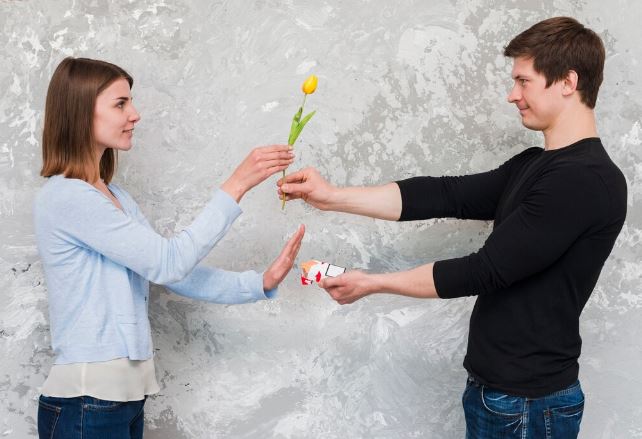
A woman in her early thirties is in a small Brooklyn café on a rainy Tuesday night when she makes her sixth phone refresh. A straightforward message sent two hours ago has not received a response from her date. The foam has collapsed into the dark liquid, and the cappuccino before her has gone cold. She maintains that she is simply “bad at waiting.” However, it’s difficult not to think that something older is stirring as you watch her jaw tighten.
According to attachment theory, which was developed by Mary Ainsworth and pioneered by John Bowlby, the emotional ties we form during infancy subtly influence how we handle intimacy in later years. The concept sounds neat in textbooks: secure attachment results from responsive caregiving, while insecurity results from fear or inconsistency. It’s messier in real life, though. Individuals don’t go around calling themselves avoidant or anxious. They say things like “I’m fiercely independent” or “I just care too much.”
| Category | Details |
|---|---|
| Founders of Attachment Theory | John Bowlby and Mary Ainsworth |
| Era of Development | 1950s–1970s |
| Core Concept | Early caregiver bonds form an “internal working model” for adult relationships |
| Key Contribution | The “Strange Situation” study (Ainsworth) |
| Modern Relevance | Adult romantic attachment research |
| Reference Website | https://www.helpguide.org/articles/relationships-communication/attachment-and-adult-relationships.htm |
You might still be guided by the attachment style you formed before you were able to talk, which functions like background software and doesn’t show up until a relationship triggers it.
Consider the anxious-preoccupied approach. It frequently develops as a result of uneven caregiving—at times tender, at other times preoccupied. As adults, these people often seek out indications of withdrawal and yearn for intimacy. A text message that is delayed becomes proof. A tone that is neutral seems menacing. You can see the hypervigilance flicker in their eyes when you sit across from someone like this during a small argument, as though they’re preparing for an abandonment that hasn’t really happened. It seems as though they are deeply in love, but their love is rooted in fear.
The dismissive-avoidant pattern is positioned on the opposite side. It teaches a child to rely on themselves at a young age and is frequently based on emotionally detached caregiving. As adults, these people minimize the value of romantic relationships and take pride in their independence. They might honestly think they “don’t need anyone.” It can be perplexing to observe them in relationships; they are initially kind and focused, but as things get more serious, they gradually distance themselves. It’s still unclear if they’re shielding themselves from intimacy or rejecting it.
Then there is the fearful-avoidant attachment style, which is also referred to as disorganized attachment. Childhood environments that were chaotic or frightening, where the caregiver was both comforting and threatening, are often the source of this style. Adults who exhibit this pattern frequently live in a cycle of pushing and pulling, sabotaging intimacy one day and craving it the next. They are intense, according to friends. They are characterized as unpredictable by their partners. They frequently talk about feeling worn out.
The remarkable thing is that these patterns are undetectable until they are triggered. For instance, a breakup has a way of bringing attachment styles to the surface. A seemingly composed person may suddenly start acting out in protest ways, making a lot of calls, obsessively monitoring social media, and scrutinizing every word of the last exchange. Someone else might seem uncannily calm, shutting down so effectively that it appears as though they are unconcerned. However, shutting down does not equate to feeling nothing.
It’s difficult to ignore how insecure attachment is exacerbated by contemporary dating culture. Apps reinforce avoidant tendencies by providing an infinite number of options. Anxious comparison is fueled by social media. Nervous systems are constantly in a state of flux due to the constant threat of replacement—someone better is only a swipe away. It appears that investors think detachment is rewarded in the dating market. In practice, emotional armor is frequently rewarded.
However, attachment styles are not a sign of a bad personality. They are modifications. When a child learned to amplify distress, they did so because it sometimes made them feel connected. Likely, a child who repressed needs did so because doing so resulted in rejection or nothing at all. These tactics were successful once. The unfortunate thing is that they frequently continue long after the initial surroundings have altered.
There is a growing prevalence of attachment language in therapy offices in both urban and suburban areas. Individuals are diagnosing themselves, reading blogs, and taking quizzes. Although it has the potential to lead to over-identification, that awareness has merit. “I’m avoidant” stops being a changeable pattern and instead becomes a fixed identity. Bowlby himself thought that while attachment was foundational, it was not fate.
Although it is not always easy, change is possible. Internal expectations can be gradually reshaped by forming bonds with partners who are securely attached. People can learn to identify triggers and control their reactions with the aid of therapy, especially attachment-focused techniques. Rewiring reactions starts with small things like allowing space without panicking or remaining present during conflict rather than retreating. The work is slow. frequently uneasy. However, it feels subtly profound to watch someone transition from reflexive fear to stable connection.
Not only is romance impacted by attachment. It influences relationships at work, friendships, and even how a person responds to manager’s criticism. One person may find a critical email to be disastrous, while another may find it mildly annoying. The discrepancy frequently stems from early safety experiences.
Considering all of this, it seems like many adults are still negotiating emotional contracts that were created during infancy. contracts they didn’t intentionally sign. They can amend contracts with effort.
Eventually, the woman in the Brooklyn café receives a response. It’s succinct and contrite. She lets out a breath, and her shoulders drop a little. The relief appears almost out of proportion to the circumstances. However, it might not be. Perhaps her feelings had nothing to do with a text. It had to do with a nervous system that was long-trained to anticipate uncertainty.
Your unidentified attachment style may still be speaking for you. The question is if you’re prepared to listen and then respond differently.