
Ichikawa City Zoological and Botanical Gardens is a small zoo that, until recently, felt very much like home. It is located in a quiet residential area of Chiba Prefecture, approximately an hour from central Tokyo. Near the petting area, kids pull at their parents’ sleeves. Slowly, elderly couples walk past enclosures. Nothing about the location suggests international recognition. But something changed in the last few weeks.
Punch is the name of the change. Punch is a Japanese macaque who was born on July 26, 2025, but his first-time mother left him soon after.
Weighing barely 500 grams at the time, he required round-the-clock care. Zookeepers took over, keeping him warm and bottle-feeding him, improvising in ways that were oddly tender and clinical at the same time. Macaques in the wild develop both muscle and trust by clinging to their mothers nearly all the time. Survival is uncertain without that contact.
| Category | Details |
|---|---|
| Name | Ichikawa City Zoological and Botanical Gardens (Ichikawa Zoo) |
| Location | Ichikawa, Chiba Prefecture, Japan |
| Established | 1957 |
| Type | Municipal Zoo & Botanical Garden |
| Famous Resident | Punch (Panchi-kun), Japanese macaque born July 26, 2025 |
| Known For | Japanese macaques, small animal exhibits, family-friendly atmosphere |
| Admission | Approx. ¥500–¥800 (varies) |
| Official Website | https://www.city.ichikawa.lg.jp/zoo |
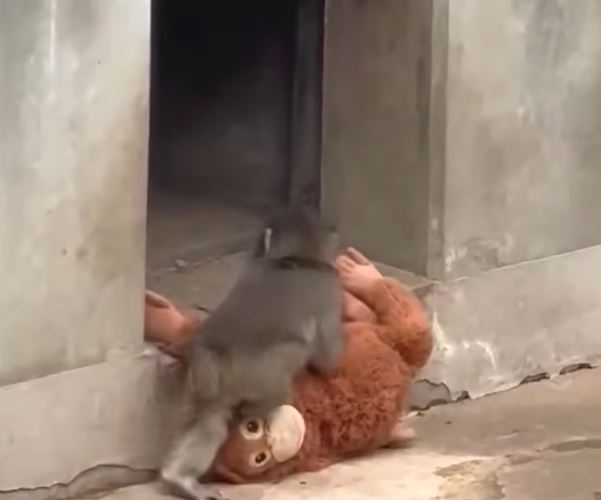
What followed might have been a combination of intuition and experiment. While closely observing, the keepers added towels and other stuffed animals to his cage. Punch selected a plush orangutan that was long-limbed, fuzzy, and almost comically large. The IKEA toy was not intended for use in primate therapy. But Punch seized it at once, grabbing its arms and pulling it across the enclosure as if it were both an anchor and a shield.
Then he was discovered online.
Videos began circulating—Punch sleeping with the toy tucked under his chin, Punch hesitating near other macaques before retreating to his plush companion, Punch being gently groomed for the first time by another monkey. The #HangInTherePunch hashtag gained traction in a steady, emotional surge rather than a flurry. People seemed to be taking in more than just a cute animal. They were projecting loneliness, resiliency, and possibly even themselves onto him.
Over a hundred people gathered around the macaque enclosure on a recent morning. A few had made the two-hour journey. They raised their phones. A young Tokyo nurse said she was moved by Punch’s “trying so hard” online. As you watch the action, you can’t help but notice how silent the crowd gets when Punch goes up to another monkey. One can sense the tension. Is he going to be accepted today?
It’s not sentimental to be accepted into a macaque troop. It can be harsh at times and is hierarchical. In one video that went viral, Punch tried to approach a younger macaque but was pulled away by an adult monkey. The moment looked brutal to human eyes. Then, clutching his stuffed orangutan, he ran back to it. Later, the zoo explained that this type of reprimand is not persistent aggression but rather a normal part of socialization. Nevertheless, the video made viewers uneasy.
The zoo made a measured statement. They said Punch had previously received a reprimand. He is gaining knowledge. No monkey has exhibited significant hostility. Notably, he stops playing with the toy after a little while and starts talking again. That particular detail seems significant. It implies that the stuffed orangutan, lovingly known as “Ora-mama,” serves more as a bridge than a crutch.
It’s interesting to note that IKEA Japan gave more orangutan toys, so Punch would always have an alternative. This gesture has the potential to become a marketing gimmick. Yet on the ground, it feels oddly practical. Playthings deteriorate. Fur thins. Comfort items deteriorate over time, just like genuine relationships do.
The more general query remains: why has this specific story struck such a deep chord? There are other, bigger zoos in Japan. For instance, Tokyo’s Ueno Zoo is much more well-known. However, Ichikawa’s size may contribute to its allure. It has a personal touch. Individual. The enclosures are sufficiently close together to allow you to hear the macaques’ soft, throaty calls and the rustle of straw.
The timing is another factor. In a year already crowded with heavy headlines, a small monkey clinging to a plush surrogate mother offers something uncomplicated yet layered. He is weak, but not defenseless. Rejected, but not by herself. It’s almost painfully familiar to watch him approach another macaque with hesitation, then quickly back off, thinking twice.
Punch has started playing with younger monkeys with greater assurance, according to zoo officials. Short but important grooming sessions have been seen. In macaque society, grooming is a sign of trust. It isn’t dramatic. There is no applause. However, it is important.
It’s unclear, though, if Punch will ever completely desert Ora-mama. One zookeeper suggested that day will come. Maybe it will. Maybe as genuine ties grow stronger, the toy will just move to the side and become less important. In both humans and monkeys, growth is rarely linear.
There is a slight change in the zoo’s atmosphere as you walk past the entrance gate and observe families comparing their pictures. However, it now tells a tale that goes well beyond Chiba. An account of adaptation. about the community. About how life insists on improvising even in a structured enclosure.
Punch is dragging a stuffed orangutan across the floor somewhere inside. He stops, looks up, and considers whether today is the right day to move a little further away from it.