
A parent who has spent months, sometimes longer, waiting for a letter from the NHS that might or might not arrive before their child’s situation deteriorates experiences a certain kind of fatigue. That weariness is currently becoming more commonplace throughout Britain. And it’s subtly changing the places where families seek assistance.
Private CAMHS, or mental health services for children and adolescents provided outside of the National Health Service (NHS), has evolved from a specialized option to something that resembles a parallel system. Clinics in Scotland and England are reporting a variety of presentations, a heavy caseload, and, in certain areas, no waiting time at all. That speed is crucial for families who have access to them. For those who are unable to, it poses a more difficult question about the true nature of mental healthcare in this nation.
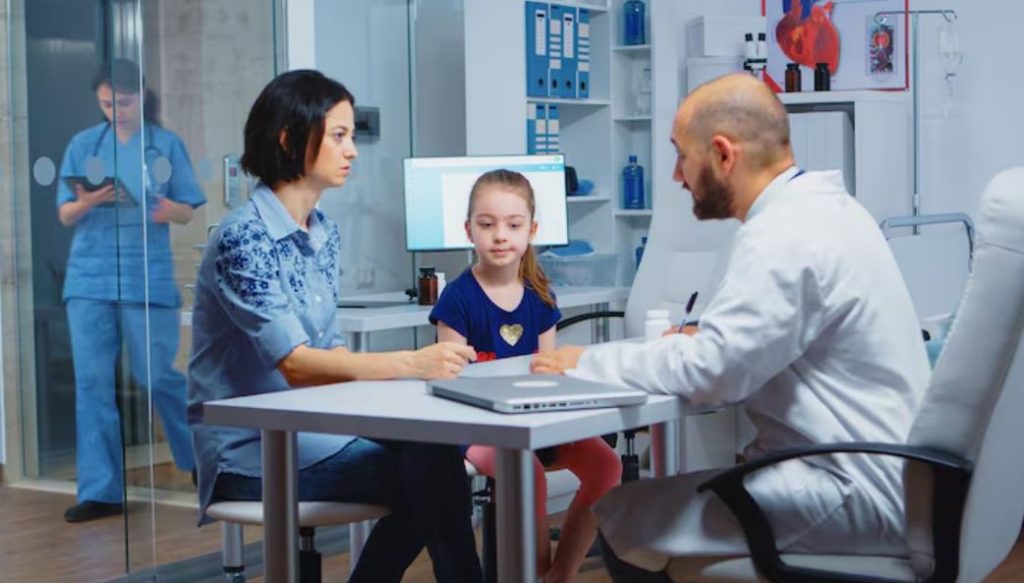
It is important to pay attention to what these clinics are observing. Referrals for ADHD have been steadily increasing for years, but practitioners are also reporting a wider range of presentations, such as anxiety mixed with social disengagement, mood swings that don’t neatly fit into a single diagnostic category, and an increasing number of younger children being brought in by parents who describe something as “off” but lack the vocabulary to put it. Although growing up has always been challenging, there is a feeling that this generation’s emotional architecture has changed in ways that clinical frameworks are still catching up to.
Some of this may be the result of increased awareness, with parents and schools recognizing issues that were previously disregarded or tolerated. That makes sense as an interpretation. However, it’s also possible that the stresses placed on British children—such as screens, anxiety about academic performance, and fractured social environments following the pandemic—are causing significant clinical harm on a large scale. Private clinics are not in a position to make a firm determination. They are observing the demand. They can tell you that.
Observers in this field are struck by how the private sector has taken action to close a structural gap without anyone formally deciding that it should. With clinical psychologists and psychiatrists on staff, facilities like the Purple House Clinic, which operates in Birmingham, Edinburgh, Leicester, and other places, have created something akin to a network that is intended to operate in areas where the NHS is overburdened. In Kingston and Weybridge, Acorn Psychiatry claims to treat a “huge range” of mental health issues in children under the age of 18, providing services that the NHS used to be expected to offer for free.
Beneath all of this, that price tag continues to be the unsettling detail. In isolation, assessments that start at £69 seem affordable. Ongoing therapeutic support, specialist consultations, and extended treatment programs do not. At least some of the youngest mental health patients in Britain are receiving treatment. those whose families are able to deal with the expense, the location, and the documentation. For everyone else, there is still a lengthy and slow-moving NHS waiting list.
Speaking with people in this industry, it seems that nobody really realized how big this would get. Real patients with real needs are being treated in the clinics. The system surrounding them continues to struggle in silence.
FAQ’s
1. Why are families choosing private CAMHS over the NHS?
NHS waiting times can stretch months or years; private clinics offer near-immediate access.
2. What conditions are private child mental health clinics most commonly treating?
ADHD, anxiety, autism, depression, and mood instability are among the most frequent presentations.
3. How much does a private CAMHS assessment cost in the UK?
Entry-level assessments start from £69, though extended treatment costs considerably more.
4. Are private CAMHS clinics available outside London?
Yes — providers operate across Birmingham, Edinburgh, Leicester, Nottingham, Kingston, and online nationally.
5. Is the rise in child mental health referrals linked to the pandemic?
Fractured post-pandemic social environments are considered a contributing factor, though causes remain complex.