
Living rooms in America and Britain are experiencing something subtly contradictory. Millennial parents, who are arguably the most emotionally intelligent, research-focused, and genuinely committed generation of parents in history, are witnessing their kids experience anxiety at rates that would have shocked their own parents. Anyone who is paying attention can see the irony.
These individuals grew up with dial-up internet and experienced two recessions as adults. They already carried that burden into parenthood, with documented anxiety, record levels of burnout, and a deep-seated fear of repeating what had been done to them. They read the books as a result. They picked up the vocabulary. In the checkout line, they exercised gentle parenting. Even so, something doesn’t quite add up.
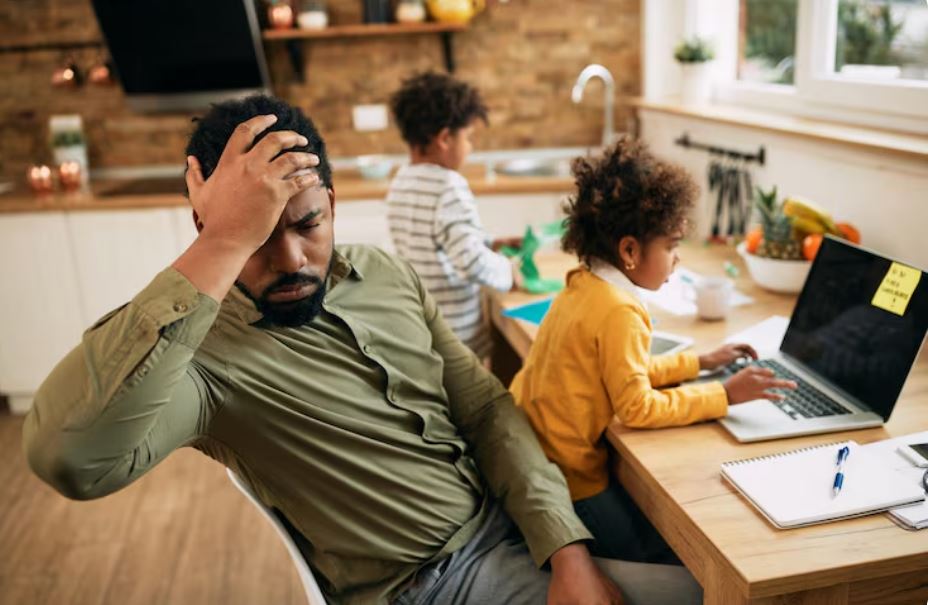
It appears that part of the problem is that worrying too much and knowing too much appear to be nearly identical from the outside. Millennials were the first generation of parents to have access to the entire internet at three in the morning, including peer-reviewed anxiety studies, parenting forums, and viral threads about the effects of screen time on developing brains. That information is incredibly accessible. It may also be a contributing factor to the issue. A parent may find it difficult to let a toddler fall off a swing and simply cry out if they have read seventeen articles about childhood trauma before breakfast.
There’s a feeling that the move away from traditional authoritarian parenting, which included time-outs, the “finish everything on your plate” mentality, and the idea that kids should be seen but not heard, was actually necessary. There aren’t many rational people who would disagree. However, the room for children to feel tolerable discomfort may have subtly shrunk somewhere between ending generational cycles and the emergence of gentle parenting as an identity. Additionally, kids who never sit uncomfortably grow up to be teenagers who also find it intolerable.
All of this is overshadowed by the phone question. Millennial parents genuinely worry about screen time in ways that earlier generations were unable to, but many of them feel helpless to stop it. They comprehend the pull, the validation loop, and how a gadget can consume an evening because they were the first generation to grow up partially online. Giving their child a tablet to purchase twenty minutes of quiet carries a guilt that their own parents never experienced because they had no cause to feel that way.
It is difficult to ignore the fact that children who are being raised with the highest level of emotional awareness in history are also statistically among the most emotionally vulnerable. That might not be a failure of millennial parenting so much as a collision of forces no single generation could have prepared for — economic instability, climate dread, a social media architecture built to be addictive, and parents already running on empty long before the school run. It’s still unclear if this generation of kids’ emotional fluency will make them more resilient in the long run or if their anxiety will worsen. The information has not yet been received. The children are still developing.
FAQs
1. Why are millennial parents considered the most anxious generation of parents?
They carry record burnout and anxiety into parenthood before their children are even born.
2. Does gentle parenting actually cause anxiety in children?
It may reduce discomfort tolerance when children never learn to sit with difficulty.
3. Why do millennial parents worry so much about screen time?
They understand its addictive pull firsthand, making guilt around it uniquely personal.
4. Are millennial parents doing something wrong?
Not exactly — they’re colliding with economic, digital, and social forces beyond any parent’s control.
5. Will this generation of anxious children eventually become resilient adults?
It’s genuinely unclear — the data isn’t in, and the kids are still growing.