
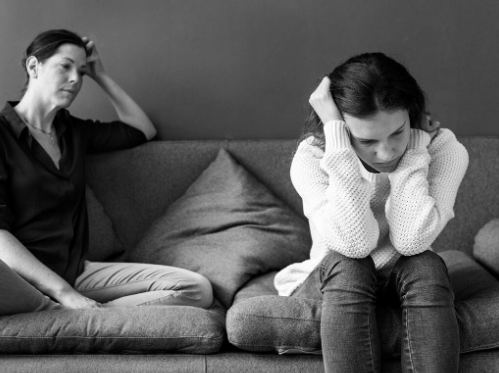
Someone notices something small but unsettling in a crowded café, somewhere between the clatter of cups and the hum of conversations: a situation that used to cause anxiety now hardly registers. There is only a silent pause where reaction once existed, no racing thoughts, no pressing need to react. Instead of feeling like progress, it feels weird, almost like witnessing the course of someone else’s life. There’s a pause, a subliminal question emerging, wondering if something significant has been lost in the process.
It takes time to become emotionally unrecognizable. It develops gradually, frequently undetected at first, and manifests in subtle changes, such as how you react to criticism, how long you sit uncomfortably, and how some conversations lose their emotional impact. From the outside, these changes may appear stable, but from the inside, they may be confusing. Even if it wasn’t healthy, there’s a feeling that something familiar has vanished.
| Category | Details |
|---|---|
| Concept | Emotional Transformation & Identity Shift |
| Core Experience | Feeling unfamiliar with your own emotional responses |
| Psychological Insight | Negative emotions are essential signals |
| Common Symptoms | Confusion, emotional mismatch, internal distance |
| Root Cause | Letting go of old emotional patterns |
| Key Mechanism | Processing previously suppressed emotions |
| Outcome | Greater emotional awareness and stability |
| Risk | Misinterpreting discomfort as regression |
| Reference Website | https://www.scientificamerican.com |
People’s strong identification with their emotional patterns contributes to this. For instance, some people use anxiety as a means of navigating the world, predicting outcomes, and being ready. Relief doesn’t come right away when you let go of that continual alertness. Even if that awareness was draining, it can feel like losing a layer of consciousness. It can feel like nothing at all when there is no intensity.
Though it’s not always clear in real time, it’s possible that what appears to be emptiness is actually space. Anger, defensiveness, and urgency are examples of emotional reactions that start to slow down and become less automatic. There is frequently a pause in their place, and during that pause, uncertainty tends to increase. How should I feel in this situation?
Another issue is the emergence of repressed feelings. Many people spend years learning to ignore certain emotions, such as sadness, frustration, or even joy, viewing them as weaknesses or distractions. These feelings don’t go away over time; instead, they settle and subtly affect behavior. They don’t always feel familiar when they eventually start to show. They seem out of context and out of place.
This stage is somewhat similar to what psychologists refer to as mixed emotional states, in which contradictory emotions coexist and produce a feeling of internal contradiction. It can be challenging to interpret feelings of both relief and uncertainty, calm and uneasy. Growth seldom provides a single, unambiguous emotional response, despite the tendency to look for one. Rather, it makes things more difficult.
There is a temptation to believe that something has gone wrong as you watch this play out. It can feel like you’re losing touch with yourself if your emotional responses are shifting, becoming less consistent, less intense, or just different. Even if it wasn’t ideal, the natural tendency is to go back to what felt familiar. Unfamiliar calm may not feel as secure as familiar discomfort.
It is not aided by cultural expectations. There is an unspoken belief that emotional development should be enjoyable and that gaining self-awareness should provide instant relief or clarity. However, in reality, the process frequently passes through uncomfortable stages where improvement doesn’t appear to be progress. Not initially, anyway.
People start describing themselves differently during this period, and it’s difficult to ignore this. Someone may say, “I’m not as reactive as I used to be,” but the tone isn’t always assured. There may be hesitation at times, as if they’re not sure if the change is desirable or even long-lasting. Even though it’s not totally true, being less reactive can feel like being less present. The emotional system is recalibrating, but it doesn’t let you know when it’s finished.
Additionally, there is a more subdued change in the perception of energy. The body adjusts when emotions are no longer repressed or continuously triggered, sometimes leaving behind a strange stillness. That stillness can be unsettling, almost like something is missing, for someone who is accustomed to working at high emotional intensity. Whether this stage is appropriately understood while going through it is still up for debate.
However, patterns start to make more sense over time. Emotional reactions become less about instantaneous reaction and more about interpretation; they become less instinctive and more deliberate. What used to feel like losing oneself begins to resemble entering a different state of awareness that isn’t influenced by the same things. However, it usually takes longer to realize that.
The experience is more ambiguous and less clear in the moment, shaped more by minor observations than by major revelations. A different approach to a conversation. a response that never took place. A sensation that was present but not overpowering. Though they subtly hint at change, these moments don’t declare it. Almost with caution.
Becoming emotionally unrecognizable seems to be more about letting go of patterns that were never fully chosen than it is about changing who you are. The space between what was once automatic and what is still developing is what causes the discomfort. Additionally, things don’t always feel stable in that area.
Nevertheless, it has a subtly encouraging quality. A degree of adaptability that wasn’t always present is suggested by the fact that feelings can fluctuate and reactions can soften or change. Uncertainty is not eliminated, but it is transformed so that it is less about fear and more about possibility.