
Finding a tropical mosquito breeding in someone’s East London backyard has a subtly unsettling quality. It’s not particularly frightening, but it’s the kind of thing that causes you to stop and reevaluate long-held beliefs. With its gloomy skies and consistently wet autumns, Britain has always seemed like the kind of place where tropical insects don’t live long enough to be significant. It turns out that this assumption merits further investigation.
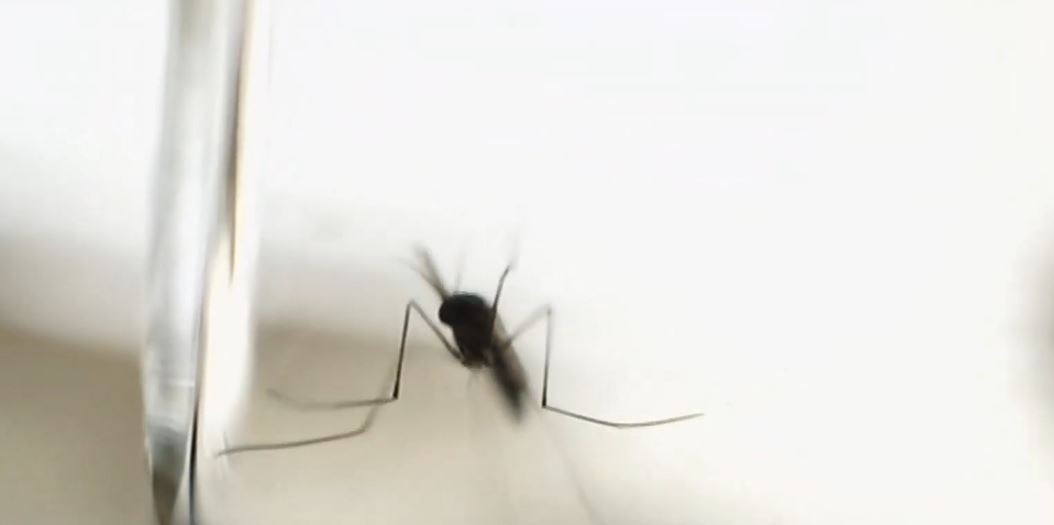
Aedes aegypti, a species typically found in tropical and subtropical regions of Africa, South America, and Southeast Asia, has been found breeding at residential properties in east London, the UK Health Security Agency confirmed this week. The species has appeared in Britain four times, but this is the first time it has been observed reproducing. There were larvae. The eggs hatched. By all accounts, the mosquitoes were settling in.
UKHSA has taken care, and rightfully so, to avoid causing needless anxiety. Since there is no proof that any of the mosquitoes found have infected humans, the agency evaluated the public risk as extremely low. Additionally, they emphasized that no mosquitoes or larvae have been found in the surrounding public areas, indicating that the breeding was, at least for the time being, limited to a small group of residential locations. The larvae have already been destroyed by control measures, and local surveillance has been increased.
However, reading the official assurance and moving on would be too simple. Aedes aegypti is not a mosquito that casually attracts attention. In areas where dengue fever, the Zika virus, chikungunya, and yellow fever are already prevalent, it is one of the most efficient disease vectors known. The crucial phrase is “where those infections are already circulating.” At the moment, Britain is not one of those areas. A foreign-infected traveler must return to the UK with the virus still active in their blood, be bitten by one of these local mosquitoes, and then the mosquito must live long enough to bite another person for local transmission to start. There are several points of failure in this series of events. However, similar chains have previously linked in nations that were previously thought to be safe from such issues.
It’s worthwhile to consider how Aedes aegypti got to East London. According to the UKHSA, accidental importation—hitchhiking, as these insects seem to do with unsettling ease—inside cars, in the lining of luggage, or hidden within imported plants and soil is the most likely path. That picture has an almost unremarkable quality. Soil is packed around the roots of a plant that was ordered online, and there is an egg or two inside the packaging. The charity Buglife’s David Smith has been outspoken about this vulnerability, contending that biosecurity surrounding the transportation of potted plants and soils needs to be strengthened before it becomes a much bigger issue.
This story really shines when it comes to the climate dimension. The UKHSA was straightforward about it: as the climate warms, Britain should anticipate more invasive mosquito species entering the country and more cases of them surviving here. Chikungunya can now spread throughout most of Europe, according to a different study conducted earlier this year. This is because rising temperatures shorten the virus’s incubation period in Asian tiger mosquitoes. Currently, Aedes aegypti cannot withstand a normal British winter because the cold kills it. However, British winters are not the same as they once were, and forecasts indicate that this trend will continue. What appears to be a contained, low-risk incident now might become more difficult to ignore ten years from now.
The first piece of advice for residents of East London is straightforward and unremarkable: get rid of standing water. When mosquitoes need to lay eggs, they search for buckets left in the garden, containers, paddling pools that haven’t been deflated, and the saucers under plant pots. It may seem almost too easy to be important, but it is one of the few things locals can do without having to wait for government orders or surveillance teams.
As this develops, it seems as though Britain is facing an issue that it is only now starting to comprehend. The infrastructure for keeping an eye on invasive mosquitoes is in place; the Mosquito Watch program located this breeding site, which is precisely what it was intended to do. However, detection is just the beginning of a meaningful response. It is still genuinely unclear if public health resources and political will will keep up with a warming climate and an increasingly mobile global population. As of right now, the risk is minimal because the larvae have been eliminated. However, low is not zero, and it appears that the mosquitoes are still trying.
FAQs
Q1: What species of mosquito was found breeding in east London?
Aedes aegypti, a tropical mosquito capable of transmitting dengue, Zika, and chikungunya.
Q2: Has anyone in London been infected by these mosquitoes?
No human infections have been confirmed anywhere near the affected area.
Q3: How did the mosquitoes likely get to the UK?
They probably hitchhiked inside vehicles, luggage, or imported plants and soil.
Q4: Is Aedes aegypti now permanently established in Britain?
No — it cannot survive long-term in the UK’s typically cold climate.
Q5: What can residents do to reduce the risk?
Remove all standing water from gardens, buckets, containers, and plant pots.