
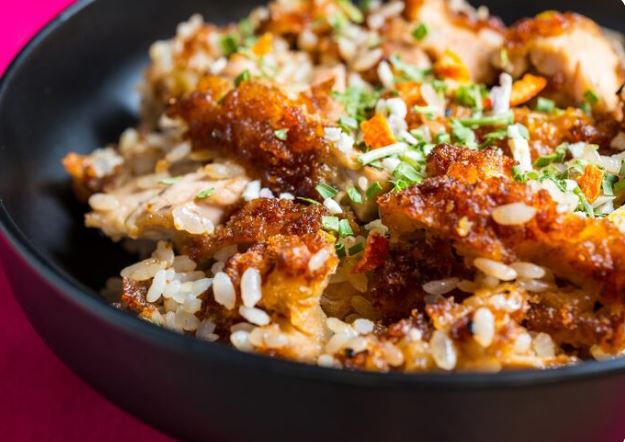
Typically, the frozen food section is a place of calm routine. Overhead, fluorescent lights hum. Customers reach for the well-known green bags that are neatly arranged in rows as they slide open glass doors and release tiny puffs of cold air. Chicken fried rice has long been a comfort food because it’s dependable, quick, and reasonably priced. That’s why the recent recall of chicken fried rice feels unique. It disrupts a routine.
Following reports of glass contamination, over 3.3 million pounds of frozen chicken fried rice products have been recalled. Produced by Ajinomoto Foods North America, Inc., the goods were offered for sale at Trader Joe’s stores across the country and, in certain situations, in Canada under a similar brand name. A reasonable probability of serious health consequences was indicated by the recall’s classification as Class I, the most serious category.
| Product Name | Trader Joe’s Chicken Fried Rice |
|---|---|
| Manufacturer | Ajinomoto Foods North America, Inc. |
| Recall Size | Approximately 3.37 million pounds |
| Reason for Recall | Possible glass contamination |
| Production Dates | Sept. 8, 2025 – Nov. 17, 2025 |
| Best-By Dates | Sept. 8, 2026 – Nov. 17, 2026 |
| Recall Classification | Class I (Highest Risk) |
| Regulatory Authority | U.S. Department of Agriculture Food Safety and Inspection Service |
| Official Notice | https://www.fsis.usda.gov |
Four customers discovered glass pieces inside the product, which led to the problem. There are no confirmed injuries. Nevertheless, the word “glass” has a way of piercing assurances. It’s difficult not to imagine someone putting a forkful into their mouth and having faith in the contents of the bag.
20-ounce green plastic bags bearing the label “Chicken Fried Rice with stir-fried rice, vegetables, seasoned dark chicken meat, and eggs” are the recalled Trader Joe’s product. They were manufactured from early September to mid-November of last year. Some of these bags may still be hidden in freezers across the nation, forgotten behind frozen peas and ice cream cartons, as their best-by dates extend into the fall of 2026.
A large number of customers may never experience a problem. The company responded promptly to the complaints, and the contamination seems to be minimal. However, even the most devoted customers are often uneasy about recalls of this magnitude. It is believed that frozen foods, particularly those sold by reputable stores, ought to be protected from this kind of danger.
By combining eccentricity and quality assurance, Trader Joe’s has established a brand that fosters a kind of affectionate grocery store loyalty. In parking lots, customers exchange recommendations. On the internet, they argue about seasonal snacks. It seems as though trust, not just inventory, is being put to the test as this is happening.
Customers are advised by the recall notice to either return the product to the retailer or throw it away. That seems easy enough. But scanning best-by dates while carrying a seemingly normal-looking bag in your own kitchen makes you uneasy. From the outside, glass contamination is invisible. It’s not like bread with mold growing on it.
Recalls for food safety are not new. Peanut butter, pureed baby food, and salads in bags. Every time, businesses pledge protections, authorities emphasize prudence, and life goes on. According to quarterly adjustments and operational reviews, investors appear to think these incidents are controllable. However, the impact feels more intimate at the household level.
Following receipt of the complaints, Portland, Oregon-based Ajinomoto Foods North America informed the authorities. That is an important detail. Although businesses must take action, voluntary reporting nevertheless indicates that a system is operating as intended. It’s unclear if this contamination resulted from packaging materials, manufacturing equipment, or some other disturbance.
Whether this recall will lead to a more thorough examination of frozen food production lines is still unknown. A breach in physical protections—something getting into the food chain that shouldn’t be there—is indicated by glass contamination. Even small mechanical failures can have a cascading effect in highly automated facilities, posing risks that are simple to ignore during regular operations.
Busy households and consumers who are concerned about inflation have been driving the steady expansion of the frozen food market as a whole. Convenience is money. A ten-minute-to-cook dinner for $3.99 has genuine appeal. However, convenience has the power to change how people behave. People can recall which products made them feel safe.
Recently, customers at a Milwaukee Trader Joe’s stood close to the freezer case, some of them holding their phones, looking over recall notices. There was no panic. It was quite hard work. Customers double-checking their carts is a scene that speaks volumes about contemporary food consumption.
The way recalls are conveyed requires a careful balance. If you exaggerate the danger, confidence will be damaged. If you downplay it, suspicion will be aroused. Officials have stressed that there have been no reports of injuries thus far. That’s comforting. However, the Class I designation serves as a reminder to consumers that the potential harm was significant enough to warrant immediate attention.
Ultimately, this recall of chicken fried rice might end up being just another incident in the lengthy history of food safety oversight. Or it might remain in consumers’ thoughts for a longer period of time, changing their purchasing patterns in subtle ways. Although it has been developed over the years, consumer trust in packaged foods can quickly erode.
The advice is simple for the time being: check your freezer. Examine the dates. And don’t eat it if you’re unsure. The most difficult reminders can occasionally be found in the most straightforward meals.