
Credit: SPORTSNET
The Ice Stopped. But His Story Didn’t. Jonathan Toews used to seem unbeatable, a player whose poise matched his skill in every game. But something changed in the 2020 season. Furthermore, it was not visible on a stat sheet.
His absence was more than obvious—it was startling for fans accustomed to witnessing Toews skate with an imposing presence. He simply announced that he would step down due to an undisclosed illness; there was no drama or obvious injury. Many initially thought he would return soon. As the weeks stretched into an entire season, that presumption waned.
| Detail | Description |
|---|---|
| Name | Jonathan Toews |
| Role | Ice Hockey Centre, Former Chicago Blackhawks Captain |
| Born | Winnipeg, Manitoba |
| Health Challenge | Chronic Immune Response Syndrome linked to Long COVID |
| Missed Seasons | 2020–21 entirely, parts of 2022–23 |
| Comeback | Signed with Winnipeg Jets for 2025–26 |
| Notable Shift | Focused on healing through Ayurveda, rest, and mindfulness |
| Source | https://www.cbc.ca/news/canada/manitoba/jonathan-toews-healing-journey-1.6895472 |
Toews eventually disclosed that he had Chronic Immune Response Syndrome, a disorder that severely hindered his capacity to recuperate, train, and even think clearly. Neither a painkiller nor a day off could resolve this. It was the kind of invisible sickness that subtly destroys routines and transforms identities.
Fatigue was more than just being tired; it was the kind that would not go away no matter how much he slept. Sometimes it was exhausting just to walk upstairs. This was emotionally debilitating for a professional athlete in addition to physically restricting them.
Uncertain of when or if he would return, Toews watched the 2020–21 NHL season from the sidelines. He referred to it as a reset rather than a setback. “I had to pay attention to my body,” he said calmly but honestly. “And that meant stopping everything for the first time in my career.”
After a while, he returned to play for the Blackhawks for two seasons. However, there were some issues with the return. On certain nights, he displayed glimpses of his former self. His energy vanished mid-game for others. He was always adjusting, learning to control a body that no longer reacted as it used to.
He eventually moved away once more. However, there was a subtle assurance in his decision this time. He pursued healing by following an entirely different route, not just by using conventional medicine.
Toews visited India in 2023 for Panchakarma, an age-old Ayurvedic detox program that aims to reset the body and mind. Toews approached the rigorous treatments, which included strict dietary regimens and herbal therapies, with openness and curiosity.
“At first, I was doubtful,” he acknowledged, “but I had tried a lot of unsuccessful things. I had to end the cycle.
Toews’ story was especially interesting because of how he dealt with his health journey, not just because of it. He never once asked for pity. He never made a show out of his symptoms. He just told it like it was, in real time, and let people figure out how to interpret it.
Admitting weakness can feel dangerous in the physically demanding and fiercely competitive world of professional hockey. However, Toews clarified that being vulnerable is a sign of leadership rather than weakness.
By taking a back seat, he encouraged discussion about chronic illness, the consequences of pushing too hard for too long, and the value of paying attention to our bodies even when they tell us otherwise.
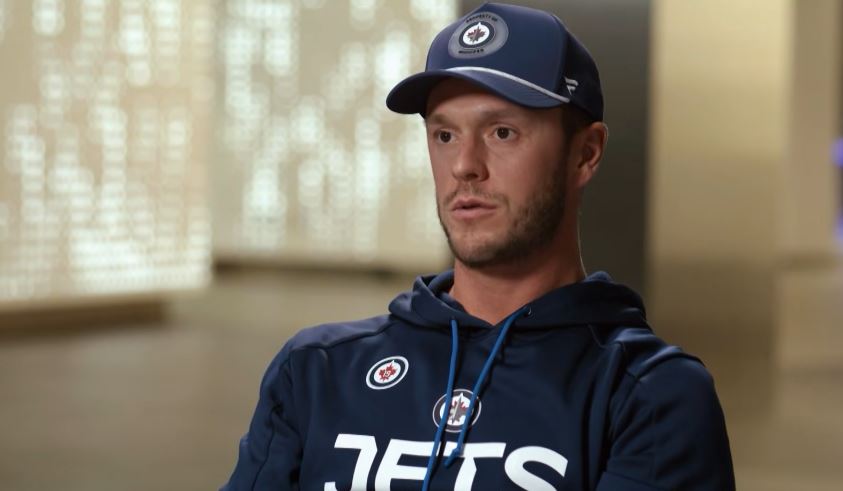
Even his closest supporters were taken aback when Toews agreed to a one-year contract with the Winnipeg Jets for the 2025–2026 campaign. Going back to his hometown was more than just a sentimental act. It represented a full-circle moment, one based on introspection rather than sentimentality.
Toews characterized it as “a chance to play the game I love, but with better balance” rather than a spectacular return.
He has already stated that he is now playing the game differently. Don’t worry so much about numbers. More about the moments. His sense of purpose has never been stronger, even though he is aware that his body may not be what it once was.
His story is especially helpful for anyone going through recovery because it serves as a reminder that choosing to be healthy is a daily choice rather than a destination. It moves. It needs to be addressed. And occasionally, it teaches us more than we anticipated.
Power play accuracy and locker room speeches are no longer the only aspects of Toews’ leadership. It’s about demonstrating what rest means. to adjust. to put longevity ahead of legacy.
That viewpoint is incredibly beneficial for anyone dealing with energy, identity, or invisible illness, not just other athletes.
Toews has taught us about presence in addition to hockey. Pulling back can be an act of strength, as he is demonstrating, that creating room for recovery is not a sign of failure. It’s sagacity.
His tale doesn’t conclude with a speech or a trophy. With new priorities as its foundation, it advances steadily. That may be his greatest triumph to date.