
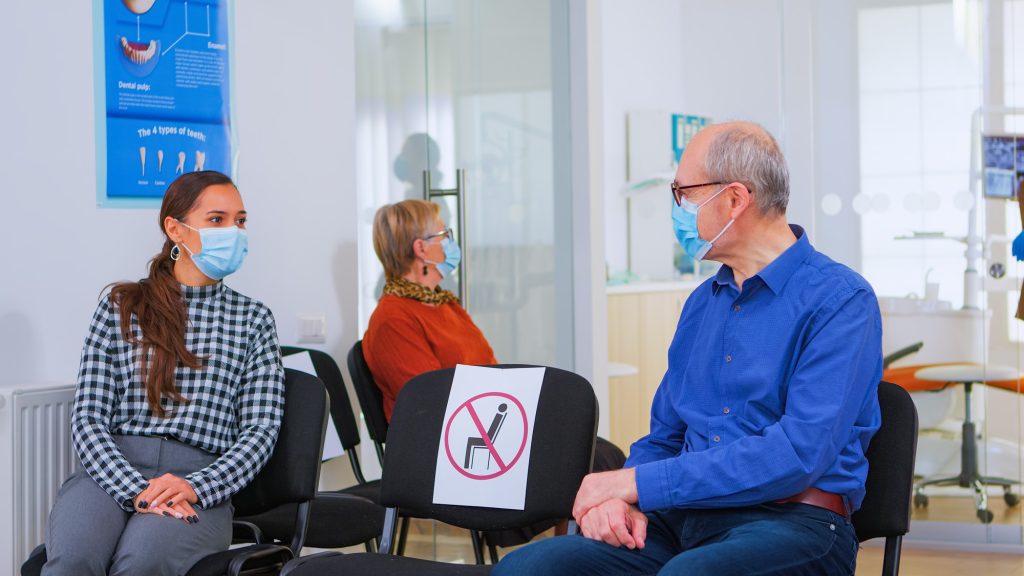
The high street in Guildford feels surprisingly quiet on a gloomy weekday morning. As they rush past cafés, commuters are absorbed in their phones. Bupa’s new “Mindplace” clinic is getting ready to open just a few doors down, behind covert frosted glass. It’s not ostentatious. quiet reception, muted walls, and soft lighting.
It’s the kind of place where you can feel your heart rate drop as soon as you enter. The consistent, noticeable growth of private therapy clinics in the UK, however, is something much bigger than what is occurring here.
A portion of the story is revealed by the numbers alone. The demand for mental health services has increased by 20% annually since 2020, according to Bupa. Referrals to NHS mental health services have increased significantly since the pandemic and have hit all-time highs in recent years. Meanwhile, rather than getting shorter, NHS waiting lists have gotten longer.
| Category | Details |
|---|---|
| Organisation | Bupa |
| CEO (Global, India & UK) | Carlos Jaureguizar |
| Initiative | “Mindplace” Mental Health Centres |
| Expansion Plan | 70 centres across the UK by 2027 |
| Demand Growth | 20% year-on-year rise in mental health treatment demand since 2020 |
| Key Locations | Guildford, Reading, Bristol |
| Industry Context | Rising self-pay and corporate mental health spending |
| Reference | https://www.telegraph.co.uk |
The system seems to be straining slowly, taking in shock after shock without fully catching up.
Perhaps the pandemic exposed Britain’s mental health crisis rather than causing it. People were isolated during lockdowns. Boundaries were blurred by remote work. The grip of financial pressure tightened. However, the rise in private clinics also points to impatience. When they notice that they are slipping, people are no longer prepared to wait months for therapy.
Apparently, employers have taken notice. Executives like Carlos Jaureguizar talk about companies that are struggling with increased sick leave and decreased productivity in their discussions with corporate clients. According to Deloitte, mental health issues cost UK employers tens of billions of pounds annually. HR teams now discuss therapy in glass-walled boardrooms throughout London in the same way that they used to discuss dental coverage: as infrastructure.
That change has a remarkable quality. Once discussed in whispers, therapy is now being spent like a line item. Clinicians themselves are also in motion at the same time. More psychologists and psychotherapists with training from the NHS have moved into private practice during the past ten years.
It’s referred to as economic necessity by some. There are a few NHS positions at the consultant level. The rate of pay advancement has slowed. In London, private sessions cost between £80 and £150 per hour and provide both autonomy and revenue. It’s difficult to ignore the proliferation of therapy room rental establishments in central London; serene hallways adorned with framed diplomas and indoor plants are available for hourly rent.
Of course, money matters. Life expenses have increased. For many professionals, housing feels forever out of reach. It’s not only appealing to add private sessions to NHS work; it might even feel necessary.
But money isn’t the only factor here. A generational undercurrent is present. Younger clinicians discuss adaptability and creating something unique. As an alternative to a bureaucratic ladder, private practice offers ownership—a small business. It feels like the gig economy shift in general, as you watch this play out, but with softer furniture and more in-depth discussions.

Not just stressed-out executives are in demand. According to surveys, one in three workers in the Udealssal with a mental health issue each year. The situation appears even more precarious among young employees.
Over the past 20 years, there has been a notable increase in anxiety and depression among those between the ages of 16 and 24. It is still up for debate whether that indicates actual decline or shifting diagnostic standards. Overdiagnosis, according to some, is inflating numbers. Others maintain that we are measuring what has always existed. The more credible explanation is still up for debate. Clinics are obviously filling up.
The trend is being subtly accelerated by technology. These days, a lot of private practices use hybrid models, which combine teletherapy and in-person sessions. The difficulty of asking for assistance has decreased thanks to encrypted video platforms and online reservation systems.
A client can log in from a peaceful spare bedroom to schedule therapy during this time. This convenience may bece is permanently changing expectations.
It appears that investors think the growth will continue. Pressures from the NHS and growing self-pay willingness are two factors driving the growth of the UK’s private healthcare market as a whole. The core of that development is mental health. Digital platforms are being built by new providers. Well-known insurance companies are expanding their physical clinics. It feels more like a structural shift than a brief uptick.
But beneath the expansion, there is uneasiness. Private therapy is inherently expensive. Access is still not uniform. Some people stay on waiting lists while insured families and corporate clients enter dimly lit consultation rooms. A two-tier system, one slow and one fast, could silently harden.
Meanwhile, stigma is diminishing. Perhaps the most important development of all was that culture change. Therapy was still regarded as indulgent in some quarters ten years ago.

These days, workplace seminars, TikTok videos, and podcasts all .touchon it. Gen Z is candid about anxiety and burnout. In policy circles, there is disagreement over whether this openness promotes dependency or resilience, but the dialogue has evolved.
When you pass a brand-new private clinic, you can’t help but feel cautious and hopeful. optimism since more people are receiving assistance sooner, which could help avert crises. Be cautious because once healthcare markets grow, they rarely contract.
In the UK, the growth of private therapy clinics is more than just a business fad. It reflects the nation’s feelings, which are anxious, reflective, and in search of stability. The lingering question is whether this expansion is a temporary solution while the NHS recovers or a long-term rebalancing of public and private care.
The waiting rooms are currently filling up. The lights are on. Furthermore, therapy has evolved into something much more prominent and visible than anyone could have imagined ten years ago, both on the high streets of Britain and behind closed doors.