
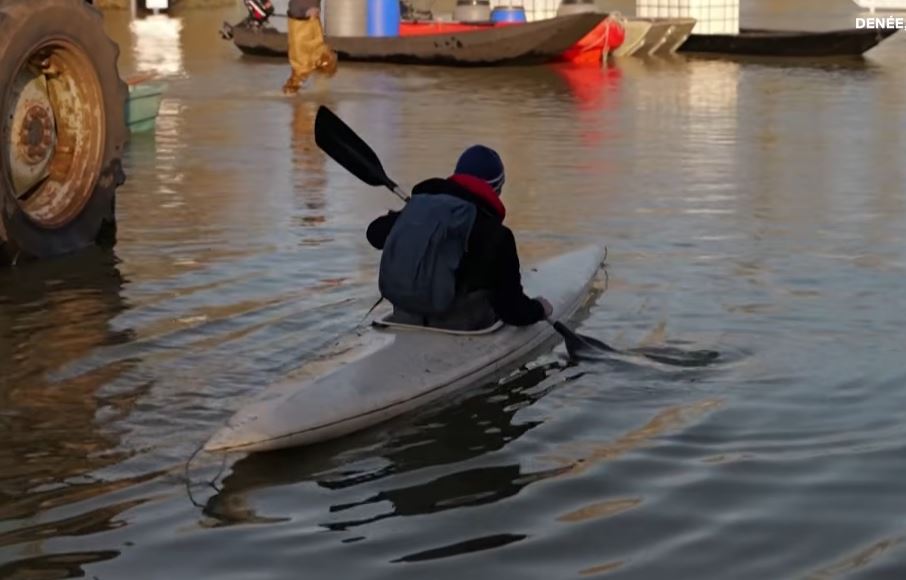
Storms are frequently given names before they manifest. The name can seem dramatic at times. It seems routine at times. Météo-France characterized Storm Pedro as a “non-exceptional winter storm,” at least on paper. Nevertheless, it didn’t feel normal at all while traveling through parts of southwest France this week.
When Pedro arrived, the ground in France was already saturated from the longest period of rain in history, which lasted for 35 days in a row. Levels of soil moisture rose to levels not seen since 1959. Rivers simply had nowhere else to send the water when the new system pushed in from the Atlantic, dumping up to 50 millimeters of rain and unleashing winds along the coast that were close to 140 km/h.
Storm Pedro — Key Information Snapshot
| Category | Details |
|---|---|
| Storm Name | Storm Pedro |
| Affected Regions | UK, France, Western Europe |
| Peak Winds | Up to 140 km/h (France coast) |
| Rainfall | Up to 50 mm in southwest France |
| UK Flood Alerts | 200+ (Environment Agency) |
| French Red Alerts | Gironde, Lot-et-Garonne, Maine-et-Loire, Charente-Maritime |
| Record Context | 35 consecutive days of rain in France |
| Official Weather Authority (UK) | https://www.metoffice.gov.uk |
The Garonne refused to back down in Bordeaux. As residents watched the river edging closer to quays that typically host weekend markets, Mayor Pierre Hurmic activated the city’s flood protection plan. Pedro by himself might not have been disastrous. However, it became something heavier when placed on top of a landscape that was already worn out.
Four departments in France were put on red alert: Charente-Maritime, Maine-et-Loire, Lot-et-Garonne, and Gironde. In some places, over 1,700 people were evacuated. More than 2,000 homes in Saintes have been impacted; in many of them, water has seeped through the ground floor, leaving behind damp lines that residents will remember long after the river has dried up.
A certain calmness is present in neighborhoods that have been inundated. Once bustling with schoolchildren and scooters, the streets are now silent brown water channels. While residents stand at windows calculating losses, emergency personnel move slowly, their boots splashing. When water takes up space, it’s difficult to ignore how rapidly everyday life rearranges itself.
The storm on the other side of the Channel told a different tale.
Storm Pedro brought rain, sleet, and snow to the UK, submerging large areas of the nation as the half-term holidays came to an end. More than 200 flood alerts were issued by the Environment Agency, including dozens where flooding was predicted rather than just a possibility.
Overnight, snow covered Buxton and Dove Holes in Derbyshire, causing rooftops to turn white and rivers to rise on the lower ground. Flooding forced the closure of the A628 Woodland Pass. Headlights reflected off surfaces that appeared to be deceptively shallow, and cars stalled in pools of water.
After heavy rainfall and strain on the infrastructure, residents in parts of West Sussex reported that their basements were filling with sewage. Residents of Surrey expressed annoyance at new housing projects in areas that are already vulnerable to flooding. Storms seem to be bringing to light more complex planning issues, such as drainage, urban growth, and climate resilience.
The Met Office predicted that unstable weather would continue even though Pedro’s direct effects on the UK would lessen. Clearer skies could be brought about by a brief ridge of high pressure, but more fronts are already forming over the Atlantic.
Storm Pedro’s actual story may have less to do with its maximum wind speed and rainfall totals. It’s the result of accumulation. Before a named storm even makes an appearance, there are 35 days of rain. rivers that are within a few centimeters of historical documentation. With every high tide, coastal towns prepare for storm surges.
Meteorologists take care to avoid exaggerating specific occurrences. Because of the complexity of climate patterns, attribution calls for subtlety. However, as one observes gymnasiums in French towns transformed into emergency shelters, one questions whether these “non-exceptional” storms are subtly becoming more significant.
There was a disruption in rail services throughout western France. Authorities in Angers made the practical but unsettling choice to purposefully flood some roads to relieve pressure elsewhere. Determining the appropriate location for water serves as a reminder of how artificially designed our landscapes have become.
Then there are the more intimate moments.
Sandbags are being stacked by the doorway of a Saintes store. A child in Manchester pressed her hand against a window streaked with rain. In Derbyshire, snow briefly falls on roofs before turning to slush. One gets the impression that Europe is renegotiating its relationship with water as it happens.
By the end of this week, the UK is expected to experience milder temperatures. If rainfall in France decreases, flood levels might level off. However, if another system is introduced too soon, it is still unclear if the already overburdened infrastructure can handle it completely.
Pedro the Storm will pass. They always do. The name will be archived alongside dozens of others in a list. However, for thousands of families waiting for rivers to recede, repairing walls, or drying carpets, this storm will feel more like a season than a weather event.
And maybe that’s the subtle change that’s worth observing—not just the wind’s violence, but the accumulation. The idea that storms are now chapters in a longer, wetter story that is still being written rather than isolated occurrences.