
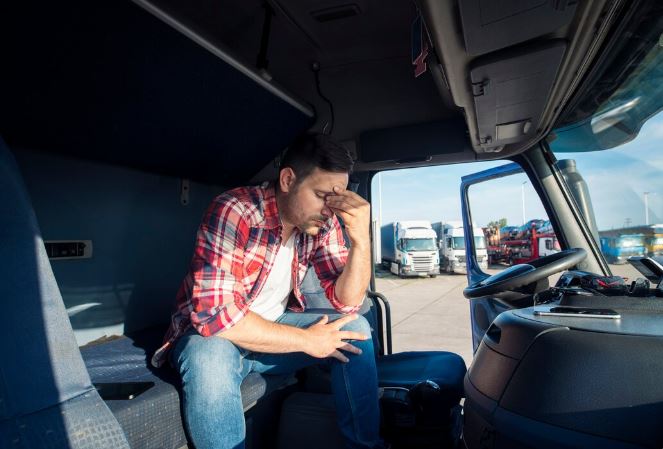
Francis Hodibert’s appointment in April 2022 was merely a checkbox exercise to maintain his HGV license, so he didn’t have high expectations. Rather, his life was turned upside down by the result of that seemingly ordinary exam. The kind of disturbance that begins subtly and develops into something you can’t ignore.
He was sixty-two years old, a seasoned Slough truck driver used to early mornings and endless stretches of tarmac. He had a routine and a steady source of income. However, the repercussions were immediate once Specsavers informed him that he had failed a visual field exam twice. His career abruptly came to a standstill after the DVLA withdrew his license.
| Item | Description |
|---|---|
| Claimant | Francis Hodibert |
| Age | 62 |
| Location | Slough, Berkshire |
| Allegation | Faulty visual field eye test by Specsavers |
| Year of Incident | 2022 |
| Licence Revocation | September 2022 |
| Licence Reinstatement | March 31, 2023 |
| Claimed Consequence | Severe depression, anxiety, and career loss |
| Legal Action | Lawsuit filed in London’s High Court |
| Damages Sought | Over £200,000 |
| Specsavers’ Position | Denies claims, will defend lawsuit |
Passing an eye test is more than just a formality for HGV drivers. It’s essential to their productivity. The criteria require precision, particularly with peripheral vision, and go beyond simply reading a chart. His legal team claims that the results were erroneous and the testing was defective. That distinction is really important.
According to Hodibert, he spiraled in the months that followed. Without his license, the financial burden started to increase in September 2022. The regularity he had been accustomed to for decades disappeared. He says that something heavier—anxiety, sadness, and a crippling doubt about whether he would ever be able to drive again—took its place.
Amazingly, Hodibert passed the same kind of vision field exam in early 2023 after seeing a consultant ophthalmologist. By March 31, the DVLA had restored his license. However, he maintains that by that point, the harm had already been sealed.
Reading the case specifics made me think about how quickly a single mistake, whether made by a human or a machine, might destroy a professional name.
Michael O’Neill, his attorney, has been clear-cut. He claims that the employees of Specsavers either submitted a flawed report or improperly handled the equipment. False results, professional negligence, and a cascade of personal injury are more serious charges in court records.
In his lawsuit, Hodibert is requesting more than £200,000 in damages. Not only for lost wages, but also for the psychological distress and health consequences of those six ambiguous months. His claim of mixed depression and anxiety disorder—conditions that have significantly hampered his capacity to function—is supported by a medical specialist’s report that was submitted to the court.
This case is especially important since it highlights issues of truth, accountability, and trust in addition to the financial stakes. A backstreet clinic is not what Specsavers is. This well-known business has a nationwide presence and is based on price and accessibility. And for that reason, this accusation is quite grave.
The business intends to defend its course of action. They have stated that they intend to properly refute the assertion, even if the specifics of their counterargument have not yet been revealed. They will probably contend that all procedures were followed and that they had no control over any disparity.
However, the court will need to consider more than just documentation. It must take into account whether the process itself is at fault and how one bad result, if it occurred at all, can ruin someone’s career. Because the stakes are quite high for HGV drivers like Hodibert.
One unsettling reality that comes to light through his experience is that years of routine can be undone by a single medical error. Although the system is designed to be extremely efficient, it breaks with a great deal of force.
This has a cascading impact. The way high-stakes assessments are given may warrant closer examination by the business. Do opticians have the necessary tools and training to conduct life-altering visual field exams? Or ought these evaluations to be restricted to specialized clinics?
The verdict in this case might serve as a trigger for other drivers who might have encountered a similar situation but chose not to contest it. It might lead to more stringent oversight or revised testing protocols. Or maybe it will emphasize how crucial appeals and second opinions are.
Although Hodibert had regained his license by March 2023, he claims he hasn’t yet gone back to his previous way of life. He is suing to get emotional and financial compensation for what was taken from him.
In situations such as this, there is a quiet determination. They serve as a reminder that systems, no matter how efficient, nonetheless need to be accountable. They need to be able to own up to their mistakes and fix them.
This is more than simply an eye exam for Hodibert. It has to do with identity, dignity, and justice.
It serves as an exceptionally obvious reminder to the business as a whole that even seemingly insignificant events can have a far bigger impact than anybody might have imagined in a tiny space like an optician’s office.
The court will decide in the upcoming months. However, something significant has already been triggered by this situation long before then. It has made testing feel very personal and brought attention to a procedure that most of us seldom consider.