
Only investors are aware of a specific type of 2am. The house is quiet and the room is dark, but the mind is working on spreadsheets, replaying the day’s figures, picturing the opening bell for tomorrow, and questioning whether the 3 p.m. decision was made out of panic or reason. On the bedside table is the phone. There is a nearly physical temptation to check. This is not a specialized experience. It is incredibly common in the months after severe market downturns, and people sitting on the other side of therapy sessions in the UK hear versions of it practically every week.
What has changed recently is that the psychological harm brought on by stock market crashes is not metaphorical, as an increasing amount of research is now confirming with unsettling precision. It can be measured. Antidepressant prescriptions and psychotherapy visits significantly increased during periods of significant market decline, according to a 2024 study by Chang Liu and Maoyong Fan that examined the medical records of millions of American investors. Antidepressant use increased by about 0.42% for every standard deviation decrease in local stock returns. The spike was even more dramatic during the most severe market crash. These statistics are not abstract. They carry a burden that started on a trading screen, representing actual people as they enter their doctor’s offices or schedule therapy sessions.
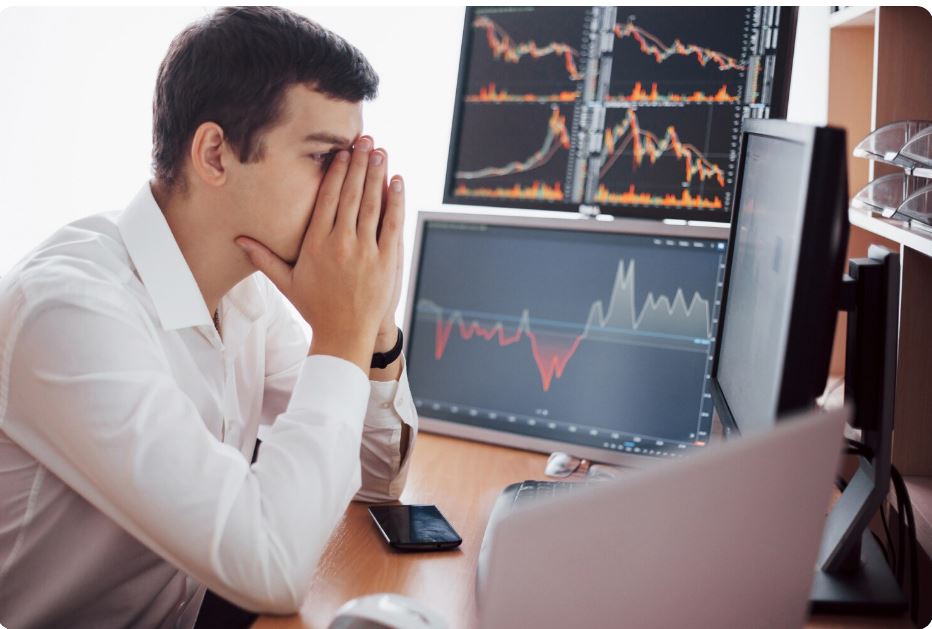
Therapists often tell clients who are embarrassed by how poorly they are coping that there is a rational connection between financial loss and mental distress. Money is more than just cash. For the majority of people, a portfolio is a representation of years of work, a timeline for retirement, and a version of the future they have been secretly constructing.
| Field | Information |
|---|---|
| Topic | Stock Market Crashes, Financial Anxiety & Sleep Disruption |
| Clinical Term | Financial Trauma / Stock Market Anxiety |
| Who Is Most Affected | Investors aged 45–64 — typically those with larger portfolios tied to retirement plans |
| Key Research Finding | A 2024 study found a one-standard-deviation drop in stock returns led to a 0.42% average increase in antidepressant prescriptions |
| Sleep Impact | Screen exposure to market news suppresses melatonin production, directly disrupting sleep cycles |
| Psychological Mechanism | Loss aversion — losses feel roughly twice as painful as equivalent gains feel good |
| Common Symptoms | Intrusive thoughts, insomnia, difficulty concentrating, loss of appetite, compulsive portfolio checking |
| Therapist-Recommended Strategies | Media detox, grounding techniques, separating self-worth from financial performance |
| NHS vs Private Therapy | NHS waiting times for anxiety support average months — private therapy offers faster access |
| Further Support | Mental Health Foundation financial stress resources: mentalhealth.org.uk |
It is not just a numerical loss when it contracts sharply. It is a hands-on experience. Identity, security, and a sense of competence in the world are all touched. The brain releases cortisol, increases heart rate, and narrows focus when it sees that shrink on a screen. This is the same threat response the brain stores for truly dangerous situations. The body cannot tell the difference between a red portfolio and a lion in the grass.
The first casualty is typically sleep. There is a well-established connection between financial anxiety and sleep disturbances that is hard to break without conscious effort. Stress raises cortisol levels just when they should be falling to get ready for sleep.
The prefrontal cortex, which is in charge of making logical decisions and maintaining perspective, is then compromised by sleep deprivation, which makes the news about the market the next day seem even more dire than it actually is. The cycle sustains itself. This loop is one of the most difficult to break, according to therapists who work with clients during volatile market periods. This is not because the methods for doing so are difficult, but rather because the person experiencing it tends to think that keeping an eye on the numbers at two in the morning is somehow protective.
It is difficult to ignore how much worse all of this has become due to the 24-hour news cycle. During the last significant financial crisis in 2008, one could at least shut down the newspaper. Live market data, breaking news alerts, and a social media feed full of commentary ranging from the sober to the catastrophic are now available on the phone on the bedside table.
The compulsive checking of portfolios and financial news during volatile times has been described by psychologists in Psychology Today as a behavioral pattern that reinforces rather than relieves anxiety; each check creates a fleeting illusion of control while actually intensifying the sense of helplessness. One of the most often suggested techniques by therapists treating this type of stress is a media detox, which entails real and regular time away from financial news. It sounds easy. It is really challenging for a lot of clients.
According to the 2024 study, investors between the ages of 45 and 64 are the most impacted; their retirement timelines make losses seem least recoverable, and their portfolios are usually the largest. Therapists have identified a particular type of grief in that group that differs from typical anxiety in that it is not only about the present but also about the future that was meticulously planned but now feels uncertain. The psychological idea of loss aversion is especially pertinent in this situation. Researchers in behavioral finance have long known that losses are about twice as painful as comparable gains. On paper, losing £10,000 does not feel the same as winning £10,000. Knowing that intellectually does little to lessen its emotional impact, and it feels significantly worse.
The goal during a market crash is not to feel nothing, which is what therapists typically want people to understand. This is the part that is frequently overlooked in the financial commentary. It is to have an emotion without allowing it to influence one’s choices. Grounding techniques, like those frequently employed in anxiety treatment, function by bringing attention back to the tangible present instead of the hypothetical future. Inhale deeply. Awareness of senses. The purposeful slowing down of a racing thought. These interventions are not gentle ones. They have a neurological foundation, counteracting the stress response that financial anxiety triggers by acting on the parasympathetic nervous system. When combined with good sleep hygiene, such as regular bedtimes, turning off screens before bed, and limiting caffeine, they create a useful foundation that portfolio monitoring cannot match.
In all of this, there is something worthwhile to sit with. The markets will fluctuate. They do it every time. Even though history doesn’t guarantee anything, it does provide a fair amount of comfort in that regard. However, a portfolio recovery, no matter how long it takes, cannot reverse the real and immediate costs of sleep deprivation, cortisol accumulation, and strained relationships brought on by financial obsession. Financial advisors are not therapists. However, they are increasingly the ones assisting clients in realizing that their financial experiences are more closely related to what security, control, and self-worth have come to mean to them than to their balance sheet. It turns out that conversation is worthwhile, perhaps even more so than the one that takes place in a dark room at two in the morning while staring at a phone screen.