
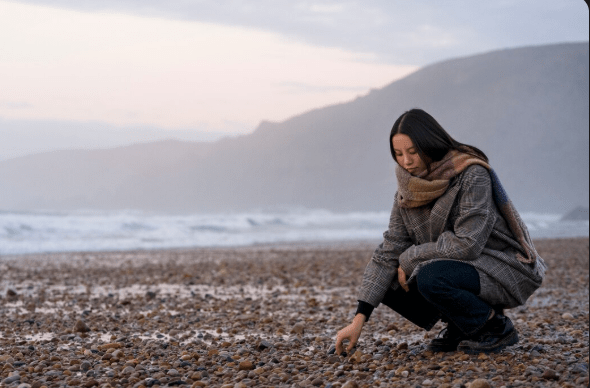
Seldom does the end of survival mode appear dramatic. There isn’t a triumphant movie scene or a catchy soundtrack. More often than not, it takes place in silence—perhaps on a Tuesday night when the phone stops ringing and the crisis eventually subsides. Then, out of nowhere, a mild, uncomfortable grief emerges.
Last fall, a woman spent almost twenty minutes sitting in her car outside a small therapy office in Chicago following a session. The street was typical, with a bus sighing to a stop, a stray leaf skating along the pavement, and a bakery closing for the evening. Nothing urgent. Nothing is damaged. And that was exactly the issue. Her nervous system had been prepared for emergencies for years, but all of a sudden there were none.
| Category | Information |
| Topic | Psychological Transition from Survival Mode |
| Field | Mental Health & Trauma Recovery |
| Key Concept | Emotional and neurological adaptation after chronic stress |
| Referenced Authority | American Psychological Association |
| Relevant Discipline | Clinical Psychology, Trauma Studies |
| Reference Website | https://www.apa.org/topics/stress |
Survival mode, which psychologists frequently refer to as the body’s emergency operating system, is a state in which adrenaline sharpens focus and emotions condense into basic priorities: endure, adapt, continue. It works, sometimes even saving lives. However, therapists occasionally notice something unexpected when they watch individuals leave that state. If relief comes at all, it does so slowly.
There is a neurological component to the problem. Calm can feel oddly empty when the body has lived on high alert. Long after the threats have passed, the nervous system, which is used to scanning for danger, keeps looking. It’s similar to leaving a noisy factory and finding the quiet almost unsettling. The mind waits for something to shatter.
Carl Jung once discussed the “persona,” or the protective identity that people create in order to endure difficult situations. A hardened version of that concept, one that is effective, concentrated, and emotionally protected, is frequently the result of survival mode. It can be uncomfortable to let go of that identity; it’s like taking off armor in a strange place.
The more subdued sorrow of lost time is another. After a long period of stress, people occasionally notice the years differently when they look around. Friends relocated. Careers fluctuated. Dreams from childhood either changed or completely disappeared. One may wonder how so many commonplace moments passed by while they were merely attempting to get through the day as they stand in a kitchen with a cold cup of tea.
Sometimes a strange pattern emerges in discussions with therapists. Paperwork, logistics, and decision-making frequently run on adrenaline during the first year following a significant loss or crisis. The second year may seem more burdensome. Routines settle, the shock subsides, and it gets more difficult to ignore the long-term reality. At that point, the more subdued grief starts to seep in.
It’s not sorrow for the adversity per se. In reality, very few people miss the trauma. Sometimes they fail to notice the clarity. Despite its weariness, survival mode provides a rigid framework: resolve this issue, overcome that challenge, and keep going. When the crisis is removed, life suddenly opens up once more. Additionally, being open can be oddly disorienting.
Many people are reluctant to acknowledge that there is more to the discomfort. Over time, chaos can become comfortable. The urgency, adrenaline rushes, and continuous sense of motion are all rhythms that the brain learns. On the other hand, calmness can seem sluggish and even suspicious. A subtle restlessness can be triggered by sitting in a quiet room with nothing demanding your attention.
As this shift takes place, it seems like contemporary culture is unsure of how to discuss it. Resilience and recovery are celebrated in society, but the messy middle stage is rarely covered by the media. When someone realizes they’re safe once more, they still don’t fully understand who they are without the ongoing struggle.
Relearning safety in tiny doses is how some therapists characterize the process. Silence for five minutes. a stroll without using a phone. a schedule that incorporates relaxation instead of continual urgency. These seemingly insignificant events gradually retrain a nervous system that has spent years anticipating danger.
Of course, this quiet grief could just be the mind adjusting. Stability is being learned by the same brain that previously learned survival. Calm eventually ceases to be suspicious. Ordinary days start to feel more like possibilities than like emptiness. The transition can be peculiar, though. After all, peace is more than just the absence of chaos. It’s the unfamiliar presence of safety.