
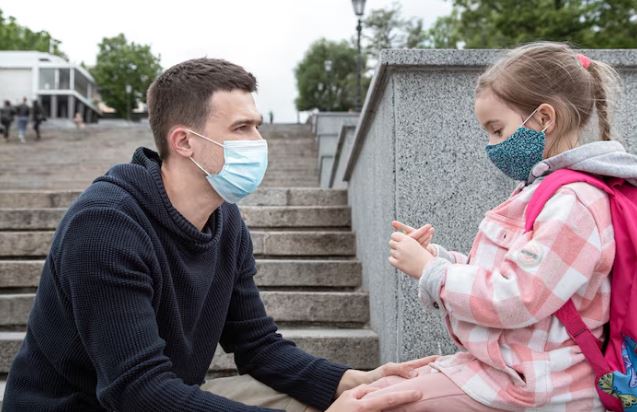
When my neighbor’s seven-year-old asked her mother why “the petrol uncle” appeared irate on the news, the mother froze, holding a half-peeled Mandarin. The child had just been waiting for an explanation on a Tuesday night in Islamabad while the television was murmuring about tensions in the Strait of Hormuz. That scene has a subtly devastating quality. Children observe everything. When the headlines shift, they notice the tightness in your shoulders, and when fuel prices rise, they notice that the conversation in the kitchen abruptly becomes sharper and shorter.
In 2026, parents are expected to explain a fragmented world to a child who has access to TikTok before lunch—something that their own parents hardly ever had to do on this scale. The wars are no longer tucked away in the evening news. A classmate’s joke, a YouTube advertisement, an older cousin’s WhatsApp forward, the price of milk, or a father muttering about diesel on his way home are some of the indirect ways they get there. Additionally, children are far more aware than adults like to think, as child psychiatrists frequently remind us. Simply put, they frequently lack the vocabulary to ask politely.
| Quick Reference | Details |
|---|---|
| Topic Focus | Helping parents discuss war, conflict, and global instability with kids |
| Recommended Age Range | 4 to 16 years, with conversation depth scaled to maturity |
| Key Authority | UNICEF, child psychologists, and pediatric mental health specialists |
| Common Triggers in 2026 | Middle East escalation, Ukraine, Sudan, oil price spikes, school playground talk |
| Children Affected Globally | More than 1 in 5 children live amid armed conflict |
| Recommended Conversation Time | Family meals, walks — never just before bedtime |
| Watch For | Stomachaches, clinginess, nightmares, sudden withdrawal |
| Trauma Resource | National Child Traumatic Stress Network fact sheets for caregivers |
| Core Principle | Listen first, validate feelings, then explain in age-appropriate language |
| Caregiver Reminder | Children read your face before they hear your words |
Over the past few years, the tone of advice from groups like Save the Children and UNICEF has changed. It is now more confessional and less clinical. Start with your child’s prior knowledge. Don’t give lectures. Don’t bury the subject. Additionally, and this is the part that usually surprises people, don’t act like you know everything because kids find pretending to be unsettling. In some ways, it’s more terrifying for a parent to confidently explain a war they don’t truly understand than for a parent to quietly say, “I’m not sure either, but here’s what I do know.”
When oil prices rise and household budgets clearly tighten, there’s a temptation to bring up economics too soon. However, a nine-year-old doesn’t require instruction in Brent crude. They must realize that the family is fine, that adults are working on the issue, and that uncertainty in the outside world does not translate into uncertainty at home. Here, routines are more important than explanations. The same time for bed. The same breakfast on Saturday. the same stroll to school. When provided consistently, stability is a language unto itself.
Observing what they’re taking in is beneficial. You can learn something from a child who abruptly stops eating breakfast or who begins to ask oddly detailed questions about gas stations. This also applies to the person who becomes extremely silent when the news breaks. For years, experts at the NCTSN resource library have observed that children’s distress rarely manifests as distress; instead, it manifests as stomachaches, irritability, clinginess, and occasionally sudden outbursts of anger. Saying aloud that it’s normal to feel afraid validates those emotions and accomplishes more than any geopolitical synopsis could.
It’s difficult to ignore how the parents are subtly changing as a result of the conversations. Fathers and mothers who once vowed to protect their kids from the outside world are now sitting at dinner tables, chopping fruit and searching for words to describe things they hardly comprehend. Perhaps the true lesson hidden in all of this is that. The war doesn’t need to be explained. All you need to do is remain in the room.