
The fact that a writer who could conjure up an entire alternate 19th-century England, complete with magic, footnotes, and made-up history, was unable to leave a darkened room for more than ten years is somewhat ironic. The illness that befell Susanna Clarke did not develop gradually. She claims that she just passed out while attending a dinner party. The ensuing fatigue did not go away for weeks, and what had started as a vague feeling of exhaustion eventually solidified into a diagnosis of chronic fatigue syndrome, which is occasionally discussed alongside Lyme disease and Epstein-Barr virus, though the exact cause has never been determined.
The timing is important to keep in mind. Almost overnight, Jonathan Strange & Mr. Norrell had elevated her to the status of one of Britain’s most renowned fantasy novelists. Her debut took ten years to write in stolen hours before 5:30 in the morning, sold on an unfinished manuscript, and was simultaneously printed in 250,000 hardcover copies in three different countries. The book tour followed. Then the collapse occurred. Success came at the precise moment her body decided it could no longer handle the demands placed on it, and there’s something almost cruel about the sequencing.
What came next reads more like a protracted negotiation with uncertainty than a tale of recovery. She explained that brain fog made it hard to keep complicated concepts cohesive, which is a particularly harsh symptom for someone whose entire profession relies on handling lengthy, footnoted narratives. During the darkest moments, she experienced what she has described as “quite severe depression.” Subsequent interviews also mention agoraphobia and times when she was essentially bedridden. She once said that the sun felt like “an oppression, a weight leaning on me.” It’s difficult to ignore the physicality of that language, which is more akin to being crushed by the outside world than metaphorical tiredness.
If there was a turning point, it occurred nearly ten years later when she received an invitation to visit the set of the television version of Jonathan Strange, which was being filmed in Yorkshire. Something seemed to loosen as she watched others bring her made-up world to life. “They were treating me like I was an author,” she said, “and I thought, ‘I’m not an author, I’m just this ill woman who’s been ill for a very long time.'” She seems to have been nudged back toward the page, tentatively, in fragments, just as she had constructed her first novel, when she was perceived as a writer once more instead of a patient.
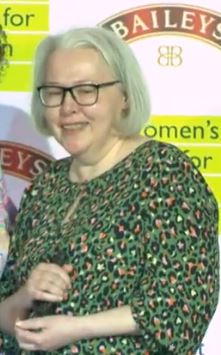
The novel Piranesi, which was published in 2020 and won the Women’s Prize for Fiction the following year, was inspired by an idea she had been harboring since her twenties: a man who lived inside an endless home full of tides and statues. She has stated that she picked it in part because it seemed more doable than the expansive sequel that fans had been waiting years for. Reading her description of that time gives me the impression that the book’s cramped, maze-like setting reflects something about the illness itself, a world reduced to what was still bearable.
This article discusses mental health and chronic illness. Talking to a doctor or other trusted professional could be beneficial if any of this resonates with you personally. The fact that a writer who could conjure up an entire alternate 19th-century England, complete with magic, footnotes, and made-up history, was unable to leave a darkened room for more than ten years is somewhat ironic. The illness that befell Susanna Clarke did not develop gradually. She claims that she just passed out while attending a dinner party. The ensuing fatigue did not go away for weeks, and what had started as a vague feeling of exhaustion eventually solidified into a diagnosis of chronic fatigue syndrome, which is occasionally discussed alongside Lyme disease and Epstein-Barr virus, though the exact cause has never been determined.
The timing is important to keep in mind. Almost overnight, Jonathan Strange & Mr. Norrell had elevated her to the status of one of Britain’s most renowned fantasy novelists. Her debut took ten years to write in stolen hours before 5:30 in the morning, sold on an unfinished manuscript, and was simultaneously printed in 250,000 hardcover copies in three different countries. The book tour followed. Then the collapse occurred. Success came at the precise moment her body decided it could no longer handle the demands placed on it, and there’s something almost cruel about the sequencing.
What came next reads more like a protracted negotiation with uncertainty than a tale of recovery. She explained that brain fog made it hard to keep complicated concepts cohesive, which is a particularly harsh symptom for someone whose entire profession relies on handling lengthy, footnoted narratives. During the darkest moments, she experienced what she has described as “quite severe depression.” Subsequent interviews also mention agoraphobia and times when she was essentially bedridden. She once said that the sun felt like “an oppression, a weight leaning on me.” It’s difficult to ignore the physicality of that language, which is more akin to being crushed by the outside world than metaphorical tiredness.
If there was a turning point, it occurred nearly ten years later when she received an invitation to visit the set of the television version of Jonathan Strange, which was being filmed in Yorkshire. Something seemed to loosen as she watched others bring her made-up world to life. “They were treating me like I was an author,” she said, “and I thought, ‘I’m not an author, I’m just this ill woman who’s been ill for a very long time.'” She seems to have been nudged back toward the page, tentatively, in fragments, just as she had constructed her first novel, when she was perceived as a writer once more instead of a patient.
The novel Piranesi, which was published in 2020 and won the Women’s Prize for Fiction the following year, was inspired by an idea she had been harboring since her twenties: a man who lived inside an endless home full of tides and statues. She has stated that she picked it in part because it seemed more doable than the expansive sequel that fans had been waiting years for. Reading her description of that time gives me the impression that the book’s cramped, maze-like setting reflects something about the illness itself, a world reduced to what was still bearable.
This article discusses mental health and chronic illness. Talking to a doctor or other trusted professional could be beneficial if any of this resonates with you personally.