
For many years, insomnia was confined to a peculiar area of medicine. Patients talked about it almost apologetically, as if it were something to manage rather than treat, similar to how they would talk about an old knee injury or a sore back. Physicians prescribed melatonin, advised avoiding caffeine after 3 p.m., and may have written a brief prescription for zolpidem if conditions worsened. The weather was viewed as unpleasant, sometimes severe, but generally something to wait out. Silently, that framing is disintegrating. If you walk into a psychiatric clinic today, you’ll see a different dialogue emerging, one in which insomnia may be the primary cause of mental distress rather than just a symptom of it.
Speaking with experts in the field gives the impression that the medical establishment has been lagging behind a narrative that patients have been sharing for decades. Seldom do people who suffer from chronic insomnia say they are simply exhausted. They talk about a state that is similar to mental static—a wired but exhausted state that persists even after they eventually fall asleep. This is now known to clinicians as hyperarousal, which is changing our understanding of the disorder. Chronic insomnia is not caused by the brain’s silent inability to fall asleep. It is actively rejecting, trapped in a state of alertness that more closely resembles the neural signature of anxiety than the neural signature of exhaustion.
Not in an academic sense, but that distinction is important. You treat the symptom and move on if insomnia is simply the noisy cousin of fatigue. If it’s hyperarousal, you’ll see changes in cortisol rhythms, increased metabolic rates throughout the entire 24-hour cycle, and HPA-axis activation, all of which are nearly identical to symptoms of major depression. The reticular activating system, hypothalamus, and thalamus—regions of the brain that promote wakefulness—fail to completely shut down at night in individuals with chronic insomnia, according to imaging studies. Sleep onset simply dims the system rather than turning it off. It’s difficult to ignore that the next time someone claims they “couldn’t shut their brain off.” They really do mean it.
The prediction data is what has made this reframing popular. For the past 20 years, longitudinal research has been accumulating, and the pattern is remarkably consistent: insomnia usually appears first. Not as an ill-defined emotion, but as a quantifiable sleep issue that occurs months or years before depression is diagnosed. Depending on the cohort, the risk multiplier is approximately threefold. Because anxiety and insomnia share similar neurochemical pathways, disrupted serotonin and dopamine signaling, and rumination loops at two in the morning, researchers found that the relationship for anxiety disorders is similar, if not worse. used to quarrel over the direction of the arrow.
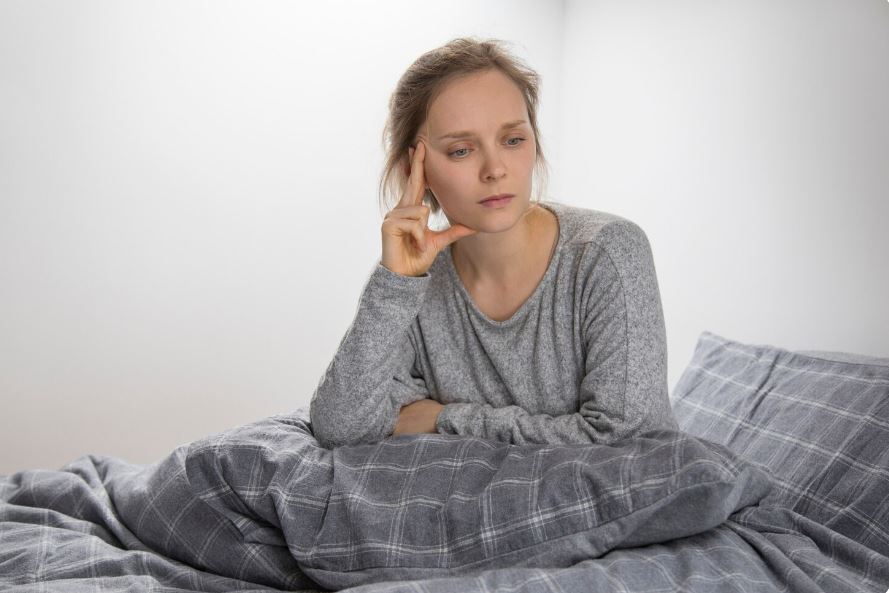
Was mental illness a result of sleep disturbances, or was insomnia a prodromal symptom of mental illness? Most people now agree that the arrow feeds back on itself and travels both ways. A poor sleep month increases emotional reactivity, which feeds rumination, which exacerbates sleep disturbance, which exacerbates mood symptoms. The vicious cycle is not a metaphor; rather, it is a fairly literal description of the fragmentation of REM sleep architecture that occurs in both insomniac and depressed patients in nearly identical ways.
But what truly changed the field was the research on suicide. Even after controlling for depression, substance abuse, and other common suspects, severe insomnia is found to be an independent risk factor for suicidal behavior.
This is a disturbing discovery that compelled psychiatrists to consider the sleep complaint as a separate clinical signal. The good news is that treating insomnia, especially with cognitive behavioral therapy for insomnia (CBT-I) instead of sedatives, has been demonstrated to lower the rate of psychiatric relapse and suicidal ideation. That’s an impressive assertion for what was once thought to be a quality-of-life problem.
The comorbidity figures speak for themselves. A co-occurring psychiatric disorder affects between 40 and 50 percent of individuals with insomnia, and the percentage rises when you consider particular conditions. Clinically significant insomnia symptoms are reported by between 70 and 80 percent of anxiety patients. It is nearly always a part of PTSD. Sleep disturbance is more than just a side effect of bipolar disorder, ADHD, and obsessive-compulsive disorder. It is often the most incapacitating aspect of the diagnostic picture. According to one study, patients with breast cancer who also experienced insomnia reported higher levels of pain, exhaustion, and depression compared to those who slept well. The course of their overall recovery was altered by treating their sleep.
As this develops, it’s difficult to avoid feeling that medicine undervalued something that was there for a generation. Spielman’s 1987 3-P model, which included predisposing factors, precipitating events, and perpetuating behaviors, already outlined the architecture. The structure was sound. The willingness to treat insomnia as a primary disorder rather than a bother, as well as the understanding that those recurring behaviors are the brain’s clumsy attempts at coping rather than moral failings, were lacking. A patient who spends ten hours lying in bed in an attempt to “catch up” is not lacking self-control. The conditioned arousal that initially keeps them awake is being reinforced by them.
The new framing is still met with opposition, especially in primary care. Similar to depression symptoms in the elderly, sleep complaints in older patients are frequently linked to aging. Together, they become entangled, dismissed, and treated with a sedative-hypnotic that may provide temporary relief but seldom treats the underlying hyperarousal. In adults over 65, the prevalence of insomnia rises above 25%, and the connection to cognitive decline is now being thoroughly investigated to the point where some researchers view chronic insomnia as a sign of vulnerability rather than an aspect of aging.
The cultural shift has been remarkably slow in comparison to the scientific one. People still treat their insomnia with a kind of stoic embarrassment, as though it were a personal shortcoming, as though everyone else was getting a good night’s sleep and they simply hadn’t figured it out. Cool rooms and herbal tea are still highlighted on sleep hygiene posters in doctor’s offices. While this is good in theory, it won’t help if the underlying issue is a brain that is unable to enter the inhibitory state required for sleep onset. In a subtle way, telling someone who is hyperaroused to “just relax” constitutes medical malpractice.
It’s unclear where this is going. CBT-I has surpassed medication as the first-line treatment in the majority of clinical guidelines, and its long-lasting effects are still impressive. Newer pharmaceuticals that target orexin pathways are promising because they don’t have the same dependency profile as older sleep aids. The more significant shift, though, might be cultural: the gradual realization that sleep is a structural component of mental health rather than an add-on. Speaking with professionals in this field gives me the impression that once sleep is viewed as central rather than peripheral, the next ten years of psychiatric research will look very different. It’s still unclear if the rest of medicine will catch up in time. In any case, the patients have been waiting for a long time.