
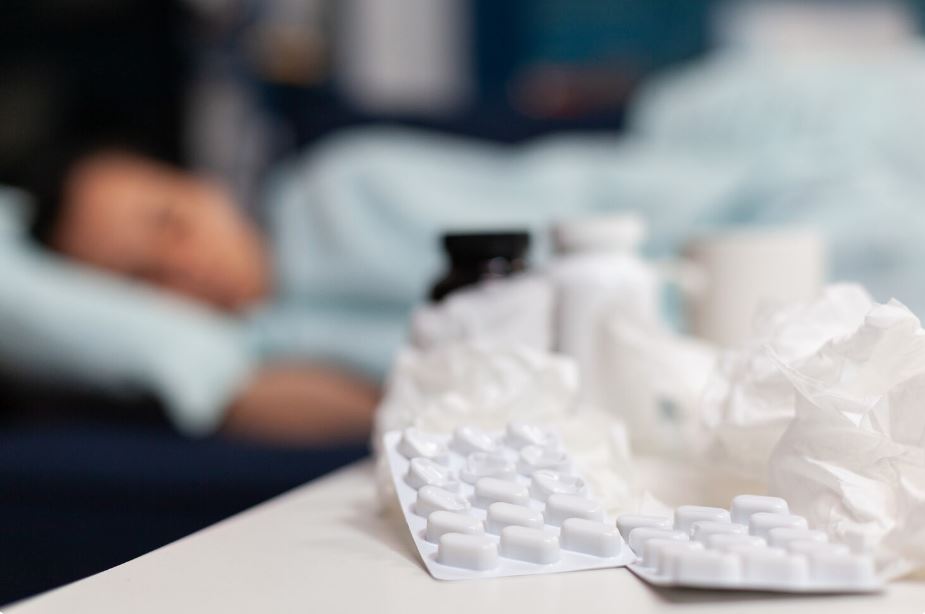
A familiar scene can be seen late at night in sleep clinics all over the world. While doctors describe how a CPAP machine will force air into their airways while they sleep, patients sit on the edge of small examination beds with plastic masks resting on their laps. The device functions. The majority of experts concur. However, anyone who has visited those clinics is aware of another fact: a lot of patients secretly detest the gadget.
For many years, the most common treatment for obstructive sleep apnea has been continuous positive airway pressure, or CPAP. By providing a constant flow of air through a mask worn while you sleep, it keeps your airway open. Theoretically, it’s easy. In reality, a lot of people give up on it after a few months due to complaints about discomfort, noise, or the odd feeling of being attached to a machine while they sleep.
| Key Information | Details |
|---|---|
| Drug Name | Sulthiame |
| Brand Name | Ospolot |
| Original Use | Treatment for certain forms of epilepsy |
| New Research Focus | Potential treatment for obstructive sleep apnea |
| Key Study | European clinical trial published in The Lancet (2026) |
| Effectiveness | Up to 47–50% fewer breathing interruptions during sleep |
| Mechanism | Carbonic anhydrase inhibitor stabilizing breathing signals in the brain |
| Trial Participants | ~298 adults with moderate to severe sleep apnea |
| Current Approval | Approved for epilepsy in parts of Europe |
| Status for Sleep Apnea | Investigational; not yet approved in the U.S. or Canada |
| Reference | https://www.sciencedaily.com |
For this reason, the concept of an epilepsy medication for sleep apnea has begun to gain traction in the medical community. Since the 1950s, the drug known as sulthiame has been available. In some parts of Europe, it has been used for decades to treat specific types of epilepsy. There was no indication in that history that it would be tested as a sleep disorder treatment.
However, that is precisely what scientists have recently investigated. Sulthiame was tested on adults with moderate to severe obstructive sleep apnea in a European clinical trial that was published in The Lancet in 2026. Participants from several nations, including Germany, France, Belgium, and Spain, numbered close to 300. A placebo was administered to some, and various daily dosages of the drug were given to others before bedtime.
Though not totally conclusive, the results were fascinating. When compared to patients taking a placebo, patients taking higher doses of sulthiame reported 47–50% fewer breathing disruptions while they slept. Additionally, their blood oxygen levels increased, which is significant when managing a condition that frequently deprives the body of oxygen during the night.
There is a feeling of cautious excitement when observing the early response from sleep researchers. The results do not ensure that a novel treatment will be developed in the future. Clinical trials are messy, and in larger studies, early success occasionally wanes. It’s hard to ignore the numbers, though.
The prevalence of sleep apnea is startlingly high. According to some estimates, the condition affects almost a billion people globally. Many people are unaware of it. Others don’t realize the issue until their partners complain about loud snoring or gasping at night.
Physicians use straightforward language to explain the underlying issue. The airway collapses during sleep because the throat’s muscles relax too much. Sometimes dozens of times an hour, breathing pauses for a few seconds. Oxygen decreases. The sleeper is momentarily awakened by the brain to resume breathing.
The cycle is repeated night after night. Heart disease, hypertension, stroke, diabetes, and even cognitive issues have all been connected to untreated sleep apnea over time. It’s the type of illness that gradually erodes health over many years.
Sulthiame seems to function by interfering with the respiratory control system. The medication modifies the body’s acid-base balance slightly as a carbonic anhydrase inhibitor, promoting more stable breathing signals in the brain. Put more simply, it might assist the body in keeping a steadier breathing rhythm while you’re asleep.
Researchers are interested in that mechanism because it approaches the issue differently than CPAP. The medication may assist the body in better controlling breathing on its own, rather than mechanically opening the airway.
Uncertainty still permeates the atmosphere. The majority of the trial’s reported side effects were minor, such as tingling in the hands or feet. However, when drugs are studied over longer periods of time in larger populations, they frequently exhibit different behaviors. Physicians are well aware of this. It’s not always easy to apply a treatment that works for a few hundred patients in a trial to regular clinical practice.
The regulatory issue is another. Although sulthiame has been approved for epilepsy in several nations, neither the US nor Canada has ever approved it for sleep apnea. This implies that there may still be years of evaluation, more trials, and regulatory reviews to come.
However, it’s difficult to ignore the change in tone among researchers when they talk about the study. Machines, masks, or surgery have been the mainstays of sleep apnea treatment for many years. The notion that a straightforward medication could help manage the illness, even in part, seems like a shift in perspective.
The most intriguing aspect might be how surprising this finding appears to be. Many medications in medical history have saved lives by treating diseases that no one could have predicted. After all, aspirin was first used to treat pain before medical professionals recognized its potential to prevent heart attacks.
Sulthiame might or might not take that route. It’s early yet. Even scientists are cautious about making overly optimistic claims.
However, there’s a growing feeling that the quest for a more straightforward treatment for sleep apnea may have just made an unexpected breakthrough while observing patients breathe through the night in those quiet sleep laboratories.