
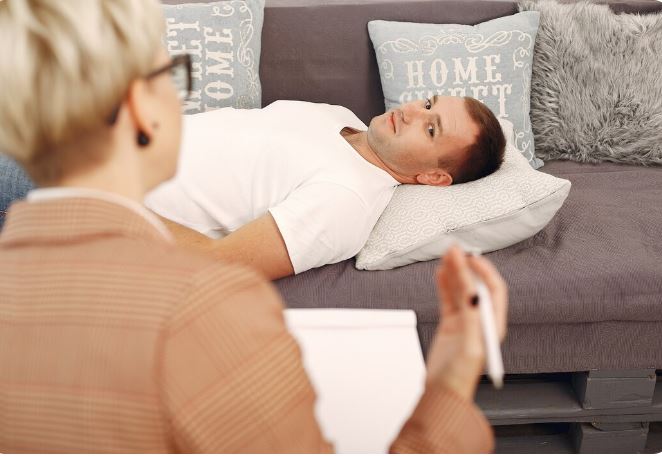
I once heard from a friend that she would rather wait for a haircut than see a private therapist. I didn’t trust her at the time. I then gave it a try. Often, the journey begins in silence. a search field. A list. a face that appears friendly, or at the very least, not menacing. After clicking and reading a few lines, you pause. After a while, you send a brief message saying, “Hey, I need help.”
Even though this first step seems insignificant, it sets the stage for something that can start remarkably quickly. Private therapists often reply in a day or two. Even people with hectic schedules typically respond within five business days. The first response is typically very clear, succinct, businesslike, and frequently kind. It details costs, availability, and occasionally gives the option of in-person or online sessions.
| Detail | Description |
|---|---|
| Initial contact response | Within 2–5 days, often sooner |
| Time to first session | Typically 7–21 days after contact |
| Cost per session | £40–£120 depending on region and specialism |
| Booking process | Directly with therapist (online or by email) |
| NHS wait by contrast | Usually 4–18 weeks, often longer |
| Common platforms to find therapists | BACP, UKCP, Psychology Today |
| Factors that affect wait | Location, therapist’s availability, special requirements |
Within one to three weeks after that, the first session is usually scheduled. People are sometimes given slots for the same week. The difference is immediately noticeable to someone who is accustomed to waiting months for NHS appointments.
Private therapy became a choice that people were discreetly turning to during the pandemic, when waiting lists grew longer and mental health referrals increased—sometimes out of necessity, sometimes out of pure frustration. It went beyond simply avoiding a line. It was about taking back control when things seemed to be stuck.
Depending on where you live, you may be seen more quickly. Compared to parts of the South West or East of England, the average wait time is much lower in places like the West Midlands. Because of their larger networks and common practices, therapists are typically more accessible in urban areas.
There may be longer waiting lists for specialist therapists who are trained in trauma-focused techniques like EMDR or who work with particular cultural or gender identities. However, a lot of them allow for flexibility for new referrals, particularly when the fit seems significant.
Although private therapy is not free, the timeline itself frequently contributes to its allure. Although 75% of patients are expected to receive treatment within six weeks according to NHS targets, actual experiences reveal a different picture. A six-week deadline turns into a 12-week hold-up, which then turns into a four-month check-in call. And occasionally, the last straw is that delay.
Therapists with independent accreditation are listed on websites such as UKCP and BACP. In-depth details regarding the problems they handle, the formats of their sessions, and whether they provide initial consultations are frequently included in their profiles. Many provide a first meeting at a reduced rate, which is a kind of soft landing.
Although it’s not therapy in the traditional sense, that initial discussion is a crucial place to start. It’s the point at which progress begins. Some people get a sense of momentum just from that. You’ve begun the process and are no longer waiting for assistance.
During my own search, I recall being taken aback by how quickly something that had seemed difficult and ambiguous became clear. A call. A query. A date. That was all.
The timeline may also be impacted by the format of the sessions, whether they are conducted online or in person. Sessions conducted online are especially effective. No travel, no trouble making reservations for a room, and frequently more flexibility in terms of hours. That can be a game-changer for parents or working professionals.
However, not everyone desires to have a screen between them and their therapist. Following the pandemic, in-person sessions have seen a notable resurgence, and some therapists now divide their time between the two formats based on demand.
The largest obstacle for many is, of course, the financial aspect. Although prices vary, they typically range from £50 to £90. Therapists can charge up to £100 in London and other large cities, but fees may be significantly lower in smaller towns or rural areas. Sliding-scale pricing is offered by some therapists, but these positions fill up fast.
If the therapist is registered with your provider and you have a referral from your general practitioner, sessions may be covered for those with private health insurance. The coverage can be a lifesaver, but the administrative work can be tiresome.
Additionally, charities like Mind, Anxiety UK, and Cruse provide less expensive therapy, which is especially helpful for people with limited funds. While still varying, their waiting lists are sometimes shorter than those of the NHS. University counseling services are frequently available to students, and companies with EAPs may provide a number of free sessions as part of a benefits package.
The private system is especially innovative because it gives patients the option to choose not only their therapist but also their frequency, approach, and length of stay. There isn’t a maximum. When you’re finished is up to you.
Some people attend six sessions, resolve a particular problem, and then move on. Others explore deeper emotional landscapes or patterns they’ve carried for decades for a year or longer. Private therapy is very adaptable because of this flexibility.
Of course, there are no assurances. A quick appointment does not guarantee healing right away. That brief period of time between reaching out and sitting down, however, becomes an essential component of recovery when assistance is required immediately rather than months later.
Private therapy restores momentum by avoiding lengthy wait times, and for many people, that’s the first step toward feeling better.