
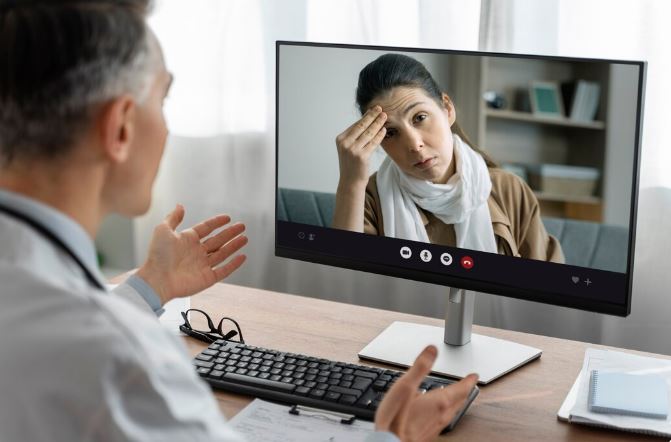
One of my friends drives himself to therapy. He puts his phone on the dashboard, drives to a peaceful layby once a week, and logs into his session. More private than his flatshare and more flexible than trying to fit in travel time, he claims it’s the only place he can talk openly. He’s not by himself. More people are choosing how and where to receive assistance.
In the UK, online therapy is no longer a last resort. It’s a final decision. A method that many people prefer. And it works incredibly well, particularly for depression, anxiety, stress, and burnout. Access to care has been reshaped by what started out as a pandemic necessity and has subtly become a permanent fixture.
| Comparison Point | Online Therapy | Face-to-Face Therapy |
|---|---|---|
| Cost Per Session | £40 to £80 (average) | £60 to £150 (average) |
| Accessibility | Available anywhere with internet | Dependent on location and transport |
| Waiting Time | 1–7 days (on average) | 2–12+ weeks (can vary by region) |
| Privacy & Setting | Home-based, may lack confidentiality | Confidential, structured environment |
| Therapist Options | Nationwide or global choice | Localised pool, fewer options |
| Ideal For | Anxiety, mild depression, work stress | Complex trauma, severe mental health |
| Session Flexibility | Easy to schedule around work/life | Fixed time and travel required |
| Non-Verbal Cues | Limited or harder to observe | Fully visible and interpretable |
| Environment Control | May include distractions at home | Quiet, neutral, distraction-free space |
The therapy room hasn’t vanished in the interim. It still has a certain weight. Many people find that entering that peaceful, neutral area—where there are no interruptions or background kettle whistles—feels grounding in a way that video calls cannot match. It has an element of containment. You come, you sit, you talk, and you go again.
However, therapy has never been universally applicable. What is effective for one individual at a given time might not be effective for another. It is now more about preference—what suits your life’s rhythm, the intensity of your need, and the emotional landscape you’re traversing—than availability when deciding whether to log in or show up.
Digital therapy is very adaptable. Speaking with a professional from your kitchen table or during your lunch break can be life-changing for someone who is juggling a busy workday, raising kids, or living in a remote village without access to local therapists. Instead of the other way around, it’s therapy that works with your day.
And this is reflected in the numbers. Online session completion and engagement rates are high, according to therapists. The results of recovery are similar to those of traditional therapy, and in certain cases, significantly better. Digital therapy can intervene earlier, before a situation worsens, by drastically cutting down on the time between initial contact and the first session.
Even so, the screen obscures something.
A lot of therapists talk about how difficult it is to read subtle nonverbal cues. Small posture changes that indicate discomfort or breakthrough, a clenched hand, or a deepening breath don’t always translate well on a webcam. Additionally, being physically present in a room with another human can be incredibly grounding for clients who experience emotional overload or dissociation.
I’ve had conversations with a number of practitioners in recent months who now provide hybrid models. Initially, there should be a few face-to-face meetings to establish familiarity and trust before any necessary online work. People balancing obligations or moving through various stages of care benefit most from this type of blended approach.
One therapist in London described how she frequently starts in-person sessions with traumatized clients before switching to video sessions once the therapeutic basis has been established. “The goal is to make therapy more emotionally and practically sustainable,” she stated. “The client should benefit from the format, not the other way around.”
Privacy is a two-way street. Confidentiality is expected and structured in a private therapy setting. Since not everyone can close a door or ensure they won’t be disturbed, online therapy depends on the client’s surroundings to provide the same sense of security. Paradoxically, the ease of living at home can present a unique set of challenges.
Cost and convenience, however, continue to be important considerations for many. Online therapy frequently has lower overhead costs for the therapist, which may result in more affordable rates. No taxis, no train tickets, and no time wasted finding new buildings. Some people are able to commit in the first place because there is less friction.
Face-to-face therapy remains the more secure and successful option for individuals dealing with high-risk mental health conditions, such as severe emotional dysregulation, psychosis, or suicidal thoughts. These circumstances frequently call for more careful observation, crisis planning, and quick action—all of which are impossible to provide via a screen.
However, it is encouraging that clients and therapists are now willing to talk about format. The days of rigid or silent therapy are long gone. Now, clients come asking, “Do you do online?” “May I change later?” “Will the sensation be different?” Additionally, therapists typically respond to those inquiries with flexibility rather than condemnation, especially those who are adjusting to contemporary schedules and resources.
A client once told me that she could never have imagined opening up to someone via a laptop, but after a few weeks, she started to look forward to those sessions in the same way that she used to look forward to journaling. She felt less afraid to be honest because she was comfortable in her own space.
The foundation of therapy has always been connection, and geography is not the only factor in that connection. Tone, timing, consistency, and trust are its defining characteristics. Healing is still shaped by that bond, whether it is shared via a screen or across a desk.
In the end, the decision between online and in-person therapy should be based more on what works for you at this time in your life than on what is theoretically best. The right decision is frequently the one you’ll stick with—the one that provides a space to let go of pressure rather than adding more.
Many people in the UK believe that there will be multiple paths for therapy in the future. Adaptable, responsive, and founded on the idea that efficacy should never be sacrificed for access. And that could be the most potent change of all, in a subtle way.