
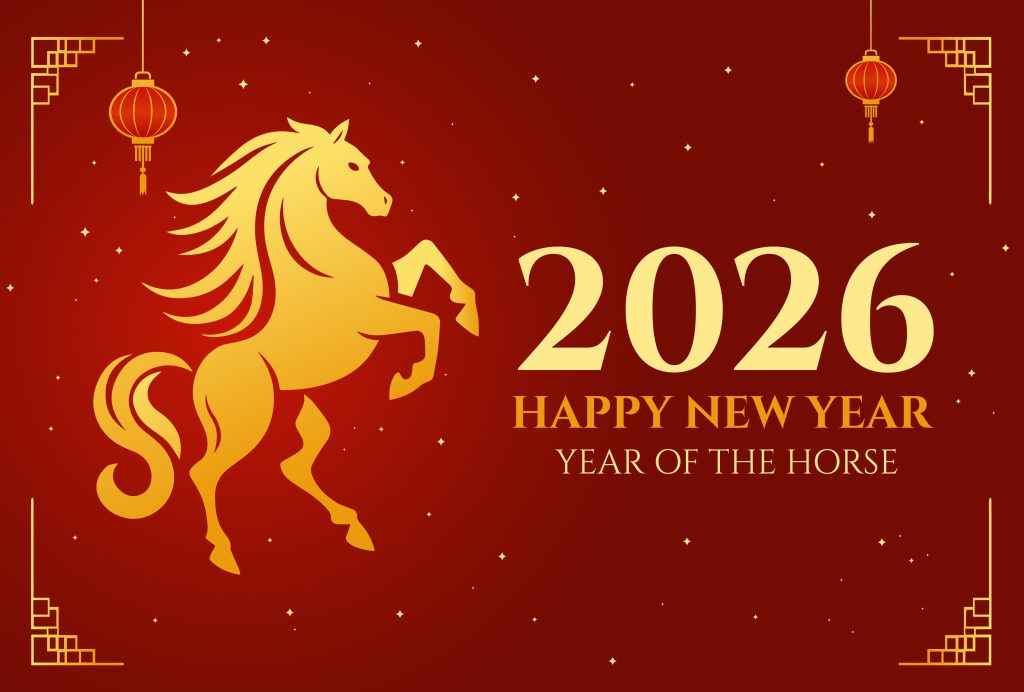
The arrival of the Chinese Lunar New Year Fire Horse, a pair that only happens once every sixty years and is known for movement, intensity, and renewal, has been marked in recent days by the glimmering of red lanterns on streets from Shanghai to San Francisco.
A cycle that many characterize as especially inventive began on February 17, 2026, when the lunar calendar reset with the first new moon. This cycle combined the fire’s urgency with the Horse’s drive, producing an energy that feels both ambitious and alive.
| Key | Details |
|---|---|
| Festival | Lunar New Year (Spring Festival) |
| Start Date (2026) | February 17, 2026 |
| Zodiac Animal | Horse |
| Element | Fire |
| Zodiac Cycle | 12 animals rotating annually |
| Element Cycle | 5 elements rotating every two years |
| Full Combination Frequency | Each animal-element pairing occurs once every 60 years |
| Previous Fire Horse Year | 1966 |
| Celebration Duration | About 15–16 days, ending with the Lantern Festival |
| Core Traditions | Reunion dinners, red envelopes, lanterns, fireworks, ancestor honors |
The zodiac rotates through twelve animals and layers five elements over time to create sixty different combinations that return with almost mathematical elegance, operating with a precision that is remarkably similar to that of a well-calibrated clock.
The combination this year is uncommon.
The horse represents endurance, independence, and forward motion—qualities that have long been valued in trade and agriculture, where fortitude and endurance were not poetic metaphors but rather everyday needs influencing communities and livelihoods.
In contrast, fire intensifies everything it comes into contact with. The Fire Horse is a sign that is frequently characterized as being exceptionally effective at inspiring audacious decisions because it is quick, bright, and transformative, able to warm homes or change the landscape.
Particularly among younger generations fusing tradition with contemporary ambition, discussions about the zodiac have become much more nuanced over the last ten years, moving from straightforward personality traits to more expansive reflections on momentum, creativity, and calculated risk-taking.
In 1966, when the Fire Horse last appeared, birth rates in Japan reportedly fell because families were afraid that daughters born under that sign might be too independent. That year is remembered in some cultures as a time of superstition and hesitation.
The idea that a calendar symbol could affect such intensely personal choices intrigues me subtly.
Today, that fear has mostly subsided and been replaced by a positive interpretation that views the Fire Horse as promoting self-reliance and fortitude—qualities that are especially advantageous in a time of swift social and technological change.
Many families start the Lunar New Year with reunion dinners, where the food is thoughtfully arranged around circular tables to represent continuity and unity. Elders also give out red envelopes containing cash, which are blessings for good health and prosperity.
In a ritual that is still remarkably successful at bringing neighborhoods together in shared celebration, firecrackers crack sharply at dawn, their echoes bouncing off concrete towers, reenacting an ancient legend of scaring away the mythical Nian beast.
The 15-day celebration culminates with lantern festivals, which light up public squares with glowing dragons, horses, and calligraphy. Each lantern sways gently, seemingly enlivened by the energy that the year symbolizes.
The Horse’s movement symbolism seems remarkably applicable in today’s world.
The year is framed as especially innovative for entrepreneurs, encouraging bold endeavors and decisive action, much like a startup that scales quickly by utilizing new tools, optimizing processes, and freeing up human talent.
The Fire Horse represents momentum for students and young professionals, promoting creative endeavors or career changes that, while once risky, now seem emotionally surprisingly affordable.
Astrologers frequently characterize people born in the Horse year as being vivacious, outgoing, and independent, but also occasionally stubborn. This combination can be very dependable when used properly, but difficult if ignored.
This year is symbolically faster and more volatile when fire is added, serving as a reminder that, like a high-performance engine that needs careful steering, ambition should be paired with reflection.
Many people reevaluated their priorities during the pandemic, placing a higher value on resilience and adaptability than on routine stability. The Fire Horse’s emphasis on flexibility seems to be particularly in line with this change.
Families are making the festival incredibly resilient by embracing innovation while upholding traditions, transferring traditions from one generation to the next, and modifying celebrations for use in digital gatherings and urban apartments.
Social media has been ablaze this week with images of stylized horses in crimson and gold, business messages emphasizing bravery and change, and friends telling each other to “wear red,” particularly if it’s their zodiac year.
Wearing red to ward off misfortune is a small ritual that feels especially grounding amid larger aspirations for those who are in their benming nian, or zodiac year.
Like changing gears on a highway and accelerating with purpose, the psychological shift from the reflective Snake to the kinetic Horse signifies a shift from introspection to action.
Many people will remember 2026 as a year marked by momentum rather than caution, when choices were made quickly but carefully, informed as much by tradition as by ambition.
The Chinese Lunar New Year Fire Horse is not merely a date on a calendar; it is a narrative framework, offering language for change and growth, encouraging individuals and communities to move forward with confidence, clarity, and courage.
The message seems particularly clear as lanterns shine and incense rises: channel the energy, channel the flame, and allow the year to unfold with purpose rather than hesitation.