
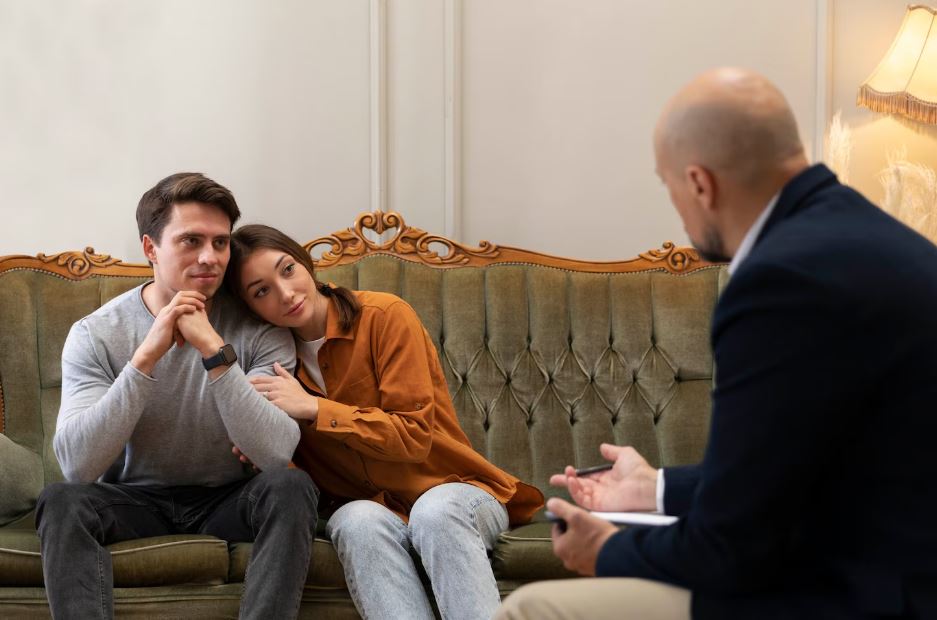
Younger generations have dramatically reimagined therapy as a preventative and empowering step, whereas previously it was thought of as a last resort for problematic relationships. Not because they are struggling, but because they want to succeed, an increasing number of couples are entering into marriage having already completed therapy sessions. Gen Z and millennials, in particular, are transforming marriage into something more purposeful, resilient, and flexible.
The figures are very convincing. Premarital counseling was chosen by 31% of millennials and 45% of Gen Z prior to marriage, according to The Knot’s 2023 Real Weddings Study. The increase seems noteworthy when compared to the meager 19 percent who followed the same course prior to 1990. Therapy has recently been reframed as proactive, akin to going to the gym or eating a healthy diet, which are actions taken out of a desire to stay strong rather than in response to failure.
| Information | Details |
|---|---|
| Trend | Couples are proactively seeking therapy before marriage |
| Generational Shift | 45% of Gen Z and 31% of millennials choose premarital counseling (The Knot 2023 Study) |
| Key Drivers | Higher expectations, reduced stigma, focus on preventative care |
| Benefits | Enhanced communication, conflict resolution, financial planning, aligned goals |
| Access | Online therapy platforms, organizations like Relate, and virtual services |
| Celebrity Influence | Kristen Bell & Dax Shepard openly credit counseling for strengthening their marriage |
| Societal Impact | Lower divorce rates, stronger family dynamics, improved emotional literacy |
| Research Support | Studies show premarital counseling lowers divorce risk by up to 30% |
| Cultural Shift | Therapy reframed as relationship self-care and resilience-building |
| Reference | Vogue: Why More Couples Are Opting for Premarital Counseling |
The dismantling of historical stigmas has been greatly aided by celebrities. Dax Shepard and Kristen Bell have discussed using therapy as a means of fostering rather than preserving their relationship on numerous occasions. Their candor strikes a deep chord with supporters, proving that therapy can coexist peacefully in a successful marriage. Their unabashed candor makes it abundantly evident that therapy is a sign of foresight rather than weakness.
Communication is where therapy has its most positive effects. According to John Gottman’s research, couples should learn how to argue effectively rather than trying to avoid conflict. They learn how to listen, think, and act without aggression through therapy. Couples are greatly lowering their chance of an early divorce and increasing marital satisfaction by putting these skills into practice before getting married. Being able to handle disagreements in a positive way is more important than avoiding them.
This trend has also been fueled by cultural pressures. Couples today face stressors like social media scrutiny, unstable economies, and the difficulties of dual-career households that were not present in previous generations. A very effective framework for talking about money management, family expectations, or even digital boundaries is provided by therapy. Couples start their marriages with clarity rather than uncertainty by developing this shared road map.
The formats of premarital therapy have also been incredibly inventive. It was formerly a religious institution formality, but it is now much more flexible. The practice has become surprisingly accessible and reasonably priced, as evidenced by services like Ours, which even lets couples add therapy sessions to their wedding registries. Couples can now more easily attend sessions from any location at any time thanks to the notable improvement in accessibility provided by virtual platforms.
There are significant societal ramifications. Stronger marriages result in a wider culture of emotional literacy, fewer children experiencing instability, and less stress leaking into workplaces. Couples are investing in emotional readiness at home in the same way that businesses are investing in mental health support for their staff. There are far more repercussions than just two people saying “I do.”
This proactive approach is supported by research evidence. According to a 2001 study by Scott Stanley, premarital education decreased divorce rates by 31%. This is consistently supported by more recent data, which shows that couples who seek counseling prior to marriage experience noticeably better communication, empathy, and satisfaction. These results clearly demonstrate that premarital therapy is a fundamental change rather than a passing fad.
The discourse has been amplified by popular culture. Millions of people listen to Esther Perel’s podcast Where Should We Begin, and shows like Netflix’s Couples Therapy have made it commonplace to hear candid discussions about intimacy and conflict. These forums have helped couples feel less alone by bringing personal struggles into the public eye. This openness generates a buzzing sense of community and validation, much like a swarm of bees cooperating.
The concept of marriage itself is evolving. It was frequently about tradition, stability, or financial security in previous generations. For younger couples, conscious alignment, shared values, and authenticity are key. Prior to marriage, therapy ensures that these discussions take place before miscommunications become bitterness. Instead of pretending to be flawless, it fosters resilience.
There’s also space for humor. Therapists frequently observe that minor peculiarities, such as a partner’s fixation on the location of toothpaste squeezes, can disclose more significant realities regarding routines, control, or comfort. When these are addressed in a nurturing environment, annoyances become chances for connection and laughter. It demonstrates that therapy need not be intimidating; it can be incredibly relatable, humorous, and enlightening.
In the end, optimism is reflected in this expanding trend. Today’s couples choose therapy in order to establish solid, purposeful marriages rather than waiting for issues to push them into it. It’s a positive development that speaks to a generation that is resolved to love with fortitude, speak honestly, and confront obstacles as a group with clarity. The popularity of premarital therapy is not merely a fad; rather, it represents a cultural shift in how love gets ready for the long term.