
Twenty years is a long time to wait for anything. Watching the same few medication options cycle through oncology wards year after year while advances in other cancers pile up like headlines you can’t quite relate to is an almost unimaginable stretch for a woman whose ovarian cancer has stopped responding to chemotherapy. This week marked the end of that wait. Mirvetuximab soravtansine, manufactured by AbbVie and marketed as Elahere, was approved for use on the National Health Service (NHS) by England’s National Institute for Health and Care Excellence. The response from cancer charities, medical professionals, and patients themselves carried a weight that felt genuinely different from the typical approval-day press releases.
The medication specifically targets platinum-resistant cases of ovarian cancer in which the tumors contain a protein known as folate receptor alpha. Platinum resistance, which indicates that the disease has resumed its progression within six months of the conclusion of chemotherapy, is a somber clinical milestone. The current treatments for those patients—weekly paclitaxel, pegylated liposomal doxorubicin, and topotecan—offer meager advantages but severe side effects. severe peripheral neuropathy that alters your gait. exhaustion that keeps you bedridden for days.
Nausea, hair loss, and a gradual decline in independence and social life. Mirvetuximab soravtansine effectively eliminated “feelings of isolation and loneliness” caused by conventional chemotherapy, according to one patient, Patricia Hill, a retired NHS physiotherapist from North London. She claims that the medication, which she has been taking since January, is the first treatment that has allowed her to move on with her life.
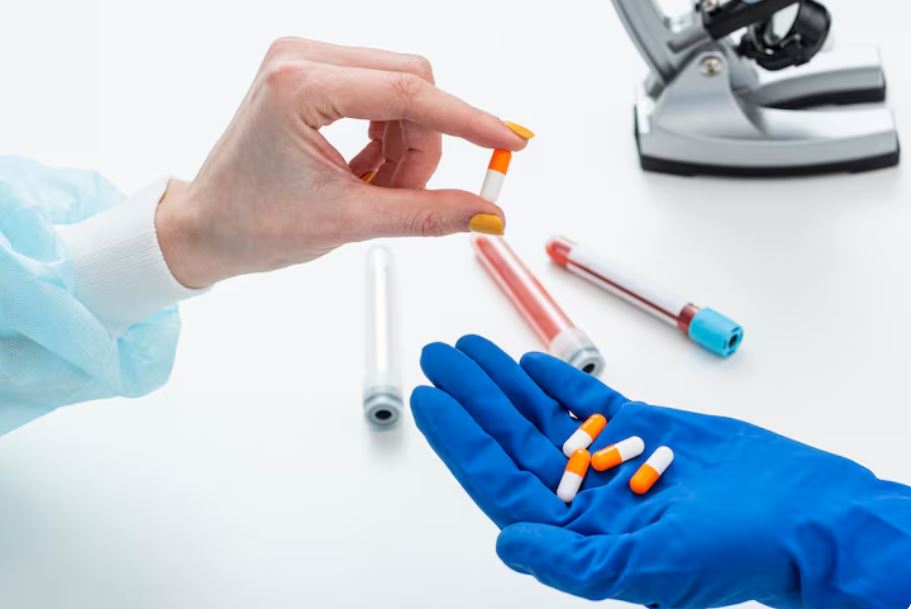
The mechanism of mirvetuximab soravtansine is unique. It has been dubbed a “Trojan horse” therapy by oncologists. Once an antibody binds to the folate receptor alpha protein on the surface of cancer cells, a molecule that kills cancer is released inside the cell. It mostly spares the surrounding healthy tissue. Although elegance in medicine seldom translates into dramatic numbers, it’s an elegant concept. Women on mirvetuximab soravtansine lived an average of 16.9 months compared to 13 months on standard chemotherapy, according to the MIRASOL trial, a phase three study involving 453 patients from various countries, including eight NHS hospitals. That’s about four more months. The chance of dying decreased by thirty-two percent. From four months to 5.6 months, the progression was postponed. In platinum-resistant ovarian cancer, where the prognosis is consistently dire, these are the kinds of numbers that don’t make front pages in other fields, but they are crucial.
Patient advocates believe that the emotional aspect of this approval is just as important as the survival statistics. Ovacome’s founder, Victoria Clare, referred to it as a “landmark moment,” and it’s difficult to disagree. In contrast to the weekly hospital visits required by chemotherapy, the treatment is given intravenously once every three weeks over a two-to four-hour session. Following her diagnosis in 2017, Jenny Green, a 71-year-old Royal Mail employee from Bishop’s Stortford, joined the clinical trial. She reported that her blood counts improved and her cancer nodules shrank, with “hardly any side effects at all.” Naturally, there aren’t many stories like hers, and it’s still unclear how the medication will function outside of the controlled setting of a trial in the larger, messier reality of regular NHS care.
In the first year, about 270 patients are anticipated to qualify; by the third year, that number is expected to increase to about 420 as the folate receptor alpha diagnostic test becomes more widely available. It is worthwhile to observe that testing bottleneck. List price for the medication is £4,950 per 100-milligram vial; however, AbbVie has negotiated a confidential discount with the NHS. The Cancer Drugs Fund provides immediate access; ninety days after the publication of final guidelines, routine commissioning takes place. As a reminder that NHS approvals do not automatically cross borders within the United Kingdom, Sinn Féin’s Mid Ulster representative has already written to Northern Ireland’s health minister to inquire about whether women there will have the same access.
Mirvetuximab soravtansine may serve as a model for how antibody-drug conjugates transform oncology outside of ovarian cancer. For uterine serous carcinoma, another folate-receptor-driven cancer, early-phase trials are combining it with pembrolizumab. It is still genuinely unclear if AbbVie can duplicate the outcomes of MIRASOL in various tumor types. However, those more general questions are of secondary importance to the women occupying infusion chairs throughout England this month. What matters is that something new has emerged after 20 years of repurposed chemotherapy regimens, and it seems to allow them to preserve more aspects of their lives while battling a disease that has long required them to give up almost everything.