
A quiet, nearly unremarkable photo of a young Tehrani woman with dark eyes, soft features, and an expression that says very little is making the rounds on the internet. No jaw deformity. There were no skeletal cheekbones that reached impossible angles. No pallor from a horror movie. By all standards, it is a typical face. However, it comes as something of a shock to millions of people worldwide who first saw Sahar Tabar through viral photos in the late 2010s.
Tabar, who was born Fatemeh Khishvand in Tehran in 2001, rose to prominence on the internet despite the fact that few people actually knew anything about her. The images that went viral were intentionally hideous, with lips that were out of proportion, a nose that was almost cartoonishly shaped, and skin that was completely devoid of color. The whole effect pushed violently in the direction of something inhumane. Rumors spread swiftly. People reported fifty plastic surgeries. Her goal is to resemble Angelina Jolie. Her face has been ruined. The internet was content to let the story write itself.
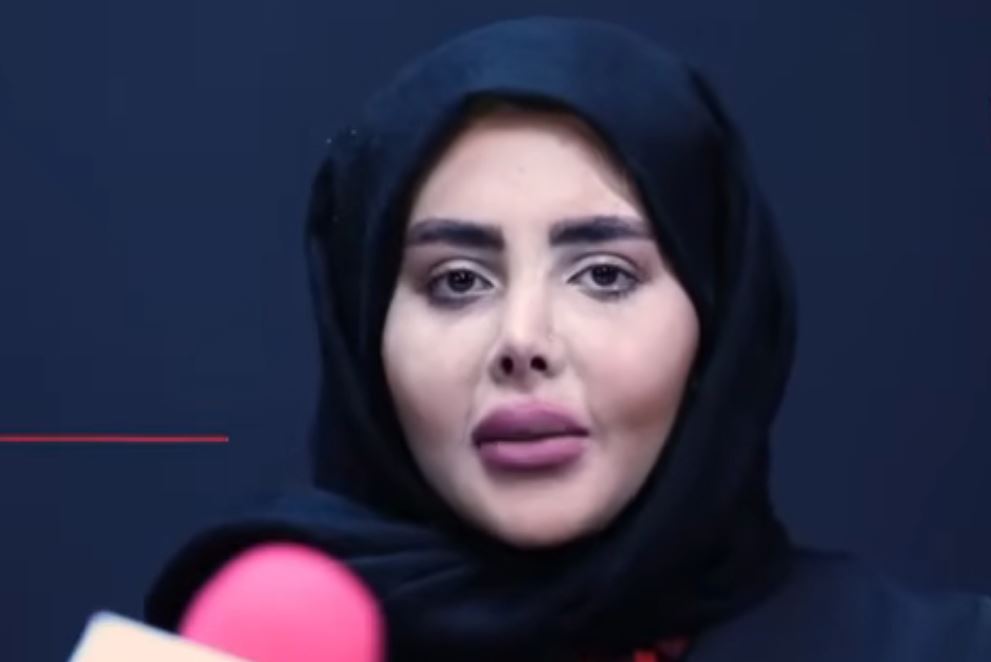
What actually transpired was far more intricate and, in a sense, more fascinating. In a 2017 interview with Sputnik News, Tabar clarified that Photoshop and makeup were the main sources of the images. At the time, she had undergone liposuction, lip fillers, and rhinoplasty; these procedures were real enough, but they were very different from the mythology that had solidified around her name. She later claimed that, rather than Angelina Jolie, she was attempting to look like Tim Burton’s animated Corpse Bride. She may have meant neither nor both. The entire project has an almost teenage vibe to it; it’s theatrical, attention-grabbing, and doesn’t really care if the audience gets the joke.
The Iranian government was not amused. Tabar was detained in Tehran on October 5, 2019, on suspicion of inciting violence, blasphemy, breaking the national dress code, and pushing young people toward corruption. On the same day, her Instagram account was removed. Her face was obscured in a pre-trial interview that the state broadcaster broadcast, but she acknowledged that she didn’t look like the pictures. It is difficult to watch that video without feeling uneasy because it shows a nineteen-year-old girl discussing her Photoshop habits on national television in a story meant to serve as a warning.
Many observers thought the ten-year sentence imposed in December 2020 was excessively harsh, especially considering that medical records showed a history of psychiatric treatment. From the beginning, her attorneys had argued for bail. Tabar confirmed that she had been freed after posting bail and that she had been cleared of two of the four charges shortly after the sentence was made public. The final verdict is still pending, and the remaining legal matter remains unresolved.
When she revealed her true face to the public following her release, it caused a minor media frenzy of its own. It was unclear to commentators whether they were shocked or ashamed that they had anticipated something more dramatic. It’s still unclear what Tabar’s future holds, including whether the platform she briefly controlled can be rebuilt or if that chapter is truly over. What is evident is that the version of her story that the majority of people were exposed to—a monstrous girl, fifty surgeries, and well-deserved punishment—was largely made up from the start. She created disturbing images. The rest were disturbed by the internet.