
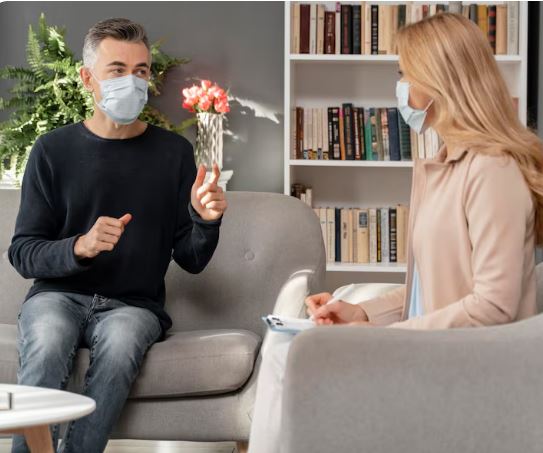
In recent years, private therapy in the UK has shifted from something reserved for the well-off to something many people can genuinely access, if they know where to look and how to ask. Too many people give up on their search before they even start, so the final section—how to ask—matters more than it should.
The thought of paying £80 for 50 minutes may seem completely unaffordable to residents of expensive cities like London. However, if you move online or venture a little outside of those hotspots, the image begins to appear significantly better. A therapist working from a smaller town or seeing clients via Zoom may charge less than half that rate.
| Topic | Detail |
|---|---|
| Typical Cost Range | £10 to £50 per session for affordable options |
| Most Affordable Sources | Trainee therapists, low-cost clinics, charities |
| Best Directories | Counselling Directory, BACP, UKCP |
| Online Advantage | Therapy outside expensive regions via Zoom |
| Accreditation to Look For | BACP, UKCP, NCS |
| Extra Support Options | Employer EAPs and private health insurance |
Many of the most affordable options come from those still in training, but nearing qualification. These therapists, who are frequently in their last year of postgraduate studies, operate under strict supervision and bill between £10 and £25 per session. The quality is impressively high, and the supervision adds a second layer of care behind the scenes.
By using training clinics—many run by universities or psychotherapy colleges—clients can access structured, low-cost therapy from dedicated professionals building their expertise. For mental health, it’s comparable to a teaching hospital.
Another highly efficient route is through charities like Mind, Anxiety UK, or local bereavement services such as Cruse. These organisations frequently offer low-cost or donation-based counselling, especially for those navigating loss, anxiety, or long-term stress. Their services are typically short-term but can be a valuable bridge.
A friend of mine, working part-time in retail, was quietly surprised to find a charity offering therapy at £20 a session. She assumed it would be group-based or rigidly time-limited, but ended up with twelve one-to-one sessions that, as she said, “got me through a winter I didn’t think I’d make it through.”
For those searching online, directories like the Counselling Directory, BACP, or UKCP can be remarkably effective. Filtering for “concessions,” “sliding scale,” or “low-cost” can highlight therapists open to negotiating rates based on need. It’s not a secret, just a filter that many people don’t think to apply.
Therapists themselves are often quietly flexible. Many reserve a few lower-fee spots in their caseload for students, carers, or those on reduced incomes. But they rarely lead with this offer. You have to ask. And when asked respectfully, they’re often more than willing to find a workable fee.
Through strategic online searches, especially across regions with lower costs of living, people are booking therapy that is not only cheaper, but just as personal and consistent. This is particularly beneficial for those comfortable with video sessions, where the only commute is clicking a link.
During the pandemic, this digital shift accelerated rapidly. Therapists adapted, clients followed, and the assumption that therapy had to happen in a softly lit room with a bookshelf behind the chair started to dissolve.
While talking to a university student who had scheduled online sessions with a therapist located two hours north of her flat, I found myself thinking about this. “I’d never be able to afford anyone local,” she told me, “but I can manage £30 a week if I skip one night out.”
Another option that is frequently overlooked is employer support. Employee Assistance Programmes (EAPs) frequently include access to short-term therapy—sometimes up to six sessions—completely covered. It’s the kind of benefit listed quietly on page seven of your onboarding packet. Worth checking.
Private health insurance, while not available to everyone, can also provide a path in. Policies from providers like Bupa, AXA, and Aviva may cover therapy costs for specific mental health concerns, although they sometimes set hourly rate caps or limit therapist choice. Still, it’s a conversation worth having.
The Free Psychotherapy Network deserves mention too. This grassroots initiative connects people with therapists who offer free or low-fee sessions to those facing financial hardship. It doesn’t operate at scale, but for those who qualify, it’s a lifeline.
What many don’t realise is how therapy costs can be significantly reduced without sacrificing quality. Yes, some therapists charge £100 or more. But many do not. And the ones who don’t aren’t less skilled—they’re simply working from different assumptions about who therapy should be for.
There’s also an emerging network of social enterprises and CICs (Community Interest Companies) offering online counselling for fixed rates around £18–£30 per session. These organizations take pride in providing accessible care free from time constraints and artificial limitations, and they reinvest in community mental health services.
For those who want to develop emotional resilience over time rather than just treat a pressing problem and move on, some provide open-ended therapy, which makes them extremely adaptable.
The NHS is still a vital resource for people in extreme distress, but the wait times can be lengthy. In these cases, using private therapy to bridge the gap can feel like an investment in your stability, even if it’s only for a handful of sessions.
Since the rise of telehealth, therapy has become both geographically and financially more flexible. It has unbundled itself from prestige.
Private therapy, once viewed as a privilege, is gradually reshaping into a service that—like gym memberships or dental check-ups—is something many can access with planning, support, and the right guidance.
Finding that first affordable therapist may still take persistence, but it is significantly more possible than most people assume. And once you start asking, you might be surprised how often the door is open.