
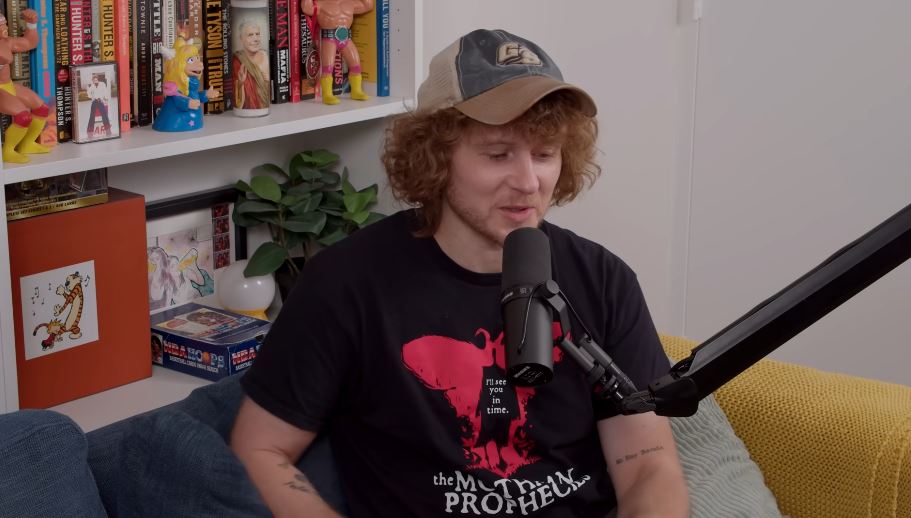
Credit: Dan Soder
The public life of Casey Rocket is a stark contrast. He is electrifying on stage, bursting into extended improvisations that occasionally resemble a swarm of bees—focused, cacophonous, and strangely coordinated. He has been open about his history of substance abuse and the drawn-out, rocky road to recovery off-stage. Now, as fans analyze his abrupt tour cancellation and discuss whether rehab is a contributing factor, those two tracks come together.
We can report the following facts in a responsible manner: Rocket has a well-established history of addiction and unsuccessful early intervention; he has been candid about extended periods of sobriety; and his team presented his recent hiatus as a health pause rather than an official inpatient stay.
| Label | Information |
|---|---|
| Name | Casey Rocket |
| Born / Origin | Born in Normal, Illinois; raised in Georgia |
| Occupation | Stand-up Comedian; Podcaster; Touring Performer |
| Notable Credits | Regular on Kill Tony; Winner — Austin Comedy Competition; festival sets (Skankfest, Melbourne) |
| Style | High-energy riffing; absurd improvisation; audience interaction; musical bits |
| Recovery History | Past addiction to alcohol, pills and Robitussin; teen rehab escape at 14; public periods of sobriety; candid about recovery on podcasts |
| Recent News | October 2025: Cancelled remaining tour dates citing “health issues”; speculation about rehab has not been officially confirmed |
| Representation | United Talent Agency (public listings) |
| Reference | https://www.caseyrockettour.com/ |
Rocket was placed in a teen residential program when he was fourteen years old. After ten days, he departed. He characterizes it as a harsh environment where manual labor and lack of sleep are presented as spiritual healing. He ran into the woods, barefoot and determined, and eventually came to a gas station where he called friends. Podcasts frequently tell the story of that escape with comedic timing.
Adolescent “rehab” can be coercive, as this raw story illustrates. The episode serves as a brief biography of the trouble-teen industry, which is harsh and ineffectual in real life despite having good intentions on paper.
His subsequent attempts to lead a sober life were not negated by those early treatment setbacks. Rocket has openly talked about a “very gnarly” drinking phase and a cough syrup and medication addiction. He has also talked about being sober for months or even years. In addiction medicine, this cycle of relapse and recovery is typical. It does not indicate a lack of moral character. It illustrates how chronic substance use disorders are.
For younger audiences, Rocket’s readiness to openly discuss those personal memories on podcasts and weave them into his comedy has helped de-stigmatize some aspects of the recovery discourse.
The sudden cancellation of tour dates in October 2025, which was the subject of the most recent news cycle, sparked a flurry of speculation right away. There is a lot of speculation about rehab, relapse, and breakdown in online forums. Social media acted as expected, compiling bits and pieces of previous interviews into stories that matched users’ anxieties.
That pattern is well-known. When there is a lack of official information, rumors quickly fill the void. The noise that results can be sympathetic. It may be intrusive as well. Separating verified history from unsubstantiated rumors and taking a pro-privacy stance while demanding accountability when necessary are helpful positions for both reporters and fans.
Here, the industry context is important. Risk factors that increase the likelihood of addiction are still prevalent in comedy culture. Touring schedules, late-night performances, and festival backstages all contribute to environments where substance use is common and recovery resources are limited. Many performers are prone to problematic use due to the same traits that make a set electrifying: impulsivity, emotional intensity, and a tolerance for risk. That observation isn’t a justification.
It is an appeal for structural reform. Better mental-health resources, required access to counseling while on tour, and sensible scheduling that minimizes chronic sleep disruption are all policies that venues, promoters, and talent agencies can implement that will be especially helpful. These are doable actions, and more significantly, when compared to the expenses of canceled tours and emergencies, they are surprisingly inexpensive at scale.
Rocket has an advantage in adjusting to such changes because of his innovative model. He is more than just a traveling comedian. In addition, he has a social media presence and hosts podcasts. Artists readjusting to life after addiction find that portfolio approach to be very effective. With much less exposure to late-night triggers, a well-timed podcast episode can reach as many people as a series of club dates.
Rocket has previously taken advantage of that model. While keeping up his public image, he switched to radio-style content and made a few festival appearances. That hybrid career design is especially creative for artists who are recovering. It lowers occupational risk while maintaining creative expression.
Rocket’s candor has cultural significance. He’s not just trading in grit when he makes jokes about escaping from teen rehab or living in a Walmart parking lot. He is providing fans and neighbors with a tangible overview of what vulnerability can entail. These specific stories—the numb nights, the stolen change, the gas station call—provide a level of detail that statistics are unable to capture.
They give legibility to the circumstances that give rise to addiction. They also evoke sympathy. Recovery involves messy logistics that readers and listeners who would otherwise treat it as an abstract moral test can understand. That change in public perception is incredibly successful in altering the definition of support.
Anecdotes are more than just examples. Policy is informed by them. Local health systems should look into adolescent treatment models in light of Rocket’s story of being coerced into a program that prioritized work over therapy. Do we employ the appropriate modalities? Are we providing trauma-informed care that acknowledges the need for autonomy in adolescents? Those are not rhetorical questions; they are practical ones.
Readers can support the expansion of evidence-based outpatient programs and family-centered interventions by turning their concerns into advocacy and advocating for funding. In comparison to the societal cost of chronic relapse, those supports are both affordable and durable.
A sense of ownership over public figures is frequently described by fans. This inclination feeds conspiracy theories, petitions, and fundraising efforts. It may also be harmful. Fandom that is responsible blends care and moderation. The prompt, positive reactions when a performer cancels a show due to health concerns are obvious: respect privacy, provide support without interfering, and channel energy into beneficial activities, like making donations to aftercare organizations or reaching out to venues to promote harm-reduction policies. Little steps like that add up. They also send a message to other artists that seeking assistance may prolong rather than end a career.
A hopeful framework is provided by analogous instances from comedy history. A number of well-known comedians have transitioned into long-term recovery and then reshaped their careers in ways that are beneficial to them personally and to society as a whole. Some have chosen recorded projects over touring. Others have taken up the cause vocally, aiding in the normalization of rehabilitation and treatment.
This precedent points to a realistic and hopeful course for Rocket: a brief hiatus, focused therapy, and then a return to a redesigned career that places an emphasis on longevity and health. Although they are not assured, such results are achievable with sufficient assistance.
The journalistic imperative is unambiguous: report the documented, put the anecdotal in context, and avoid harmful speculation. Rocket’s history is both public and educational. Until he decides to disclose, his present is private. There is currently no more compelling and uplifting story than one of cautious optimism. Rehab can be a place of renewal rather than spectacle if it is a part of his current journey.
If he decides to remain silent, that is also a good tactic. Either way, there’s no reason to waste the wider discussion this pause has sparked. The comedy industry has a chance to take the initiative. Instead of abandoning artists to the whims of online pity, it can create the infrastructure that helps them get through difficult times.
The story of Casey Rocket is still unresolved. It features humorous rescue lines, ragged beats, and a resolute refusal to disappear. He is compelling because of that combination. It also makes the discussion of his health important. Colleagues and fans can respect that outcome by moving from rumors to helpful assistance. They can advocate for venues to provide better access to mental health care, finance aftercare, and set an example of a more compassionate culture for traveling artists. By doing this, they support more than just one artist. They support a whole profession that flourishes when its members are robust, healthy, and creative.