
There is a specific type of shock that results from the everyday rather than from a disaster. One of the most renowned actresses in the world, Viola Davis, an Oscar winner and EGOT winner, did not become ill during a dramatic moment. Around the time her career was reaching its zenith, she woke up one morning with a profound, unexplainable sense of unease.
Her stomach was where it began. A skin rash. The kind that gives you the impression that you may have slept on a rough surface or brushed against something. It encircled her back. She would later describe the pain as being about a nine out of ten. Not a dull pain. Not a persistent pain. The kind of pain that makes it hard to lie down. The kind that makes getting up more difficult.
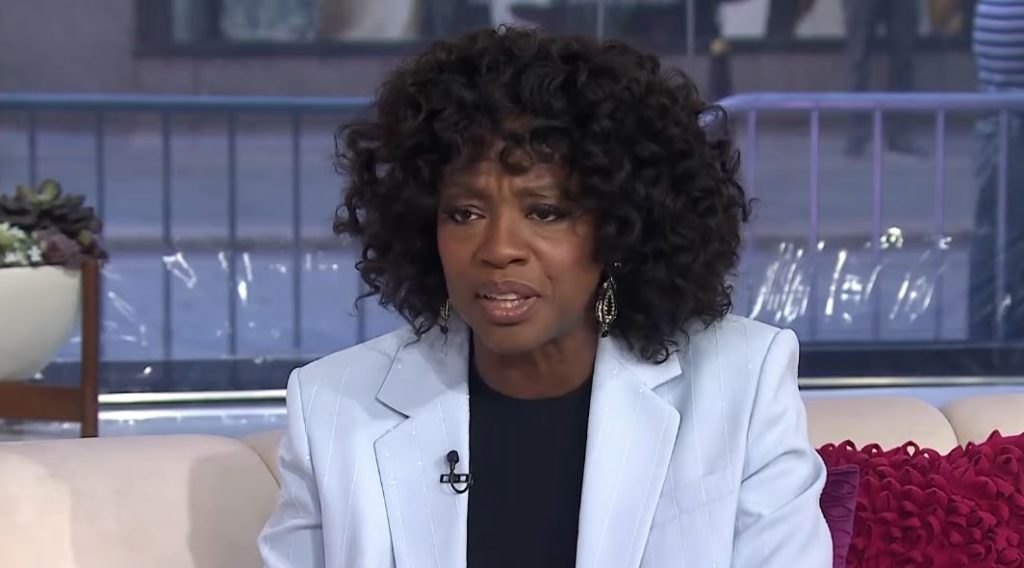
At the time, Davis claimed that she was running herself into the ground. In 2011, she and her husband Julius Tennon adopted their daughter Genesis. Her Oscar nomination for The Help was giving her a professional high. Hollywood momentum and motherhood are not known to coexist peacefully, and Davis was doing what many successful people do: persevering and viewing relaxation as a luxury she couldn’t afford.
Somewhere in the back of her mind, she seemed to think that maintaining a clean lifestyle and working hard were like armor. She exercised. She had a healthy diet. Perhaps unconsciously, she had persuaded herself that she was immune.
She wasn’t. When the rash blistered and the pain reached its peak, her first thought was that she had been bitten by a poisonous spider. It was so bad that it was reasonable to assume that something poisonous and aggressive had attacked her during the night. Eventually, a co-star advised her to consult a physician. According to Davis, the diagnosis of shingles was “the surprise of my life.” She had no knowledge of the illness. Until it finds them, most people don’t.
The varicella-zoster virus, which causes chickenpox, reactivates to cause shingles, which is not a rare disease. About one in three Americans will get it at some point in their lives, and the risk rises dramatically after the age of fifty, according to the CDC. In addition to the rash Davis had, other symptoms include fever, nerve pain, and in certain situations, long-term complications. When the illness reappeared approximately a year later, with three blisters on her upper back and pain that was more severe than the first round, Davis also discovered firsthand that it is possible to get it more than once.
Her story is remarkable not only for the physical details (difficult to lie down, difficult to get up, nerve pain permeating everything), but also for the subsequent philosophical change. Davis had made endurance the cornerstone of her career. Making it through. past with a muscle. She talks about believing that being strong meant persevering and that it was admirable to be able to endure hardship without complaining. Shingles disagreed, almost impolitely.
She said to People magazine, “I didn’t realize that’s not what strength is about.” “Loving your body is kind of what strength is all about.” It seems like a straightforward statement. It was probably not an easy decision to make, particularly for someone whose job required her to be available, perform, and give all the time.
Davis, now 61, has taken on the role of spokesperson for GSK’s “Shingles, Actually” campaign, which began in early October 2026 with the goal of encouraging adults over fifty to have genuine discussions about shingles prevention with their doctors. She joined actress Kristin Davis, who had a severe case of shingles on her face, and former Today host Hoda Kotb at a luncheon close to Central Park. It’s a lineup that implies something intentional: women of a particular age speaking candidly about the experiences their bodies had without trying to hide it.
Beyond the health disclosure of celebrities, there is something noteworthy in all of this. Millions of people with shingles lack the resources Davis has, may not have a co-star encouraging them to see a doctor, and may write off their symptoms as manageable until they’re not.
Davis makes the discussion more approachable by being honest about her pain and confusion—the shock of the diagnosis, the ignorance. The extent to which awareness campaigns like this one actually change behavior is still unknown, but at the very least, it introduces the term “shingles” to a group of people who might not otherwise consider asking their doctor about it.
It’s difficult to ignore how frequently a personal crisis is necessary to redefine what health really means. Davis recovered twice, so it wasn’t a devastating illness in the traditional sense. However, it was sufficient to cause her to reevaluate the narrative she had been telling herself about her invincibility. For most of us, that story turns out to have an expiration date.
FAQs
Q1. What illness was Viola Davis diagnosed with?
She was diagnosed with shingles, a painful viral infection caused by the varicella-zoster virus.
Q2. How severe was Viola Davis’s pain from shingles?
She rated her pain at nine out of ten — enough to make basic movement difficult.
Q3. Did Viola Davis get shingles more than once?
Yes, the condition returned roughly a year later, this time with blisters on her upper back.
Q4. What did Viola Davis initially think was causing her symptoms?
She suspected a poisonous spider bite before a doctor confirmed it was shingles.
Q5. What is Viola Davis doing about shingles awareness now?
She is a spokesperson for GSK’s “Shingles, Actually” campaign, urging adults over 50 to act.