
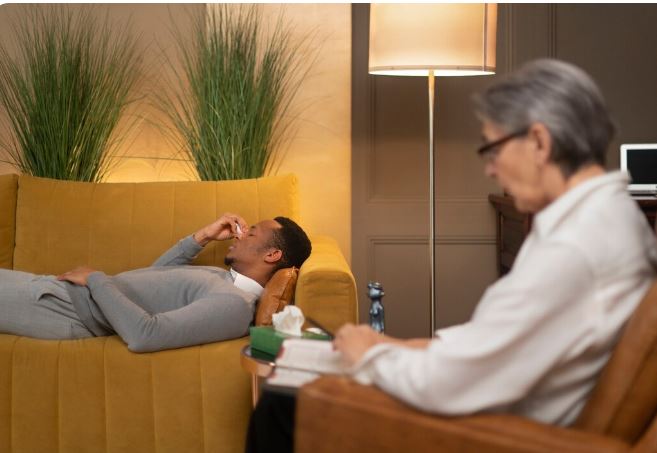
A few years ago, a commuter on a delayed train explained to me, with a half-smile and shaking hands, that his therapist now cost more per hour than his driving instructor ever did, yet felt far more necessary. That comparison, strikingly similar to many others I have heard, neatly captures how private anxiety therapy has slipped from optional support into something people budget for like rent or heating.
Across the UK, private therapy for anxiety now commonly sits between £50 and £150 per session, a range that feels deceptively neat until location enters the picture. Fees in London are rising rapidly, sometimes reaching £200 per hour, which is more a result of increased overhead and unrelenting demand than of opulent settings or long sessions.
| Aspect | Clear UK Context |
|---|---|
| Typical private therapy session | £50–£150 for 50–60 minutes |
| London private rates | £100–£200+ per session |
| Counsellors | £40–£80 per session |
| CBT-focused therapy | £120–£200 per session |
| Clinical psychologists | £100–£180+ per session |
| Low-cost or trainee options | £20–£40 per session |
| Average 12-session course | Around £1,500 nationally |
| Online sessions | Often slightly cheaper than in-person |
For many clients, the choice is shaped less by preference and more by timing, particularly when NHS waiting lists stretch into months. Anxiety seldom comes courteously, and the prospect of being seen in a matter of days as opposed to seasons becomes especially alluring, even when the figures make one take a quick breath.
Counsellors are typically at the lower end of the spectrum, charging between £40 and £80 per session. They offer a space for reflection, conversation, and calming down feelings that have started to interfere with work or family life. Their approach can be remarkably effective for situational anxiety, especially when someone needs grounding rather than deep clinical intervention.
Because it is structured and requires specialized training, cognitive behavioral therapy—which is often recommended for anxiety—tends to be more expensive, typically costing between £120 and £200 per hour. The appeal is clear: defined goals, practical tools, and a sense of momentum that many find notably improved their confidence within weeks.
Clinical psychologists, carrying extensive training and regulation, command the highest fees, sometimes exceeding £180 per session. Although the expense may seem overwhelming, their work is frequently described as being extremely versatile for complex or chronic anxiety, addressing patterns that have subtly shaped behavior for decades.
Over the past decade, online therapy has moved from niche experiment to mainstream option, particularly accelerated by necessity and convenience. By removing travel time and room hire, online sessions are sometimes surprisingly affordable, while remaining extremely reliable for clients comfortable speaking from familiar surroundings.
Low-cost routes do exist, though they require persistence and flexibility. Community-based services and trainee therapists frequently provide supervised, carefully managed sessions for between £20 and £40, which is especially helpful for people juggling anxiety with limited household finances.
The cumulative cost is where anxiety therapy becomes a serious financial decision. A typical twelve-session course, often proposed as a starting point, can total around £1,500, a figure that lands heavily for anyone already counting expenses with care.
I recall stopping at that total and wondering how many people quietly stop at session six because the calculator says they have to, rather than because they feel better.
Despite this, many clients describe private therapy as money well spent, not because it is painless to pay, but because it restores daily functioning that anxiety has steadily eroded. Being able to sleep, concentrate, or leave the house without rehearsing disasters is, to them, a return on investment that feels tangible.
Therapists themselves are rarely oblivious to the strain. In an effort to maintain sustainable support rather than abruptly ending care, many discreetly modify fees, provide limited sliding scales, or extend session spacing once progress is made.
In recent years, conversations about cost have become more open, with clients asking direct questions and therapists responding transparently. Slow but steady, that change is especially creative; it replaces awkward silence with sensible planning that honors both financial and emotional constraints.
Private therapy for anxiety is not a flawless system, nor a universal answer, yet it is increasingly woven into how people manage mental health. By treating it as a considered investment rather than an indulgence, many are finding a path that, while not cheap, is steadily guiding them toward calmer ground.