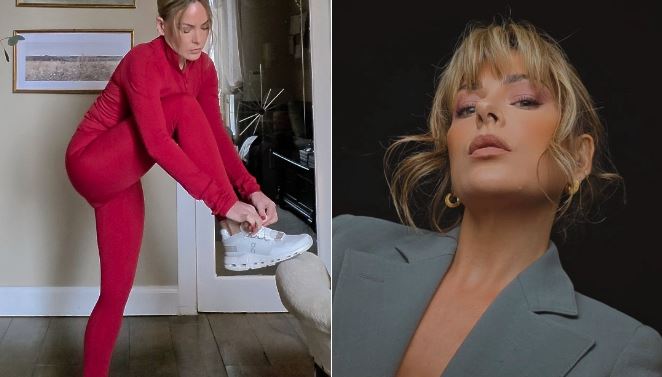
Reading what Ryan Gardiner wrote in the wee hours of Thursday morning has a subtly devastating quality. They weren’t dramatic, that’s for sure. They were loving, gentle, and measured. He claimed that Danielle Quinn, his partner, “passed peacefully and as gracefully as ever, surrounded by an abundance of love” in his arms—exactly where he had promised. She was forty-one. Additionally, she had been battling a disease that most people are unaware of for nearly four years.
Danielle Quinn, a content creator and finance manager from Glasgow, had amassed a small but significant online following—roughly 14,900 Instagram followers—largely due to her refusal to act as though her life was perfect when it wasn’t. She continued to use the internet after receiving a Stage 3 low-grade serous carcinoma diagnosis in December 2022. She shared updates from treatment rooms, hospital beds, and eventually a hospice with her followers. Contrary to popular belief, such candor is uncommon.
The path that led to her diagnosis is what makes her story particularly difficult to accept. Danielle had been diagnosed with IBS for a while before December 2022. It’s a frustratingly common story, especially for women who present with abdominal symptoms, and it’s unclear how long the misdiagnosis caused her care to be delayed. The cancer had already spread throughout her abdomen by the time medical professionals discovered what it was. Ten organs were removed over the course of a seven-hour procedure. It is nearly impossible to comprehend the scope of that.
Low-grade serous carcinoma is an uncommon, slow-growing type of ovarian cancer. The term “slow-growing” may seem almost comforting until you realize what it actually means: it is more difficult to treat, less responsive to conventional chemotherapy, and frequently detected later because it doesn’t behave like the cancers that most people are familiar with.
At first, Danielle opted for hormone therapy rather than chemotherapy; this choice was influenced by both medical advice and, one can imagine, a deeply personal desire to cope with this. In October 2024, her cancer returned. The choices became more limited after that.
She gave followers what would prove to be her last update earlier this week, stating that she had “fought as hard as she could” and that she had entered hospice care after medical professionals informed her that there was nothing more they could do. The post was straightforward and honest. Both strangers and those who had followed her updates for years left comments that were filled with the kind of sadness people save for someone who truly mattered to them rather than just someone they followed.
According to Ryan’s tribute, the woman’s private and public selves were identical. Observing her “face things no one should ever have to, yet somehow she found reasons to smile, laugh, and care for those around her,” he said. He wrote that she was “unapologetically D” even in her last days. That sentence says a lot on its own. Reading all of this gives me the impression that Danielle Quinn was the kind of person who gave something genuine to those around her, both offline and online, and that what her fans are grieving is a real person rather than a persona.
Social media users have showered her with tributes, calling her a “beautiful soul” and a woman “taken far too soon.” Danielle’s passing was also announced by the Beatson Cancer Charity in Scotland, with whom she had collaborated to promote awareness of ovarian cancer. According to most accounts, she transformed her suffering into something beneficial for others, which is arguably the most subdued act of bravery.
She departs from Ryan, her family, and a group of fans who will, at least temporarily, find it more difficult to scroll past her absence in their feeds than they may have anticipated.