
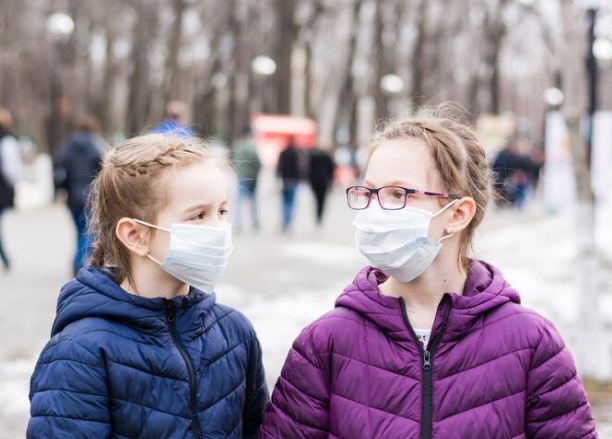
It was the end of January when the letter arrived, folded into a school bag that was already stuffed with spelling sheets and a cereal bar that had been partially consumed. Unvaccinated children who had been in close contact with a measles case could be excluded from school for a period of twenty-one days, according to the information that was provided to parents in Enfield.
It had a procedural tone to it. It was not the case.
According to the United Kingdom Health Security Agency, there were 34 confirmed cases of measles in Enfield alone by the beginning of February. Additionally, there were more than sixty suspected cases spread across seven schools and a nursery. Some of the children needed to be treated in the hospital. During this outbreak, one in five children who were affected had been hospitalized, and all of them had not received their full vaccinations. This information was posted on the website of a local general practitioner’s office.
| Key Context | Details |
|---|---|
| Location | Enfield and neighbouring boroughs, north-east London |
| Confirmed cases | 34 laboratory-confirmed cases (1 Jan–9 Feb 2026) |
| Suspected cases | 60+ across seven schools and a nursery |
| Vaccination rate | 64.3% of five-year-olds in Enfield received two MMR doses (2024/25) |
| Recommended threshold | 95% for herd immunity |
| Authority | UK Health Security Agency (UKHSA) |
Coughing and sneezing, as well as surfaces that are sticky with fingerprints and condensation, are all mechanisms by which measles is transmitted. It flourishes in areas where vaccination rates fall below 95%, which epidemiologists consider to be the minimum level required to prevent outbreaks. Over the course of the 2024/25 school year, only 64.3% of children aged five in Enfield received both doses of the MMR vaccine.
In addition, the national uptake has decreased, reaching approximately 84%; however, the patchwork of boroughs that make up London conceals deeper pockets of vulnerability.
Last week, parents gathered in a cluster outside a primary school in north-east London. The sky was a pale winter sky, and the air smelled faintly of damp concrete. Until she checked the red book at home, a mother told me that she had assumed that her child had received all of the recommended vaccinations. It was with a mixture of embarrassment and defensiveness that she said, “I thought the school did it.”
At the core of the issue is the confusion that exists between this assumption and the action that is being taken.
Officials need to use language with caution. In place of “refusal,” they refer to “vaccine hesitancy” in their discussion. Missed appointments, overbooked general practitioner surgeries, and families moving between boroughs are some of the access barriers that they cite. They acknowledge the continued existence of claims that have been debunked for a long time, and that link the MMR vaccine to autism. These narratives never quite disappear from accounts on social media.
It was confirmed by the World Health Organization in January that the United Kingdom had lost its status as a measles-free nation after nearly 4,000 cases of the disease had been reported since 2024.
Measles was something that doctors in this region read about rather than actually seeing for many years. The BBC was informed by a general practitioner in north London that it was most likely the first time in her twenty-year career that she had treated the illness locally. The significance of that sentence was greater than that of any statistic.
The manner in which the authorities react is fraught with genuine tension. By preventing unvaccinated students from attending school for a period of twenty-one days, the larger community is protected, particularly infants who are too young to receive vaccinations and children whose immune systems are compromised. Exclusion, on the other hand, causes disruptions in academics, work patterns, and the trust that exists between families and institutions.
A number of parents contend that requiring their children to be absent from school only serves to exacerbate their feelings of resentment. In response, officials from the public health sector assert that measles is approximately six times more infectious than the COVID-19 virus and has the potential to cause pneumonia or inflammation of the brain. Not an abstract concept, the trade-off is.
Because of the rapid transition from containment to inevitability in the language, I found myself feeling uneasy.
It has been suggested by the United Kingdom Health and Safety Agency (UKHSA) that in the event of a widespread outbreak, tens of thousands of people in London could become infected. Because families travel between boroughs for work and school, the director of public health for Enfield expressed concern about the possibility of a more widespread pan-London spread.
In the context of this discussion, the city’s transportation system, which is frequently praised for its ability to connect people, takes on the role of a vector.
Putting this outbreak in the context of a straightforward tale of misinformation would be a simple task. This explanation is compelling, and it is partially accurate. However, there are more layers to the reality. There is a shortage of primary care in certain areas of London. The booking system may appear to be unknown. Language barriers continue to exist. It is not because of ideology that a family that is juggling shift work and childcare may delay a second dose of vaccine; rather, it is because of logistics.
It is an intervention that feels both urgent and slightly improvised due to the fact that the borough has opened temporary vaccination centers in schools and community hubs.
Recently, I was able to observe a school hall being transformed into a clinic. Plastic chairs were arranged in rows, and a nurse was peeling open sterile packaging while the sound of cellophane crackling softly echoed through the room. The children were restless. The parents were there. The procedure was unruffled and almost unremarkable.
Despite this, the stakes were not high.
In addition to that, there is the issue of perception. For many people under the age of forty, measles is a disease that belongs to an earlier era in the history of public health in the United Kingdom. To a certain extent, if at all, it is remembered. There is a possibility that the visible rash, which consists of red-brown blotches that spread from behind the ears, could be misdiagnosed as something less serious until the fever increases and the eyes become red.
Measles is a disease that can only be prevented, as there is no specific treatment for it.
The scale of the outbreak that occurred in north London is not unprecedented. Since late 2023, similar clusters have been observed in other locations. However, there is something about this one that gives the impression of a turning point, possibly because it has arrived in a borough where the uptake is so much lower than the threshold for herd immunity.
The fragility of progress is brought into sharp relief as a result of this.
It is important to highlight the counterargument, which is that vaccination programs, on the whole, continue to be effective in comparison to many regions of the world. Extreme cases continue to constitute a minority. No one benefits from panic. Indeed, that is the case.
In contrast, complacency is even less helpful.
The playgrounds in Enfield continue to be places where children continue to run, shout, and share snacks and secrets. Public health is a field that operates in the background, and for the most part, it is invisible. If it falters, even for a brief moment, the consequences spread rapidly throughout the physical bodies.
It is predicted that the outbreak will be contained. Numbers will increase as a result of catch-up clinics. Letters are going to be stored away. The underlying question, however, which is how a city that had previously eradicated measles allowed immunity to weaken, continues to pose a greater challenge than any rash.