
Two years after Aliya Mustafina won her second Olympic gold on uneven bars in Rio de Janeiro in 2016, you would never have imagined that the internet would be analyzing pictures of her body with the fervor typically associated with geopolitical crises. For you, that’s gymnastics. And maybe for all female athletes.
After giving birth to her daughter Alisa in 2018, Mustafina took a break from competition and resumed her elite training, but by her own admission, she had gained four pounds. In an interview that year, she stated, almost dismissively, that she didn’t particularly enjoy diets, they didn’t work for her, and the weight wasn’t that much anyhow. It was a line that was thrown away.
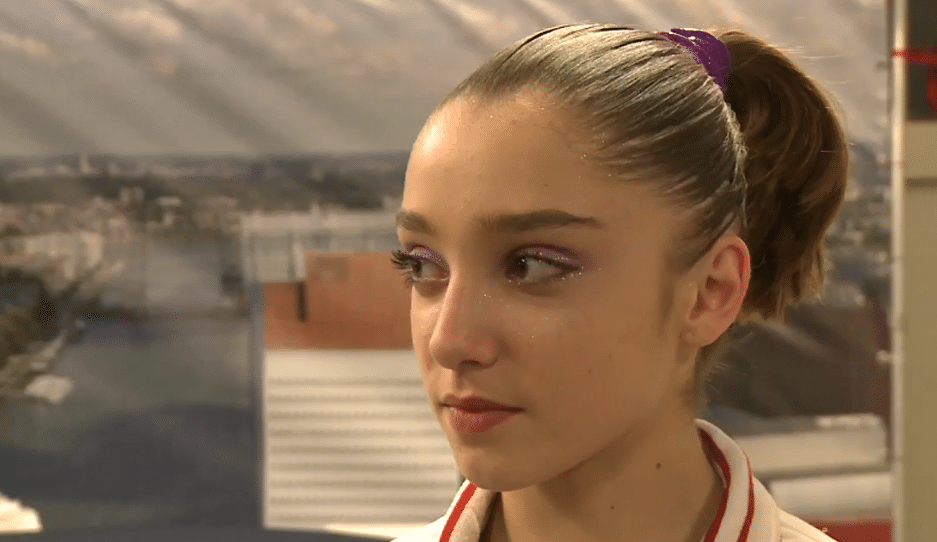
That is not how the internet handled it. Gymnastics forums and social media threads were inundated with comments, conjecture, and before-and-after comparisons. Some of it might have been presented as a concern. Most of it wasn’t.
Mustafina herself appeared to view the scrutiny as everyone else’s issue rather than her own, which made it especially uncomfortable to watch. The woman who had recovered from a ruptured ACL at the 2011 World Championships, won gold at the London Olympics twelve months later, and then made a comeback in time for Rio after suffering a second serious injury was not going to give in to the criticism of strangers on the internet. In a 2020 interview, she referred to herself as “unbreakable” and stated almost casually that she doesn’t give a damn about what people think. That assertion isn’t posturing in light of everything she has experienced. It reads more like a factual statement.
Elite gymnastics is currently experiencing an odd cultural reckoning that is present but not entirely resolved or clearly expressed. The foundation of the sport was a model that viewed the female body as a raw material that needed to be controlled, trimmed, and observed. In recent years, gymnasts have spoken more and more about coaches who used weight as a form of pressure and about diets that were enforced in training facilities.
Although Mustafina never went into great detail about those experiences in public—at least not in interviews that are widely accessible in translation—the weight discussion surrounding her return is part of that larger context, whether or not those who have it are aware of it.
Assessments were divided when she competed again at the 2018 Russian Championships. She had been the world’s best at that event for more than ten years, and her bars routine demonstrated much of that technical elegance. Although analysts pointed out some deductions, such as slightly off angles and positions at the catch that weren’t quite what they used to be, they also acknowledged that her skills were still clean in the important areas.
With a body that had withstood two Olympic campaigns, numerous surgeries, and one pregnancy, she had been competing at the highest level for about ten years. Depending on your point of view, the fact that she was performing at all was either subtly amazing or somehow insufficient.
It’s difficult to ignore how the weight discussion about female gymnasts differs from that of male athletes making a comeback. When a male boxer gains muscle in between fights, he is referred to as powerful and rebuilt. A female gymnast is said to have let herself go if she puts on any weight while pregnant. Almost no one calls out the framing in real time, despite the fact that it does a lot of work.
Since then, Mustafina has become a coach, influencing the upcoming generation of Russian gymnasts. Occasionally, her daughter Alisa can be seen in pictures posted on social media. Mustafina the public figure still exists in the collective memory of gymnastics, which is a difficult place to occupy, while Mustafina the competitor has mostly retreated from the spotlight. She is still arguably the most decorated Russian gymnast of her generation and among the best in the modern era of the sport.
In the end, the entire episode reveals more about gymnastics’ ongoing tension with the female body than it does about a single athlete. The sport is still negotiating and hasn’t fully come to terms with the notion that the body belongs to the person inside it. It appeared that Mustafina had figured that out long ago. She simply didn’t feel the need to make the announcement.
FAQs
Q1. How much weight did Aliya Mustafina gain after her pregnancy?
She gained approximately four extra kilos following the birth of her daughter Alisa.
Q2. How did Aliya Mustafina respond to public scrutiny over her body?
She called herself “unbreakable” and said she doesn’t care what people think.
Q3. Did Aliya Mustafina return to elite gymnastics after gaining weight?
Yes, she competed at the 2018 Russian Championships and performed well on bars.
Q4. What is Aliya Mustafina doing now?
She works as a national gymnastics coach in Russia.
Q5. Why did Aliya Mustafina’s weight gain attract so much attention?
Elite gymnastics has long tied female body weight to performance and public perception.