
Witnessing someone lose the very thing that made them unique can cause a certain type of grief. The loss came quietly, brutally, and long before anyone realized what was going on for Linda Ronstadt, who once filled arenas with a voice that critics called arguably the most sterling of her generation.
According to her own account, it began around the year 2000. Something had changed. Her voice’s top end, which had helped songs like “Blue Bayou” and “You’re No Good” become part of American culture, had started to fade. She initially became aware of it as a sort of gripping feeling in her throat. Then came the inability to maintain harmony. She later told CNN’s Anderson Cooper, “It would just be like I had a cramp or something,” with the composed composure of someone who has spent years dealing with a disturbing reality.
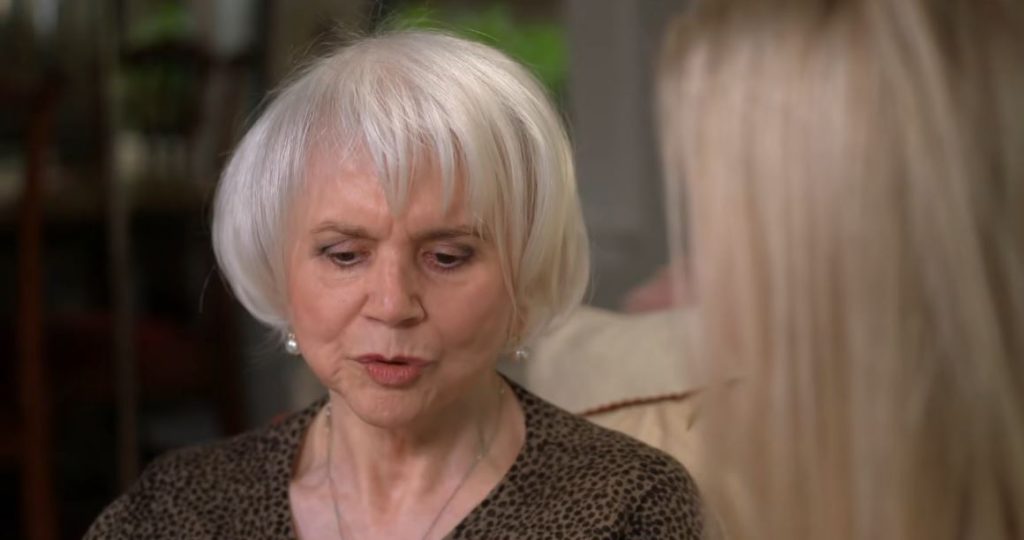
Years of slow withdrawal ensued. She completely stopped performing live by 2009. She declared her retirement in 2011. Then, in 2013, the diagnosis of Parkinson’s disease was made. It clarified a few things. The slowness, the tremors, the decline in voice quality. Up to 90% of people with Parkinson’s disease have speech and singing impairments, which frequently show up as a softening or breathiness in the voice before other motor symptoms appear. It was an especially cruel progression for someone whose instrument was her larynx.
This is where the story takes a surprising turn, and considering its medical significance, it still feels underreported. Ronstadt’s diagnosis was completely altered by a reevaluation in late 2019. After all, the ailment was not Parkinson’s disease. It was progressive supranuclear palsy, or PSP, a rare and poorly understood brain condition that damages nerve cells involved in speech, movement, balance, vision, and cognition. It is thought to affect only three to six people per 100,000 people globally. About twenty thousand Americans. Although it doesn’t provide much solace, it’s the kind of figure that helps put things in perspective.
In its early stages, PSP is frequently confused with Parkinson’s, which is exactly what happened in this case. Stiffness and slowed movement are symptoms of both conditions. Both may have an impact on speech. However, PSP develops differently and, in many respects, more widely, impacting mood, memory, swallowing, and eye movement. Ronstadt explained to Cooper how everyday activities like eating, taking a shower, and brushing one’s teeth have evolved into ways to solve problems. “I’ve had to relearn how to eat,” she remarked. “I’m like a toddler.”
It’s difficult not to stop staring at that picture. One of the best-selling female recording artists in American history, a woman who won the Kennedy Center Honors in 2019 and once made six appearances on the cover of Rolling Stone, is now navigating eating as if it were her first time. Her description of it lacks self-pity, which in some way makes it hit harder.
She responded without hesitation when Cooper asked her for advice to others dealing with Parkinson’s or similar diagnoses. Acceptance is one word. The weight of that one response is greater than that of the majority of essays on the topic. It’s hard to tell if it represents hard-won wisdom or something more akin to necessity. Most likely both.
Looking back, what sticks out is how long the signs were apparent before anyone made the connection. Voice issues started in 2000; he stopped performing live by 2009, received a formal diagnosis in 2013, and six years later received a revised diagnosis. The rarity of PSP may have played a role in the delay; doctors might have initially chosen the more well-known Parkinson’s diagnosis. In its early stages, the illness basically wears a disguise. However, for someone who is living in uncertainty, ten years of progressive silence before any true diagnostic clarity is a long time.
Ronstadt has persisted in giving speeches and making public appearances. Her memoir, Simple Dreams, was published in 2013. In 2019, a highly acclaimed documentary titled Linda Ronstadt: The Sound of My Voice was released. These seem like attempts to be remembered through more than just illness, and that gut feeling seems correct. Maybe the voice has vanished. The narrative isn’t.
FAQs
1. What illness does Linda Ronstadt have?
She has progressive supranuclear palsy, a rare brain disorder affecting movement and speech.
2. When was Linda Ronstadt first diagnosed?
Doctors initially diagnosed her with Parkinson’s disease in 2013.
3. Why did Linda Ronstadt stop singing?
Her degenerative neurological condition gradually destroyed her ability to control her voice.
4. Was Linda Ronstadt’s original diagnosis correct?
No — a 2019 re-evaluation revealed the correct diagnosis was progressive supranuclear palsy.
5. How has Linda Ronstadt responded to her illness?
She has publicly advised others facing similar diagnoses to practice acceptance.