
The picture of a woman crossing the finish line of the New York City Marathon in November 2023, her husband waiting to embrace her, and neither of them explicitly stating what they already knew is almost intolerable. Only a few weeks prior, he had received a glioblastoma diagnosis. Carrying that weight, she ran 26.2 miles before grinning on television the following morning.
Sheinelle Jones got up early, drove to 30 Rockefeller Plaza, sat on the Today show couch, and laughed at her co-hosts’ jokes for almost a year. After that, she and her husband, Uche Ojeh, got back in a car and headed to chemotherapy. Very few people were aware of it. She has repeatedly stated that she wasn’t pretending to be happy. That’s the part that stays. She maintains that although most of us don’t fully believe it until we have to, it is possible to hold both joy and grief at the same time.
In May 2025, Uche passed away. He was a 45-year-old father of three, an avid soccer fan, a former triathlete, and by all accounts, someone who approached faith as a daily routine rather than a Sunday ritual. Glioblastoma is the most aggressive of the primary brain tumors, and the average survival window is still stubbornly short. It is the same disease that claimed the lives of Edward Kennedy and John McCain. Every year, about 14,000 Americans receive a diagnosis. The majority of chemotherapy medications are prevented from reaching the brain by the blood-brain barrier, which was developed to keep toxins out. Researchers at Duke are attempting to use engineering to get around it. Slow progress is made. Hope also does.
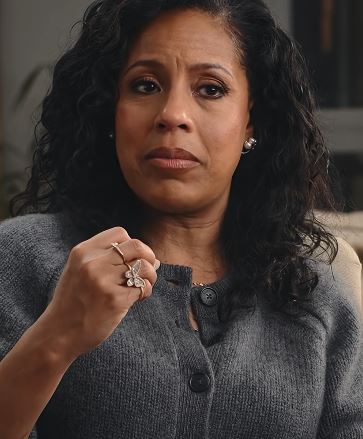
Sheinelle didn’t appear composed when she eventually returned to Today on September 5, 2025, sitting across from Savannah Guthrie in a pre-recorded interview. She shattered. She said, “The life that I’ve known since I was 19 is no more,” and the studio fell silent in the way that happens when a teleprompter is no longer useful. She described the event as a “beautiful nightmare”—a term that shouldn’t work but manages to do so. According to her, the hospital nurses referred to them as “the lovebirds.” She talked about taking his hand.
Watching this play out gives me the impression that morning television has seldom been asked to bear such a heavy burden. Today’s format is centered around recipe segments, weather updates, and lighthearted banter. It’s not really intended for a co-host to say on the air that some days are like swimming through mud. However, Sheinelle has stated precisely that ever since, most recently in January 2026, four months after her return, in an interview with People. “People think, ‘Oh, she’s better,’ after seeing me on TV. It’s like, “Oh, no, no.” “I’m not better.”
Since then, she has taken care to focus attention on the illness itself. One of those quiet areas of oncology where the resources don’t match the brutality is glioblastoma research. While Uche was under 65, the majority of patients were over 65. In younger individuals, tumors typically grow more slowly and manifest as seizures rather than the severe headaches that older patients report. That is not consoling at all. But it’s the kind of specific information she seems to want people to know—partly so other families can see what they’re looking at sooner, and partly, you suspect, because it’s better to deal with the grief than to let it linger.
The medical detail, however, is not what you remember. It’s the marathon. She claims that when she was training for the race, she was unaware that she was getting ready for something completely different. Put one foot ahead of the other. One breath at a time. She now refers to it as a template, practically a guide for the ensuing year. It’s difficult to deny that she is still in charge.