
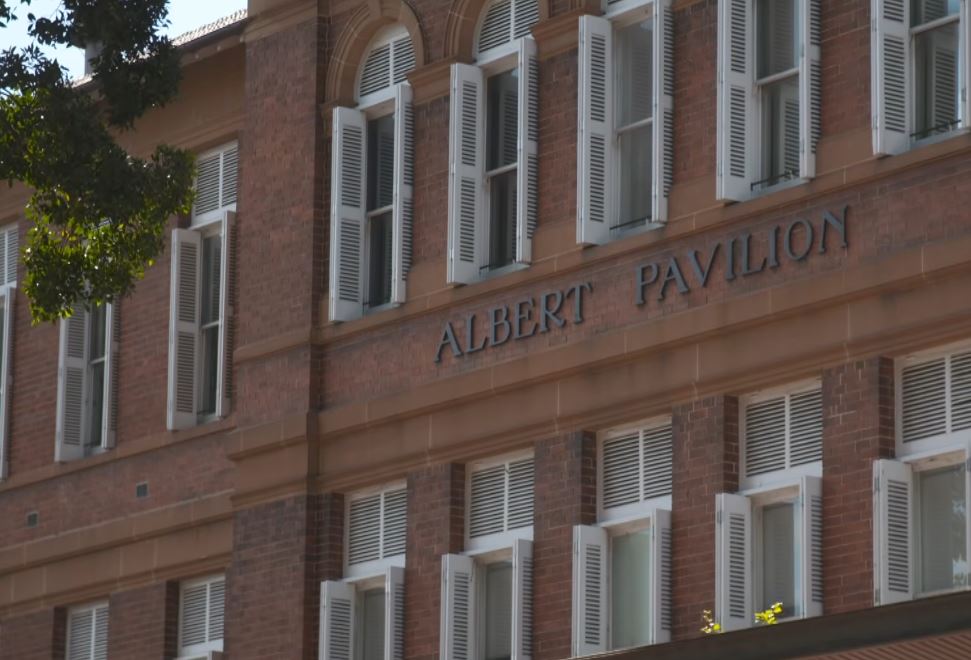
The Royal Prince Alfred Hospital’s emergency room in Camperdown doesn’t appear to be very scary. Staff in blue scrubs move briskly across the polished floor, ambulances sit idle, and sliding doors open and close with mechanical calm. However, two patients would not live when something nearly invisible—fungus spores, light as dust, common as soil—drifted through some areas of the building in late 2025.
Between October and December, Aspergillus infections occurred in six transplant patients at the hospital. Two people lost their lives. Four fell very ill. Even though newsrooms now repeat this fact, it’s difficult to avoid the contrast between how commonplace mold is and how deadly it can be in the wrong environment when you’re outside the red-brick complex.
| Category | Details |
|---|---|
| Hospital Name | Royal Prince Alfred Hospital (RPA) |
| Location | Camperdown, Sydney, New South Wales, Australia |
| Established | 1882 |
| Governing Body | Sydney Local Health District (NSW Health) |
| Specialty | Major tertiary referral hospital; transplant services |
| Recent Issue | Cluster of Aspergillus fungal infections (Oct–Dec 2025) |
| Redevelopment Project | A$940 million hospital redevelopment (since 2023) |
| Official Website | https://www.slhd.nsw.gov.au/RPA/ |
Aspergillus is not a foreign species. It inhabits damp areas of buildings, compost, and soil. The majority of people unknowingly breathe in its spores every day. Immune systems in good health ignore it. However, transplant recipients are not like other patients. In order to avoid organ rejection, their immune systems are purposefully suppressed and precisely balanced. Ironically, that protection leaves them exposed.
The timing is unsettling in some way. Since 2023, Royal Prince Alfred has been undergoing a A$940 million renovation, with construction vehicles coming and going and cranes rising behind heritage facades. It is well known that construction disturbs dust and soil, which could lead to increased spore concentrations in the air. According to hospital officials, nearby construction projects might have played a role. It’s possible that the facility’s most vulnerable patients were inadvertently exposed during the renovation, which was intended to modernize and strengthen it.
The air is more important inside a transplant unit than it is outside. HEPA filtration systems, which are intended to capture microscopic threats, are commonly installed in these wards. The unit was closed, thoroughly cleaned, had its ceiling sealed, and had its air filters replaced and tested after the infections surfaced. After officials declared that the elevated spore levels had subsided, the ward was finally reopened in early February. The response seems complete on paper. However, the question remains: should construction have been subject to stricter monitoring?
In his denial of any cover-up, Health Minister Ryan Park stated that officials wanted to educate patients and their families without “unnecessarily scaring people.” Although there is some reasoning behind that—panic never helps anyone—it is simple to understand why detractors call for greater transparency. Trust is the foundation of hospitals. Even infrequent occurrences feel seismic when deaths are connected to exposure to the environment within their walls.
Invasive aspergillosis is bluntly described by medical professionals. Spores can damage tissue and occasionally spread to the brain or kidneys after settling in compromised lungs and releasing toxins and enzymes. Fever, a chronic cough, chest pain, and even blood in the cough are all symptoms that can worsen rapidly. According to a significant US study, transplant recipients who develop invasive disease have alarmingly low survival rates. Although those figures are clinical, they are significant.
It’s difficult to avoid thinking about how contemporary hospitals coexist with their own growth as you pass the construction fencing close to RPA, where employees wearing high-visibility vests continue the drawn-out redevelopment process. During renovations, urban medical facilities are not afforded the luxury of complete closure. The care goes on. The surgeries continue. Patients with compromised immune systems sleep just meters from dust and drilling. That is a delicate balancing act.
This also has a larger context. Fungal infections are gaining more attention on a global scale. Resistance to antifungals is increasing. The way that spores spread is being altered by changes in climate, urbanization, and building booms. Although hospital Aspergillus cases are still uncommon, clusters during construction have been reported in the past. Even though RPA’s predicament is not unique, it is still concerning.
According to the hospital’s chief executive, RPA’s transplant population usually contracts one or two fungal infections annually. It can be challenging to distinguish between cases that are related to environmental factors and those that are incidental. Accountability is made more difficult by that uncertainty. It’s still unclear if this will lead to a permanent change in air monitoring procedures in hospitals throughout New South Wales.
Statistics and policy reviews may seem insignificant to the families of the two patients who passed away. After all, during a critical illness, a hospital is meant to be the safest location. Damage that occurs within its walls, even inadvertently, seems to have a greater emotional impact.
One cannot help but notice how delicate hospital ecosystems are as they watch this unfold. A building is made up of more than just bricks and machinery; it also has sealed ceilings, airflow systems, maintenance plans, and human attention to detail. If you take away one layer of focus, something tiny could get through.
One of the top tertiary hospitals in Australia is still Royal Prince Alfred. Its transplant program is still going strong. With air filters humming softly overhead, patients are once again receiving care in the renovated ward. In an institutional sense, life goes on.
However, there is a subtle uneasiness to the episode, similar to dust from construction settling in the sun. It implies that control is never absolute, even in highly developed health systems. Perhaps that’s the unsettling reality of the fungal infections at this hospital in Sydney: despite medicine’s ability to boost immunity, repair organs, and prolong life, it still coexists with the archaic, airborne world of mold.